If you’ve searched for the Royal Vintage Car Collection in Rajkot, here’s the thing to know before you set off: the cars aren’t in Rajkot city.
Gujarat Tourism lists the collection under Rajkot reasonably enough, since it sits in Rajkot district but the garages themselves are at Gondal, about 40 km south. Turn up at Rajkot’s Ranjit Vilas Palace expecting a museum and you’ll find a private family residence with a locked gate.
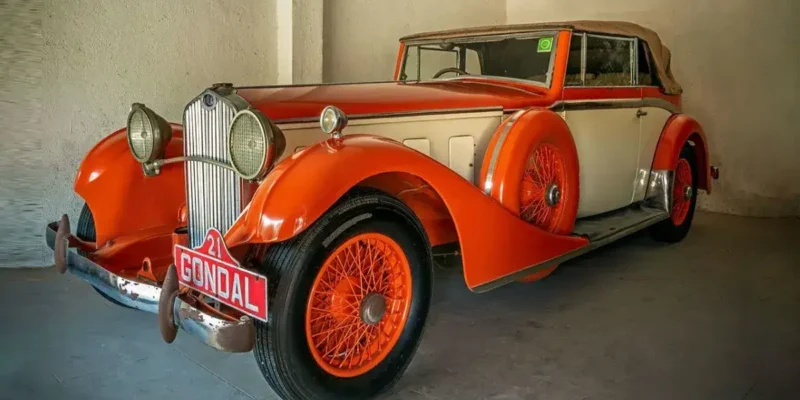
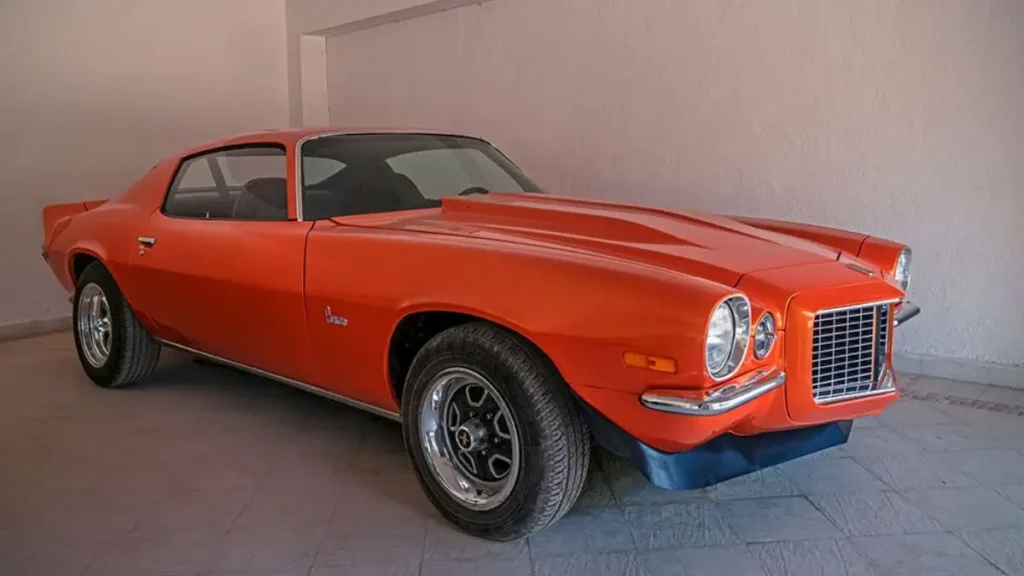
The good news: the Gondal collection is genuinely worth the drive. Thirty-two vehicles, running from a 1907 car built by the New Engine Company of Acton through a 1935 Mercedes saloon, and including racing cars driven by the present Maharaja of Gondal himself.
This guide covers what’s in the collection, how to reach Gondal, the Rajkot vintage cars you can’t currently see, the Darbargadh museum that may change that, and the two other royal car collections in Saurashtra.
Quick Facts at a Glance
| Detail | Information |
| Actual location | Gondal, Rajkot district, Gujarat |
| Listed by Gujarat Tourism under | Rajkot |
| Distance from Rajkot city | Approx. 40 km (42 km from Rajkot railway station) |
| Distance from Junagadh | Approx. 60 km |
| Collection size | 32 vehicles |
| Oldest reported | 1907, by the New Engine Company, Acton |
| Also includes | A 1935 vintage Mercedes saloon; racing cars raced by the present Maharaja |
| Housed at | The royal garages of the Gondal royal family |
| Ruling house | Jadeja dynasty, Thakur Sahibs of Gondal – an 11-gun-salute state |
| Related property | Orchard Palace, now a small heritage hotel |
| Timings & fees | Not reliably published – contact ahead |
| Best time to visit | October to March |
Rajkot or Gondal? Clearing It Up
Three separate things get tangled together in search results. Here’s what’s what.
| Gondal royal garages | Ranjit Vilas Palace, Rajkot | Darbargadh, Rajkot | |
| What | The 32-car royal collection | Rajkot royal family’s residence | The family’s ancestral palace |
| Cars? | Yes – this is the collection | Yes, in the palace garage | Reported for a planned museum |
| Open to visitors? | Yes, with arrangements | No – private residence | Museum conversion reported |
| Distance from Rajkot city | ~40 km | In the city | In the city |
The takeaway: if you want to see royal vintage cars in this region today, go to Gondal.
What’s in the Gondal Collection
Thirty-two vehicles, and the range is the point.
The 1907 New Engine Company Car
Why it matters: The oldest reported vehicle in the collection, built by the New Engine Company of Acton in west London. This is an extremely early motor car the kind of machine that existed when driving was still an experiment rather than a habit.
Best for: Serious car enthusiasts
The 1935 Mercedes Saloon
Why it matters: A vintage Mercedes saloon from the mid-1930s, the era when princely India and European luxury manufacturers were closely entwined.
Best for: Everyone
The Racing Cars
Why it matters: This is the detail that sets Gondal apart from most palace collections. The garages include racing cars raced by the present Maharaja of Gondal not inherited display pieces, but machines the family actually competed in.
Best for: Motorsport enthusiasts
The Broader Collection
Between those poles sit the rest of the thirty-two the saloons, tourers and state cars of an 11-gun-salute princely house across the first half of the twentieth century.
Beyond the Cars: What Else Is at Gondal
If you’re driving 40 km, the cars shouldn’t be the only reason.
Orchard Palace
Why visit: Converted into a seven-room heritage hotel, decorated with 1930s–40s Art Deco furniture, antiques and handicrafts. The gardens hold a large peacock population and plenty of other birdlife.
Best for: Heritage travellers, overnight guests
The Rail Saloon
Why visit: The Gondal royal family’s private railway saloon has been converted into a hotel suite complete with drawing room, dining room and bedroom. A royal train carriage you can sleep in is not something most heritage hotels offer.
Best for: Anyone who likes a genuinely unusual stay
The Room of Miniatures
Why visit: A sitting room holding a collection of miniature paintings, brass and period furniture.
Best for: Art lovers
The Gondal Royal Story
Why it matters: The rulers of Gondal were Thakurs of the Jadeja dynasty, entitled to an 11-gun salute, and held the title Thakur Sahib from 1866. Gondal was among the more progressive princely states of Saurashtra.
Best for: History readers
Timings, Fees and Access: Contact Ahead
This is the weak point in all published information about this collection.
Neither Gujarat Tourism’s listing nor the other sources consulted gave reliable opening hours or ticket prices for the car collection.
Why that is: the garages are part of a privately owned royal property attached to a working heritage hotel, not a government museum. Access arrangements at properties like this typically depend on whether you’re a hotel guest, whether you’ve arranged a visit in advance, and what’s happening on the day.
What to do:
- Contact the property directly before travelling the Orchard Palace heritage hotel is the point of contact for the royal properties at Gondal.
- Ask specifically about the car collection, not just “the palace.” They’re different things.
- Ask whether non-residents can view it, and what the charge is.
- Consider staying overnight At a seven-room heritage property, being a guest is usually the simplest route to full access and the rail saloon suite is a genuine draw in itself.
- Don’t rely on published timings We couldn’t find any we’d stand behind, and neither should you.
The Rajkot Cars You Can’t See (Yet)
Worth knowing, because it explains the search confusion.
Ranjit Vilas Palace, Rajkot built in 1870 by Thakore Saheb Bawajiraj Mehrmansinhji, begun as a famine relief measure following the famine of 1847. It’s Gothic in style, with around 100 rooms across six acres, on an estate of roughly 225 acres. And its palace garage holds a collection of vintage cars of the Rajkot State.
But it is a private residence Ranjit Vilas remains the home of the Rajkot royal family one of the few former ruling families’ palaces still lived in rather than converted. It is not a public museum, and you shouldn’t plan a visit around it.
One car worth mentioning: a Rolls-Royce custom-built in 1934 for the Rajkot royal family was out of the family’s hands for 42 years as part of a private British collection, and was at one point described as the most expensive car in the world. It has since returned to the family.
The One to Watch: Darbargadh, Rajkot
Here’s the development that could change this whole picture.
Darbargadh Palace the Rajkot royal family’s ancestral home in the city, and the residence that preceded Ranjit Vilas has been reported as undergoing conversion into a museum, with visitors expected to be welcomed from around 2025.
The reported plan covers 400 years of Rajkot princely history, including vintage cars, paintings, textiles, weapons, and the palace’s connections to Mahatma Gandhi who spent part of his childhood in Rajkot.
If it has opened, it would be the vintage car attraction inside Rajkot city that currently doesn’t exist.
Verify the current status before planning around it. Museum conversions slip, and we haven’t been able to confirm whether it’s open to the public yet.
Saurashtra’s Three Royal Car Collections
Once you know where to look, this region has a genuine motoring heritage trail.
| Collection | Where | Highlights | Access |
| Gondal royal garages | Gondal, ~40 km from Rajkot | 32 vehicles, 1907 onwards, racing cars | Arrange ahead |
| Ranjit Vilas Palace, Wankaner | Wankaner, ~50 km from Rajkot | Reportedly includes a 1921 Rolls-Royce Silver Ghost, plus horse-drawn buggies | Permission required; easiest for Royal Oasis guests |
| Ranjit Vilas Palace, Rajkot | Rajkot city | Rajkot State vintage cars | Private residence – not open |
Two of the three are realistically visitable, and they’re 50 km apart. For anyone genuinely interested in princely-era motoring, Gondal plus Wankaner makes an excellent two-day run.
Our Royal Oasis Wankaner guide covers the Wankaner end including how palace access works there, which is the same “arrange ahead, easiest as a guest” pattern you’ll find at Gondal.
A naming note: yes, there are two Ranjit Vilas Palaces one in Rajkot, one in Wankaner. Both are Jadeja Rajput properties. Both have vintage cars. Neither is a public museum. Saurashtra does not make this easy.
How to Reach Gondal
By Road
- From Rajkot: approx. 40 km, under an hour
- From Junagadh: approx. 60 km
- From Ahmedabad: approx. 250–270 km
- From Wankaner: approx. 85–95 km
Gondal sits on the main Rajkot–Junagadh route, which makes it an easy stop rather than a detour.
By Train
Gondal is roughly 42 km from Rajkot railway station. Rajkot is the major junction for the region.
By Bus
Regular buses run between Rajkot, Gondal and Junagadh, making Gondal a convenient base for the area.
By Air
Rajkot (Hirasar) International Airport is the nearest.
Best Time to Visit
October to March is the season across Saurashtra.
- October–March (Winter) – Best overall. Comfortable for the drive and for walking palace grounds.
- July–September (Monsoon) – Green, with the Orchard Palace gardens at their best.
- April–June (Summer) – Hot. Garages are indoors, but the rest of a Gondal visit is outdoors.
Where to Eat and Stay
Gondal – The Orchard Palace heritage hotel is the obvious stay, with seven rooms plus the rail saloon suite. The town also has simple local eateries and Gujarati thali options.
Rajkot (approx. 40 km) – The region’s food capital and the practical base for most visitors, with everything from legendary thali houses to a strong café scene.
Kathiawadi staples to look for: bajra rotla with garlic chutney, sev tameta, kadhi and chhaas.
Plan the Rajkot end with our best restaurants in Rajkot guide, and the top cafés in Rajkot list for an evening stop.
Places to Visit Nearby
| Place | Why Visit | Best For | Distance from Gondal |
| Orchard Palace & royal properties | Heritage hotel, Art Deco interiors, rail saloon, miniatures | Heritage travellers | On site |
| Rajkot | Kaba Gandhi No Delo, Watson Museum, the food scene | Everyone | ~40 km |
| Junagadh | Uparkot Fort, Ashoka’s rock edicts, Girnar | Everyone | ~60 km |
| Gir National Park | The world’s only wild Asiatic lions | Wildlife lovers | ~100 km |
| Wankaner | Royal Oasis, Ranjit Vilas Palace, vintage cars | Heritage travellers | ~85–95 km |
| Rampara Wildlife Sanctuary | Former Wankaner royal shooting reserve (permit required) | Wildlife lovers | ~85–95 km |
If you’re building a Saurashtra heritage route, our Royal Oasis Wankaner guide and Rampara Wildlife Sanctuary guide cover the Wankaner end, about 90 km north.
Suggested 2-Day Saurashtra Royal Motoring Route
Day 1 – Base in Rajkot. Kaba Gandhi No Delo and the Watson Museum in the morning, then drive to Gondal for the royal car collection (arranged in advance) and the Orchard Palace properties. Overnight at Orchard Palace, or back in Rajkot.
Day 2 – Drive north to Wankaner. Royal Oasis, the Art Deco pool and stepwell, and Ranjit Vilas Palace with its vintage cars if access is arranged. Overnight at Royal Oasis or return to Rajkot.
Frequently Asked Questions (FAQs)
The Royal Vintage Car Collection is in Gondal, about 40 km south of Rajkot. It is listed under Rajkot by Gujarat Tourism because Gondal is in Rajkot district.
The collection has 32 vehicles, including vintage cars from the early 1900s, a 1935 Mercedes saloon, and racing cars associated with the Gondal royal family.
Published timings and entry fees are not reliably available. Since the collection is on private royal property, contact Orchard Palace in Gondal before visiting.
No. Ranjit Vilas Palace is a private royal residence and is not open to tourists. Its garage contains vintage cars, but public access is not available.
There is no confirmed public vintage car museum currently open in Rajkot city. Darbargadh Palace has reportedly been planned as a museum featuring Rajkot’s history and vintage cars, so check its current status before visiting.
Wankaner is another option. Ranjit Vilas Palace reportedly houses vintage cars, including a 1921 Rolls-Royce Silver Ghost, but visits require prior permission.
Final Thoughts
The Royal Vintage Car Collection filed under Rajkot is really Gondal’s thirty-two machines spanning nearly half a century of princely motoring, including cars the present Maharaja raced himself. Confirm access before you drive out, consider staying at Orchard Palace to make it simple, and if you’re properly interested, carry on to Wankaner. Saurashtra’s princely garages are one of the most underrated things to explore in Gujarat with Travel Roach.
Have you seen the Gondal collection? Tell us how you arranged access and what was on display this is one of those places where reader reports are worth more than any listing. Follow Travel Roach for more travel guides and lesser-known places across Gujarat and India.