Housed inside the historic Alfred High School, the Mahatma Gandhi Museum in Rajkot is where a shy schoolboy named Mohandas once studied and today it’s one of Gujarat’s most moving heritage stops. Spread across 39 interactive galleries, the museum traces Gandhi’s journey from his Rajkot childhood to the Mahatma who reshaped a nation. This guide covers the museum’s history, gallery layout, timings, entry fees, and everything else you need to plan your visit, whether you’re a history enthusiast, a student on a school trip, or a family exploring Rajkot.
A Brief History of Alfred High School and the Museum
The building dates back to 17 October 1853, when it opened as Rajkot English School with just 36 students one of the first English-medium institutions in the Saurashtra region. It was built under the political agent Kernel Singh, and the present structure was funded by the Nawab of Junagadh and named Alfred High School in honour of Prince Alfred, Duke of Edinburgh.
Mahatma Gandhi studied here from around 1880 to 1887, completing his matriculation before leaving for Bhavnagar’s Samaldas College and later London. He was reportedly one of only two students in his batch to matriculate that year, out of 38 who had passed the entrance exam. After Independence, the school was renamed Mohandas Gandhi High School in his honour and remained active for 164 years before closing in 2017.
The building was then restored and converted into a museum, jointly run by the Rajkot Municipal Corporation and Gujarat Tourism. It was inaugurated on 30 September 2018 Gandhi’s 150th birth anniversary by Prime Minister Narendra Modi, along with Gujarat’s then Chief Minister and Deputy Chief Minister.
Read Also : Khirasara Palace, Rajkot
What to See Inside the Museum
39 Galleries Across Two Floors
The museum repurposes the school’s old classrooms into 39 themed galleries 18 on the ground floor and 21 upstairs. Visitors move through them sequentially, following Gandhi’s life chronologically: his Rajkot childhood and schooling, his transformation in South Africa, the freedom struggle (including the Dandi March and Quit India Movement), and his core philosophy of truth and non-violence (Satya and Ahimsa).
Original Artefacts and Documents
Look out for genuine period pieces, including a letter noting Gandhi’s admission to the school, his attendance register, and displays recreating his actual classroom.
Digital and Interactive Exhibits
Each gallery blends heritage architecture with modern technology touchscreen kiosks, 3D models, projection mapping, and audio narration in multiple formats, making it engaging for both adults and children rather than a traditional glass-case museum.
Light and Sound Show
After sunset, the museum runs a 20-minute 3D light and sound show on Gandhi’s life, typically from 7:00 PM to 7:20 PM. It’s included free with your museum ticket, but you’ll need to buy your entry ticket before 5:00 PM to be eligible.
Library and Research Centre
A quieter corner most visitors skip the museum has a dedicated library and research centre with an extensive collection of books and documents on Gandhi, worth a stop if you want to go deeper than the galleries.
Timings and Entry Fee
- Timings: Generally 10:00 AM to 6:00 PM (some listings note last entry around 5:00 PM); the museum is typically closed on Mondays
- Entry Fee: Approximately ₹25 for Indian visitors and ₹250 for foreign visitors
- Light & Sound Show: ~7:00–7:20 PM, included with your museum ticket if purchased before 5:00 PM
- Time needed: Budget 2–3 hours to walk through all 39 galleries comfortably
- Note: Outside food and water aren’t allowed inside; the museum is centrally air-conditioned, and pets aren’t permitted
Also Read : Virpur Jalaram Bapa Temple
Best Time to Visit
The museum is comfortable to visit year-round since it’s air-conditioned, making it a good indoor option even during Rajkot’s hot summer afternoons. That said, October to February remains ideal if you’re combining it with outdoor city sightseeing. Weekday mornings, right after opening, tend to be the quietest weekends and school-excursion season (especially around Gandhi Jayanti in early October) see noticeably higher footfall.
How to Reach the Museum
By Train: Rajkot Junction is about 1.8–2 km away, roughly a 10–15 minute auto or cab ride.
By Road: The museum sits centrally near Jubilee Chowk / Jawahar Road, in Rajkot’s old-city heritage cluster, and is well connected by auto-rickshaw, taxi, and local bus from anywhere in the city.
By Air: Rajkot Airport is around 20–30 minutes away by road, depending on traffic.
Who Is This Museum Best For?
- Students and school groups – genuinely educational, and one of the most-visited academic excursion spots in Rajkot
- History and freedom-movement enthusiasts – a rare chance to stand in the actual classrooms where Gandhi studied
- Families with kids – the interactive, multimedia format holds children’s attention far better than a traditional museum
- First-time Rajkot visitors – an easy, centrally located half-day cultural stop
Where to Eat Near the Museum
After a couple of hours moving through galleries, head into Rajkot’s old city food streets nearby for classic Kathiyawadi snacks fafda-jalebi, kachori, and a simple cutting chai are the local go-tos. If you’re building out a full Rajkot food trail, our guides on restaurants in Rajkot and cafés in Rajkot cover more options for every mood and budget.
Other Places to Visit Nearby
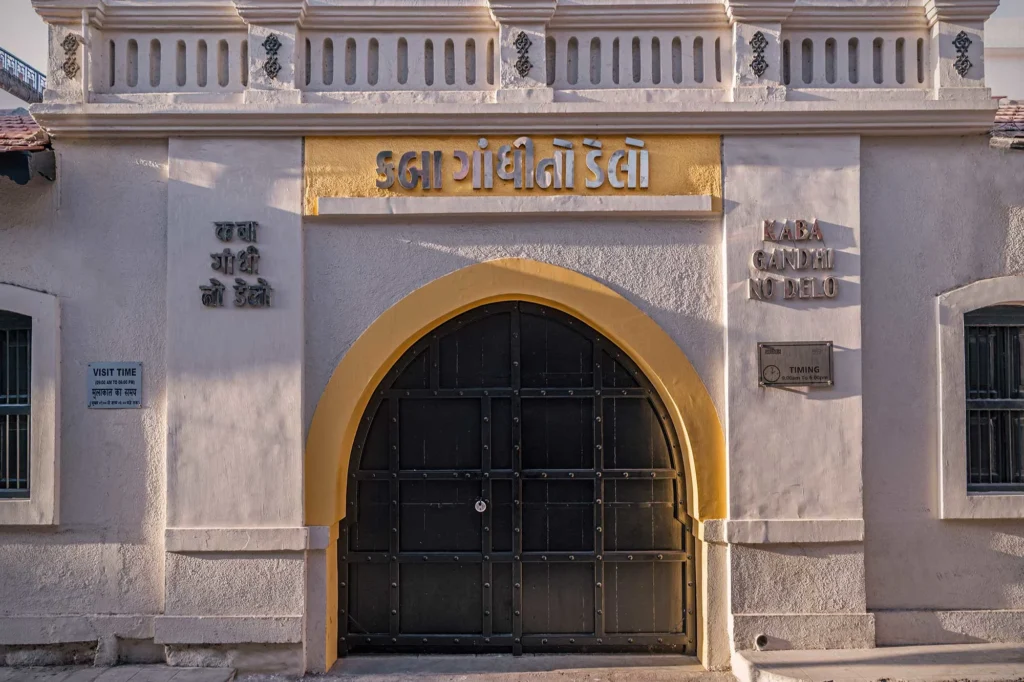
- Kaba Gandhi No Delo – Gandhi’s ancestral home where he lived as a child, and a natural pairing with this museum
- Watson Museum – a colonial-era museum covering Gujarat’s broader history and culture
- Rotary Dolls Museum – a quirky collection of dolls from around the world
- Jubilee Garden – a relaxing green space right near the museum, good for a short break
Also Read : Best Fast Food in Rajkot
Frequently Asked Questions (FAQs)
Entry costs approximately ₹25 for Indian visitors and ₹250 for foreign visitors. It’s worth confirming the current rate at the counter or the museum’s official ticketing page, since prices can be revised over time.
The museum generally operates from 10:00 AM to 6:00 PM and is closed on Mondays. Try to arrive well before the last-entry cut-off, especially if you also want to catch the evening light and sound show.
Kaba Gandhi No Delo is Gandhi’s ancestral home, where he lived as a child. The Mahatma Gandhi Museum is his former school, Alfred High School, now converted into an interactive gallery experience. Both are in Rajkot and complement each other well on the same trip.
Plan for about 2 to 3 hours to walk through all 39 galleries without rushing. Add extra time if you’re staying on for the evening light and sound show.
Yes. The heavy use of audio-visual storytelling, touchscreens, and 3D models tends to keep children more engaged than a traditional text-and-photograph museum would.
Not really – the galleries are designed to be self-explanatory, with text panels, audio narration, and visual displays guiding you through in sequence. Guided options may be available at the counter if you want deeper context.
Final Thoughts
Few museums let you stand in the exact classroom where one of history’s most influential figures once sat as a nervous schoolboy. The Mahatma Gandhi Museum turns Alfred High School’s old corridors into a genuinely moving, technology-driven walk through Gandhi’s life well worth 2–3 hours on any Rajkot itinerary. Planning your Rajkot trip? Roach the road less traveled with us drop your questions in the comments and we’ll help you plan the rest of your visit!
