On the south Saurashtra coast of Gujarat, between Somnath and Porbandar, there is a beach that holds three entirely distinct stories. The first belongs to a Nawab Mohabat Khan, the pleasure-loving ruler of Junagadh State, who saw a sleepy fishing village on the Arabian Sea in the early 20th century and decided it was the ideal place to escape the summer heat. He built a palace on the beach in 1930 a grand structure of Italian, Muslim, and colonial architectural influences and called it the Dariya Mahal (Sea Palace). It was India’s first beach palace resort. It may still be the only one.
The second story belongs to a boy born in the village of Chorwad in 1932. He would leave this coastal settlement as a young man with very little and build one of India’s largest corporations Reliance Industries from a textile trading business into a conglomerate that changed the shape of Indian commerce. His name was Dhirubhai Ambani. The house where he was born stands in Chorwad to this day.
The third story is the one you write yourself the walk along the beach with the Arabian Sea breeze in your face, the Dariya Mahal’s facade glowing against the sky behind you, the sound of the sea and the Kathiawadi horse’s hooves on the sand. Chorwad Beach is not dramatic like Somnath or famous like Shivrajpur. It is quieter, more melancholy, more historically layered. This TravelRoach guide covers all three stories and everything you need for a complete visit.
Chorwad Beach – Quick Information
| Detail | Information |
| Location | Chorwad village, Malla Hatina Taluka, Junagadh District, Gujarat on the Arabian Sea coast |
| District | Junagadh (administratively); also near Gir Somnath district boundary |
| Most Famous For | Dariya Mahal (India’s only beach palace resort) and as birthplace of Dhirubhai Ambani |
| The Palace | Dariya Mahal built 1930 by Nawab Mohabat Khan of Junagadh; Italian-Muslim-Colonial style |
| Palace Status | Currently a government-managed resort/heritage property; partially ruined |
| Dhirubhai Ambani | Born in Chorwad in 1932 founder of Reliance Industries; birthplace in the village |
| Beach Type | Sandy beach on the Arabian Sea; scenic but not ideal for swimming |
| Swimming | NOT RECOMMENDED rocky shores and rough sea make swimming dangerous; wade ankle-deep only |
| Activities | Horse riding, country boat rides, beach walking, palace exploration, photography |
| Entry Fee | Free beach – no entry fee for beach access |
| Timings | Open throughout the day – sunrise to sunset recommended |
| Best Season | October to March; Summer is also popular for the sea breeze |
| Distance from Somnath | ~35–37 km (~50 minutes by road) |
| Distance from Veraval | ~20 km (~25–30 minutes) |
| Distance from Junagadh city | ~85–95 km (~2 hours) |
| Distance from Porbandar | ~80 km (~1.5 hours) |
| Distance from Rajkot | ~180 km (~3.5 hours) |
| Nearest Railway | Chorwad Road Railway Station (~6 km); Veraval Railway Station (~20 km) |
| Nearest Airport | Diu Airport (~60 km); Porbandar Airport (~80 km); Rajkot Airport (~180 km) |
The Dariya Mahal – India’s Only Beach Palace Resort
Nawab Mohabat Khan and the Discovery of Chorwad
In the early years of the 20th century, the Nawab of Junagadh State Muhammad Mahabat Khanji III Rasul Khanji, known popularly as Nawab Mohabat Khan was in search of a summer retreat that could offer relief from the intense heat of Junagadh city. Junagadh’s summers are clammy and energy-sapping the combination of heat and humidity that characterises the Gujarat interior in May and June. The Nawab, with the resources of a princely state at his disposal, began looking at the Saurashtra coastline for a suitable site.
When he found Chorwad a small fishing village on the south Saurashtra coast, with a wide sandy beach, a consistent Arabian Sea breeze, and sufficient distance from Junagadh to feel genuinely like an escape he understood its potential immediately. The sea breeze that made the village pleasant year-round was exactly what a summer retreat needed. In 1930, construction began on the palace that would define Chorwad’s identity: the Dariya Mahal.
Also Read: Prabhas Patan Museum Somnath
The Dariya Mahal -Architecture and Character
The Dariya Mahal (Sea Palace) was built in 1930 as the Nawab’s personal summer residence a private palace on the beach for the ruler of one of Gujarat’s most significant princely states. The architecture reflects the cosmopolitan aesthetic of the late princely era: an interesting and unusual blend of Italian, Muslim, and British colonial influences that creates a building unlike any other on the Saurashtra coast.
The imposing facade features projecting porticos covered entrance porches extending from the main building face combined with large arched windows in the Muslim tradition and the proportional grandeur of Italian palazzo architecture. Elegant balconies open toward the sea, positioned to catch the maximum breeze and to frame the maximum view of the Arabian Sea. Inside, the interiors were finished with the quality appropriate to a royal residence: polished floors, high ceilings, and the detailed craftsmanship that the princely states could commission.
The Kathiawadi thoroughbred horses of the Junagadh royal stable were housed at the palace the Nawab and his court would ride along the beach below the palace, the combination of the royal equestrian tradition and the seaside setting creating a scene of particular glamour. The beach at Chorwad before the Dariya Mahal became, for the years of the late princely era, one of the more elegant spaces in Saurashtra.
After Independence -The Accession Controversy and the Government Resort
The post-independence history of the Dariya Mahal is inseparable from the most politically controversial aspect of Junagadh’s history: the accession dispute. When British India transferred power in August 1947, the Nawab of Junagadh unlike the rulers of most princely states initially chose to accede to Pakistan rather than India, despite Junagadh being geographically surrounded by Indian territory and having a predominantly Hindu population. This decision, made by Nawab Mohabat Khan’s successor, triggered a constitutional crisis resolved by the intervention of Sardar Vallabhbhai Patel.
Patel, India’s Iron Man, moved decisively. India blockaded Junagadh, cut off supplies, and exerted the full weight of the new Indian state’s diplomatic and practical authority. The Nawab fled to Pakistan. Junagadh State was integrated into the Union of India. The Dariya Mahal and the Nawab’s other properties came under government control. In 1974, the Gujarat government converted the palace into a resort property India’s first beach palace resort was now a government-managed hotel, open to the public that the Nawab had once governed.
Today, the Dariya Mahal is a heritage property in various states of repair the grandeur of its 1930 construction is still visible in the facade, the arched windows, the overall proportions of the building. Parts are maintained as the Chorwad resort. Parts show the weathering and partial decay of a 90-year-old building on a salt sea coast without the level of maintenance that a privately owned heritage property might command. The ruined quality of the palace the faded paint, the weathered stone, the overgrown garden sections has its own beauty: this is what magnificent things look like when history moves on.
Dhirubhai Ambani – The Boy from Chorwad Who Changed Indian Business
The Birthplace
Chorwad village is the birthplace of Dhirubhai Hirachand Ambani born here on December 28, 1932. Dhirubhai Ambani’s story is one of the most celebrated of 20th-century Indian capitalism: a man who grew up in a small coastal village, left for Aden (Yemen) in his teens to work as a petrol station attendant, returned to India with almost nothing, entered the textile trade, and built Reliance Industries from the ground up into one of India’s largest corporations encompassing petrochemicals, refining, telecommunications, retail, and media.
Dhirubhai’s childhood in Chorwad was not wealthy. The village was small and its fishing and agricultural economy was modest. The palace of the Nawab loomed over the beach as evidence of a world entirely different from the one the Ambani family inhabited. The contrast between the palace and the village between the Nawab’s opulent summer retreat and the ordinary Chorwad household where Dhirubhai grew up is one of the more poignant historical juxtapositions on the Saurashtra coast.
The House and the Legacy
The house in Chorwad village where Dhirubhai Ambani was born is still identifiable and is visited by those who come to the beach with an interest in his story. For students of business history, for Reliance followers, and for those who are moved by the Indian entrepreneurship narrative the story of someone who came from this village and built what he built Chorwad has a significance that no other beach on the Saurashtra coast can claim.
Dhirubhai Ambani passed away on July 6, 2002, following a stroke. Reliance Industries, the company he founded, is today one of India’s largest corporations by revenue. His sons Mukesh and Anil Ambani inherited the company. The transformation of Reliance under Mukesh Ambani including Jio, the telecommunications revolution that changed how India uses mobile internet is one of the most consequential business stories of 21st-century India. All of it traces back to a boy from a fishing village on the south Saurashtra coast.
Also Read: Junagadh Travel Guide
The Beach at Chorwad – What to Expect
The Sandy Shore and the Arabian Sea Breeze
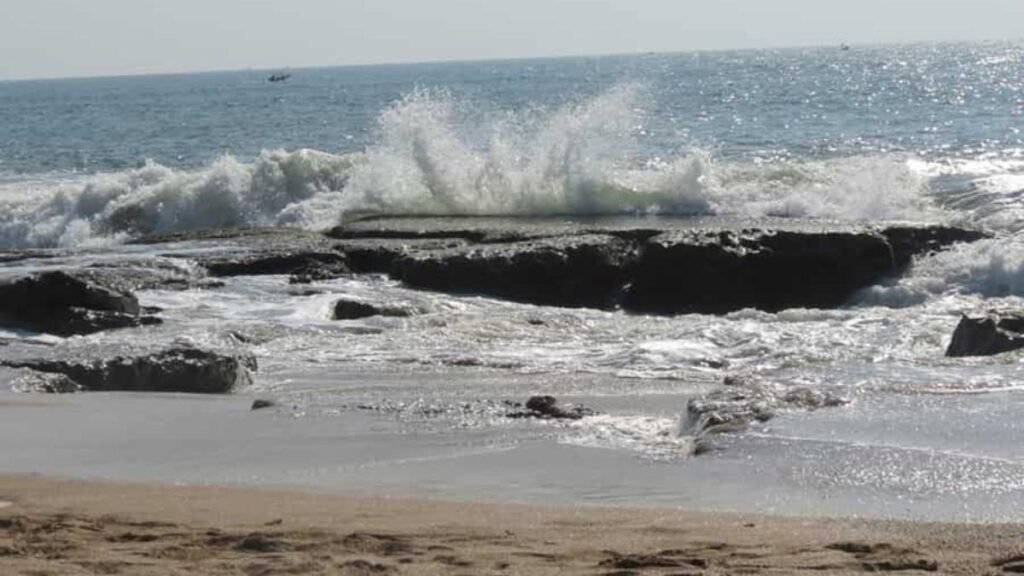
Chorwad Beach is a wide, expansive sandy stretch on the Arabian Sea. The combination of the palace backdrop, the open horizon, and the consistent sea breeze creates a visual and sensory environment of considerable beauty. The beach is not developed with food stalls and infrastructure in the way that more commercially popular beaches like Dumas or Suvali are it retains a relatively undeveloped, quiet character that is one of its primary appeals.
The sea breeze at Chorwad was precisely what the Nawab came here for, and it remains the beach’s most immediately pleasurable feature. Even in the summer months when the Saurashtra interior is punishingly hot, the breeze from the Arabian Sea keeps the beach cooler than inland locations. In the winter months, the breeze is fresh and the air has the particular coastal clarity that makes seaside walking genuinely invigorating.
NO SWIMMING – The Honest Safety Note
Multiple sources are consistent on this point, and TravelRoach emphasises it clearly: Chorwad Beach is not safe for swimming. The rocky shores and the strength of the sea make swimming genuinely dangerous. Do not enter the water beyond ankle or knee depth. This applies to all visitors, including strong swimmers, as the underwater rocky terrain creates unpredictable currents and fall risks.
Visitors who want to swim are directed to cross the fishermen’s jetty to a separate beach area where the sea is reportedly calmer but exercise your own judgment on conditions before entering the water anywhere on this stretch of coast. No lifeguards are present at Chorwad Beach.
Horse Riding – The Classic Chorwad Experience
The most distinctive single activity at Chorwad Beach is horse riding specifically, riding Kathiawadi horses along the sand in front of the Dariya Mahal. This experience the specific combination of a Kathiawadi breed (the noble horses of the Junagadh royal stable) on the sand before a ruined beach palace is unlike any other beach activity in Gujarat. Kathiawadi horse owners operate at the beach during tourist season. Confirm availability and negotiate rates on arrival.
Horse riding at Chorwad is not merely recreational. It is, with the Dariya Mahal as backdrop, a genuinely atmospheric experience the kind of thing you do once and remember for a long time. Even a 20-minute ride along the beach at sunset, with the palace silhouetted against the evening sky, is worth the effort of the journey to Chorwad.
Country Boat Rides and Fishing Village Walks
Country boat rides are available from the fishermen’s areas near the beach traditional wooden fishing boats that can take visitors on short excursions on the Arabian Sea. This is a simple but pleasurable activity that gives a sense of the sea from the water’s perspective rather than the beach’s. The boats are operated by local fishermen; negotiate directly. Adjacent fishing villages are worth a walk the active fishing culture of the Chorwad area has been present since long before the Nawab arrived, and the village life around the beach is quietly interesting.
Chorwad’s Layered History – From Fishing Village to Royal Retreat
Chorwad’s history before the Nawab is a succession of rulers that reflects the turbulent political history of Saurashtra’s coastal settlements. After the decline of the Mughal Empire in Saurashtra, the Raizadas seized Chorwad from the existing power. The village subsequently came under the rule of Rana Sultanji of Porbandar, who controlled it until the late 18th century. From the 19th century, the Nawab of Junagadh took control and it was under this Junagadh administration that Chorwad began its transformation from fishing village to princely summer retreat.
The Junagadh Nawabs’ connection to Chorwad lasted through the colonial period until the 1947 accession crisis. The Nawab who fled Junagadh left behind not only the Dariya Mahal but also the political history of a principality whose complex relationship with the departing British Empire and the newly independent India produced one of post-independence India’s most interesting (and mostly forgotten) territorial disputes.
The birth of Dhirubhai Ambani in the village in 1932 added a layer of significance to Chorwad’s history that would only become apparent decades later when the boy from the fishing village had become one of India’s most powerful industrialists. Together, these layers the Raizadas, the Porbandar Ranas, the Junagadh Nawabs, the Dariya Mahal, the independence crisis, and Dhirubhai Ambani give Chorwad a historical richness that is entirely disproportionate to its small size.
Also Read: Palitana and Shatrunjaya Hill, Bhavnagar
Best Time to Visit Chorwad Beach
October to February — Best Overall
The winter months are the most pleasant for a Chorwad visit. Temperatures on the south Saurashtra coast from October to February are comfortable 20 to 28 degrees Celsius and the sea breeze is fresh and invigorating rather than hot and heavy. The Dariya Mahal in the winter morning light its faded facade catching the low sun at an angle that reveals the detail of the arches and porticos is at its most photogenic. Weekday winter mornings offer the quietest and most personal experience of the beach.
Summer – The Nawab Had a Point
The Nawab built his palace here specifically for the summer months and his instinct was sound. The Arabian Sea breeze at Chorwad in March, April, and May is genuinely cooling relative to the heat of the Saurashtra interior. The beach in summer, with the cool sea wind and the shade of the casuarinas (she-oaks) around the palace gardens, is significantly more comfortable than Junagadh city at the same time. Summer is a legitimate time to visit Chorwad for precisely the reason the Nawab chose it.
Monsoon – Atmospheric but Rough
The monsoon transforms the Chorwad landscape dramatically the sea becomes powerful and green, the palace’s age shows most dramatically in the rain-washed light, and the beach has a raw, elemental quality. Swimming is completely inadvisable in monsoon conditions. The atmosphere is melancholy and beautiful. This is not a family beach outing season but a writer or photographer’s Chorwad.
How to Reach Chorwad Beach
| From | Distance | Mode | Approx. Time |
| Somnath (Prabhas Patan) | ~35–37 km | Car / Taxi on coastal road | 50 minutes |
| Veraval | ~20 km | Car / Bus / Taxi | 25–30 minutes |
| Porbandar | ~80 km | Car | 1.5 hours |
| Junagadh city | ~85–95 km | Car | 2 hours |
| Chorwad Road Railway Station | ~6 km | Train + Auto-rickshaw | 10 minutes from station |
| Diu Airport | ~60 km | Flight + Taxi | 1.5 hours |
| Porbandar Airport | ~80 km | Flight + Taxi | 1.5–2 hours |
| Rajkot | ~180 km | Car / Bus | 3.5 hours |
| Ahmedabad | ~370–380 km | Car / Bus / Train to Veraval + local | 7+ hours |
The most practical base for a Chorwad visit is Somnath (35 km away) or Veraval (20 km). Both have good accommodation options. Chorwad is best done as a day trip or afternoon excursion from either base. From Somnath, the coastal drive to Chorwad is pleasant — the road runs close to the sea for stretches, offering views of the Arabian Sea.
Nearby Attractions to Combine with Chorwad Beach
- Somnath Temple and Prabhas Patan Museum ~35 km | The first and most important Jyotirlinga, the sacred city of Somnath, and the Prabhas Patan Museum holding the archaeological remains of the various historical Somnath temples. Read our full TravelRoach guides.
- Veraval ~20 km | One of India’s most important fishing ports. The working harbour at dawn or dusk hundreds of fishing vessels, the smell of the sea, the activity of a genuinely functional maritime town is one of Gujarat’s most vivid coastal scenes.
- Sasan Gir National Park ~60 km | The only home of the Asiatic lion one of the world’s most remarkable wildlife conservation stories. A wildlife day at Gir before an afternoon at Chorwad Beach is one of the most unusual and memorable itineraries on the Saurashtra coast.
- Porbandar ~80 km | Gandhi’s birthplace. The Kirti Mandir the heritage house where Mahatma Gandhi was born is one of India’s most significant historical sites and is straightforwardly accessible from Chorwad.
- Junagadh city ~85–95 km | Girnar Hill (10,000 steps to Jain temples and the Dattatreya summit), Uparkot Fort (319 BCE), Mahabat Maqbara (Indo-Gothic tombs), Ashoka’s Rock Edicts the Nawab whose summer palace you just visited also ruled this extraordinary city. Read our full TravelRoach guide.
Practical Tips for Visiting Chorwad Beach
- Do not swim -the shore is rocky and the sea is rough; this is a beach for walking, horse riding, and sitting by the water, not for swimming.
- The horse ride is the defining experience -arrange it for the late afternoon when the light on the Dariya Mahal is best and the temperature is most pleasant. Even 20 minutes is transformative.
- Visit the Dariya Mahal facade – walk through the palace area and observe the architectural detail closely. The blend of Italian arches, Muslim ornament, and colonial scale is genuinely unusual and worth examining.
- Find Dhirubhai Ambani’s birthplace in the village – locals know it; asking a Chorwad resident for directions to ‘Dhirubhai Ambani nu ghar’ will get you to the right place.
- Combine with Somnath as a base – stay in Somnath for its accommodation and restaurants, and make Chorwad a half-day excursion. The 35 km drive takes under an hour.
- Carry food and water – Chorwad has limited commercial food stalls at the beach. The Somnath or Veraval areas have better dining options; eat before or after rather than relying on the beach for meals.
- Best light for Dariya Mahal photography -morning (7-9 AM) and late afternoon (4-6 PM) give the best light angles on the palace facade. Midday produces flat, harsh light on the weathered stone.
Frequently Asked Questions (FAQs)
Chorwad Beach in Junagadh district, Gujarat, is famous for two primary things: the Dariya Mahal (India’s only beach palace resort), built in 1930 by Nawab Mohabat Khan of Junagadh as his summer residence; and as the birthplace of Dhirubhai Ambani the founder of Reliance Industries, one of India’s greatest industrialists, born in Chorwad village in 1932. The beach itself is known for its wide sandy shore, consistent Arabian Sea breeze, quiet and uncrowded character, and the atmospheric combination of the ruined palace facade and the open sea. Horse riding along the beach with the Dariya Mahal as backdrop is the most celebrated single experience at Chorwad.
The Dariya Mahal (Sea Palace) is a beach palace built in 1930 by Nawab Muhammad Mahabat Khanji III Rasul Khanji — the Nawab of Junagadh State — as his personal summer retreat from Junagadh city’s heat. The palace combines Italian, Muslim, and British colonial architectural influences in an unusual and distinctive facade of projecting porticos, arched windows, and elegant balconies opening toward the sea. It is described as India’s only beach palace resort. After independence and the Junagadh accession crisis, the palace came under government control and was converted into a resort in 1974. The building is now partially ruined but its architectural character remains visible.
No – Chorwad Beach is not safe for swimming. The beach has rocky shores and rough sea conditions that make swimming genuinely dangerous. Multiple sources and local guidance consistently advise against swimming at Chorwad. Visitors who want to swim are directed to cross the fishermen’s jetty to a calmer beach area, though conditions should still be assessed carefully before entering the water. Wading ankle-deep or knee-deep in the gentler sections of the shoreline is generally considered safe. There are no lifeguards at Chorwad Beach.
Yes – Dhirubhai Hirachand Ambani, the founder of Reliance Industries and one of India’s most celebrated industrialists, was born in Chorwad village on December 28, 1932. His birthplace the house where he was born is in Chorwad village, adjacent to the beach. He grew up in the village before leaving Gujarat to work in Aden (Yemen) as a teenager. He returned to India and built Reliance Industries from a textile trading business into one of India’s largest corporations. The birthplace is identifiable in the village and locals can direct visitors to it.
Chorwad Beach is approximately 35 to 37 km from Somnath about 50 minutes by car on the coastal road heading northwest. From Veraval (20 km from Chorwad), the drive takes approximately 25 to 30 minutes. Chorwad Road Railway Station is only 6 km from the beach accessible by auto-rickshaw in about 10 minutes. Somnath and Veraval are the most practical bases for a Chorwad visit, both with accommodation options, and both well-connected by road and rail.
The main activities at Chorwad Beach are horse riding along the sand with the Dariya Mahal as backdrop (Kathiawadi horses available seasonally; confirm on arrival and negotiate rates), country boat rides on the Arabian Sea from the fishermen’s area, beach walking along the wide sandy shore, exploring the Dariya Mahal facade and palace gardens, photography of the palace and sea, and visiting the nearby fishing villages. The beach is not suitable for swimming due to rough seas. The most atmospheric single experience at Chorwad and the one most visitors remember is the Kathiawadi horse ride along the beach at late afternoon with the faded palace behind you.
Yes – and this combination is one of South Saurashtra’s finest multi-day itineraries. A suggested sequence: Day 1 Sasan Gir National Park (morning safari); drive to Somnath for the evening aarti and Sound and Light Show. Day 2 -Somnath Temple morning darshan; Prabhas Patan Museum; drive to Chorwad for horse riding and Dariya Mahal in the afternoon; return to Somnath. Day 3 – drive to Porbandar for Kirti Mandir (Gandhi’s birthplace) or continue north to Dwarka. This covers the most historically and naturally significant destinations on the South Saurashtra coast.
Final Thoughts
Chorwad is not a beach you go to for swimming. It is not a beach you go to for food stalls and crowds and adventure sports infrastructure. It is a beach you go to for a specific quality of experience that very few places in Gujarat offer: the combination of a ruined royal palace, an empty wide beach, a consistent sea wind, and a story about a boy who grew up here and went on to change Indian business.
The Dariya Mahal is falling apart in the way that all 90-year-old sea coast buildings fall apart when they are not perfectly maintained. The faded paint and weathered stone are, depending on how you see these things, either melancholy or beautiful. The Nawab who built it has been gone for 75 years. The accession crisis that ended his family’s rule is a footnote in political history. But the building is still there, arches intact, balconies still facing the sea.
And somewhere in the village behind the beach, Dhirubhai Ambani’s house stands in the lane where a future industrialist played as a child, entirely unaware of what was coming.
Ride the horse. Walk the beach. Stand in front of the palace. Drive through the village. Chorwad is a small place with a very large story.
