If Gujarat has one fort that truly earns the word timeless, it’s Uparkot Fort in Junagadh. Perched dramatically on a plateau above the city, this ancient citadel has been standing guard for over 2,300 years witnessing the rise and fall of the Mauryas, the Guptas, the Chudassamas, and the Mughal Sultans. Unlike the grand Rajput forts of Rajasthan, Uparkot doesn’t dazzle you with marble and mirror work. It impresses through sheer antiquity, raw scale, and layers of civilisations stacked literally on top of each other. This guide tells you everything you need to know before you visit.
What Is Uparkot Fort? A Quick Overview
Uparkot Fort (also spelled Upperkot) is a walled citadel fort located in the heart of Junagadh city, Saurashtra, Gujarat. It sits atop a rocky plateau rising about 20 metres above the surrounding landscape, giving the fort its name Uparkot meaning “upper fort” in Gujarati.
What makes Uparkot truly extraordinary is its age and continuity. The fort has been in near-continuous use since the 4th century BCE, making it one of the oldest living forts in India. It is said to have been built during the reign of Chandragupta Maurya, and later expanded by rulers across multiple dynasties over two millennia.
The fort was also reportedly besieged 16 times over its long history yet never once conquered by direct assault. That’s the kind of fortress this is.
History of Uparkot Fort: A Walk Through 2,300 Years
The Mauryan Origins (4th Century BCE)
The earliest known construction at Uparkot is attributed to Chandragupta Maurya (reign: 321–297 BCE), the founder of the Maurya Empire. His famous minister Kautilya (Chanakya) is said to have played a role in fortifying the site. Later, Chandragupta’s grandson Ashoka the Great governed Gujarat from Junagadh, and inscriptions on a nearby rock (the Ashoka Edicts) confirm the Mauryan presence in this region.
The Gupta Golden Age (4th–5th Century CE)
During the reign of the Gupta Empire, Junagadh flourished as a major city. The famous Skandagupta inscription near Uparkot the Junagadh Rock Inscription records repairs to Sudarshan Lake and the administrative history of the region. The Guptas likely added to the fort’s existing structure.
The Chudassama Rulers (9th–15th Century CE)
After a period of abandonment (the fort lay deserted for roughly 300 years), the Chudassama Rajput dynasty rediscovered and re-fortified Uparkot around the 9th century CE. Under their rule, the fort reached new heights of defensive engineering. They added massive gateways, walls, towers, and a number of structures inside the fort that still stand today.
The Mughal and Babi Nawabs (16th–19th Century)
After various shifts in power, Junagadh eventually came under the Babi Nawabs, who ruled it as a princely state under Mughal suzerainty. The Jama Masjid inside the fort and other Islamic architectural additions date to this period.
Post-Independence
After Indian independence in 1947, Junagadh’s accession was contested but eventually resolved in India’s favour. Today, Uparkot Fort is maintained by the Archaeological Survey of India (ASI) and is one of Gujarat’s most visited heritage sites.
Also Read : Best Restaurants in Rajkot
What to See Inside Uparkot Fort
Uparkot is not just a fort it’s an entire world within walls. Here’s what you’ll find inside:
1. The Triple Gateway (Teen Darwaza)
The dramatic entrance to Uparkot consists of three successive arched gateways that once served as formidable defensive checkpoints. The thick sandstone walls around these gates still show carvings and Islamic calligraphy from the Nawab era. Walking through all three gates feels like passing through centuries.
Why It Stands Out: One of the finest examples of medieval fortification design in Gujarat.
2. Adi Kadi Vav (Stepwell)
One of the most stunning features inside the fort, Adi Kadi Vav is a 15th-century stepwell carved entirely out of solid rock. Descending 170 steps into the earth, this stepwell once served as the fort’s primary water source during sieges. The name “Adi Kadi” is said to refer to two servant girls who would fetch water from it daily.
- Depth: Approximately 41 metres below ground level
- Architecture: Rock-cut corridors, natural stone pillars, and sculpted niches
- Best for: Photography, history enthusiasts, those unafraid of depths
Pro Tip: Bring a torch the lower levels can be dimly lit. The descent is steep but safe.
3. Navghan Kuvo (Stepwell)
Even more dramatic than Adi Kadi Vav, Navghan Kuvo is a circular stepwell built in the 11th century during the Chudassama reign. It features a single circular spiral staircase winding down around a central well shaft a feat of engineering that feels almost impossibly elegant for its age.
- Depth: Around 52 metres deep
- Style: Circular in plan, unlike typical rectangular stepwells
- Named After: Likely King Ra’ Navghan (Chudassama ruler)
This is arguably one of the most remarkable stepwells in all of India and alone is worth the trip to Junagadh.
4. Buddhist Caves (Khapra Kodiya Caves)
Hidden along the walls of the fort, these rock-cut Buddhist caves date back to the 3rd and 4th centuries CE the Mauryan and early Gupta periods. Simple in design, these caves served as meditation cells for Buddhist monks. Stand inside one and consider that monks may have meditated here while the Mauryan Empire still ruled India.
5. Jama Masjid (Inside the Fort)
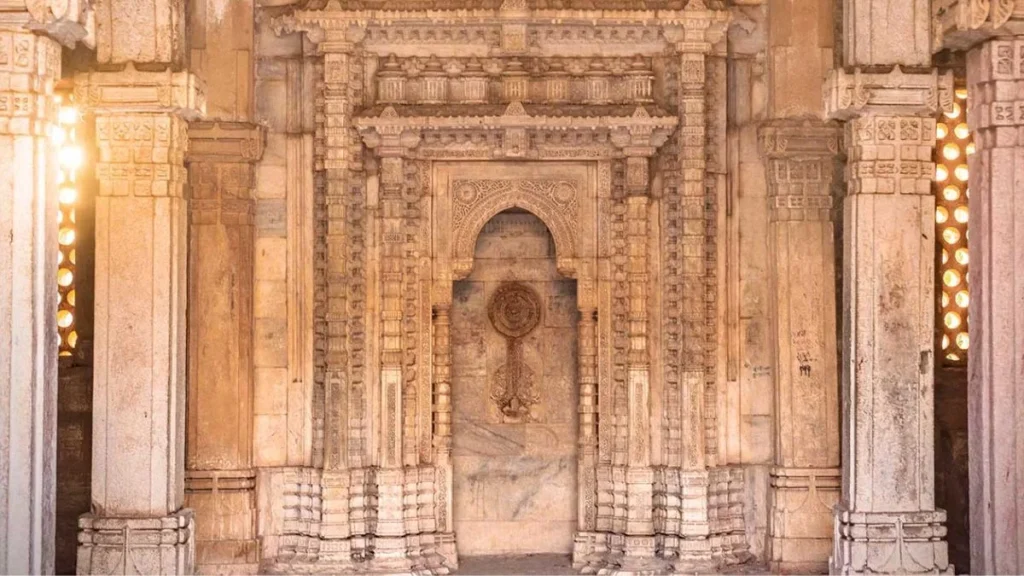
Built in the 15th–16th century, the Jama Masjid inside Uparkot is constructed partly from repurposed Hindu and Jain temple pillars you can still see the original carved columns and motifs from earlier structures. This architectural palimpsest tells the story of Junagadh’s shifting religious landscape across centuries.
6. The Tomb of Nuri Shah
Within the fort premises is a small but atmospheric dargah (shrine) dedicated to a local Sufi saint a quiet spot for reflection amid all the historical grandeur.
7. Cannons – Nilam and Kadanal
Two of the most celebrated exhibits at Uparkot are its ancient cannons: Nilam (the Blue One) and Kadanal (the Thunderer). These massive bronze cannons date from the 15th–16th centuries and are some of the finest examples of medieval artillery in Gujarat.
- Nilam: Said to have been cast in Egypt and brought to Junagadh
- Kadanal: Reportedly cast locally; known for its extraordinary girth
8. Fort Walls and Panoramic Views
Walk along the top of the fort’s outer walls for sweeping 360-degree views of Junagadh city, Girnar Hill rising dramatically in the distance, and the Saurashtra plains stretching to the horizon. At sunrise or sunset, this view is nothing short of spectacular.
Also Read : • Top Cafes in Rajkot for Every Mood
Architecture of Uparkot Fort
Uparkot is a textbook study in how a single site can carry the architectural DNA of multiple civilisations:
| Era / Layer | Period | Architectural Style |
| Earliest walls & foundations | Mauryan (4th–3rd c. BCE) | Cyclopean stone masonry |
| Buddhist caves | Gupta (3rd–5th c. CE) | Rock-cut, simple forms |
| Stepwells (Adi Kadi, Navghan) | Chudassama (9th–15th c.) | Rock-cut Indic, circular |
| Gateways & fortifications | Chudassama / Mughal era | Composite Indo-Islamic |
| Mosque & Islamic additions | Babi Nawabs (15th–18th c.) | Sultanate Indo-Saracenic |
The result is a fort that is simultaneously Mauryan, Buddhist, Hindu, and Islamic one of the most culturally layered heritage sites in India.
Best Time to Visit Uparkot Fort
| Season | Months | Experience |
| Winter ⭐ Best | November – February | Pleasant weather, clear skies, ideal for long walks |
| Post-Monsoon | October – November | Lush hillsides, dramatic light, fewer tourists |
| Summer | March – June | Very hot; visit at 7–9 AM only |
| Monsoon | July – September | Moody atmosphere; some paths slippery |
Best time of day: Early morning (7–9 AM) for golden light, cooler temperatures, and the fort nearly to yourself. Late afternoon (4–6 PM) for the best views of Girnar at sunset.
Best months overall: November to February the weather is perfect and the fort looks its most photogenic.
Uparkot Fort Timings and Entry Fee
Opening Hours: 7:00 AM – 6:00 PM (daily)
| Indian Nationals | ₹25 per person |
| Foreign Nationals | ₹300 per person |
| Children (under 15) | Free |
| Photography | Included — no extra charge |
| Guided Tour (optional) | ₹200–400 at the gate |
Tip: A guided tour is well worth the cost many of the fort’s details, stories, and inscriptions are invisible without context.
How to Reach Uparkot Fort, Junagadh
Uparkot Fort is located in the centre of Junagadh city it’s hard to miss once you’re in town.
From Junagadh Railway Station
- Distance: ~2 km
- By auto-rickshaw: ₹40–60 (about 10 minutes)
- By cab: ₹80–120
From Ahmedabad
- Distance: ~327 km (NH 947 / 27)
- By road: ~5–5.5 hours
- By train: ~6–7 hours (Gujarat Railway)
- By GSRTC bus: ~6 hours; buses depart frequently
From Rajkot
- Distance: ~102 km – approx. 2 hours by road
- By train: ~2.5–3 hours via Rajkot–Junagadh rail line
- Perfect for a comfortable day trip from Rajkot
From Sasan Gir (Gir National Park)
- Distance: ~65 km – approx. 1.5 hours by road
- Uparkot makes a natural Day 2 addition to a Gir wildlife trip
What to Do Near Uparkot Fort
Junagadh is a compact and deeply rewarding destination. Combine your Uparkot visit with:
1. Mahabat Maqbara (1 km away)
One of India’s most extraordinary mausoleums – a jaw-dropping fusion of European, Islamic, and Gujarati Gothic architecture. Built for the Nawabs of Junagadh, it is often described as one of the most ornate buildings in Gujarat. Absolutely unmissable.
2. Girnar Hill (5 km from fort)
A sacred pilgrimage site for both Hindus and Jains, Girnar is a mountain with 9,999+ steps leading to ancient temples at its summit. The trek takes 3–4 hours each way. A ropeway is also available. The views from the top are extraordinary.
3. Junagadh Zoo – Sakkarbaug (2 km)
One of Gujarat’s most celebrated zoos, famous for housing the Asiatic lion found only in the Saurashtra region. A great add-on, especially for families.
4. Ashoka Rock Edicts (Girnar Base)
At the base of Girnar hill stands a large boulder bearing inscriptions of Emperor Ashoka (3rd century BCE) among the most important historical records in India. Free to visit and profoundly moving.
5. Damodar Kund
A sacred stepped tank used for Hindu religious rituals near the base of Girnar. Atmospheric at dawn when pilgrims bathe and priests perform aarti.
Also Read : Adi Kadi Vav, Junagadh
Junagadh Street Food & Where to Eat
- Kesar Mango: Junagadh sits in the heart of Gir Kesar country. Visit April–June for the best kesar mango you’ll ever taste.
- Sev Khamani & Farsan: Classic Gujarati evening snacks at street stalls near the fort area
- Bhavnagari Gathiya: Crispy, spicy, dangerously addictive available at roadside stalls
- Junagadhi Chai: The local chai stalls near Chowk Bazar are perfect for a post-fort break
Visitor Tips & Practical Information
Do’s
- Wear sturdy shoes – stepwell descents and fort paths involve many steps and uneven stone
- Carry water and a light snack – no food stalls inside the fort
- Hire a local guide at the entrance – the stories they share bring the ruins to life
- Carry a torch or use your phone light for the stepwells
- Start with Navghan Kuvo – it’s the more dramatic stepwell and sets the mood perfectly
Don’ts
- Attempt the stepwells if you have vertigo or knee issues – descents are steep
- Visit in peak summer afternoon – exposed stone surfaces get extremely hot
- Skip the cannons – Nilam and Kadanal are a highlight most first-timers overlook
- Litter – ASI maintains this site carefully; please respect it
- Ideal Visit Duration: 2.5 to 3.5 hours (including both stepwells, caves, mosque, and walls)
- Family-Friendly: Yes – but supervise children closely near the stepwells
- Senior-Friendly: Main fort surface is walkable; stepwell descents may not suit limited mobility
Frequently Asked Questions (FAQs)
Entry to Uparkot Fort is ₹25 for Indian nationals and ₹300 for foreign nationals. Children under 15 enter free. The ticket covers access to the entire fort complex, including both the Adi Kadi Vav and Navghan Kuvo stepwells. Photography is permitted at no extra cost.
Uparkot Fort is over 2,300 years old. Its earliest construction is attributed to the Mauryan emperor Chandragupta Maurya in the 4th century BCE. The fort was expanded, abandoned, rediscovered, and rebuilt multiple times, giving it one of the most layered histories of any fort in India.
The top highlights are the Navghan Kuvo (circular stepwell), Adi Kadi Vav (rock-cut stepwell), the Khapra Kodiya Buddhist Caves, the ancient cannons Nilam and Kadanal, the Jama Masjid built from repurposed temple columns, and panoramic views of Girnar Hill from the fort walls. Budget at least 2.5–3 hours.
Yes, absolutely. Rajkot is approximately 102 km from Junagadh about a 2-hour drive. A day trip can comfortably include Uparkot Fort (3 hours), Mahabat Maqbara (30 minutes), Ashoka Rock Edicts (30 minutes), and a meal of local Junagadhi street food. Start early by 7 AM and you’ll be back in Rajkot by evening.
Yes, both Adi Kadi Vav and Navghan Kuvo are safe and maintained by the ASI. However, the staircases are steep and the lower levels can be slippery. Wear closed-toe shoes with grip, carry a torch, and descend carefully. Those with knee problems, vertigo, or mobility issues should admire them from the top.
Yes – and it’s highly recommended. Junagadh is only about 65 km from Sasan Gir. Plan a 2-day Saurashtra itinerary: Day 1 at Gir for a lion safari, Day 2 in Junagadh covering Uparkot Fort, Girnar, and Mahabat Maqbara. This combination delivers wildlife, heritage, and history in one perfect trip.
Without question. Uparkot Fort is the single best starting point for exploring Junagadh. Its mix of ancient history, dramatic architecture, stepwells, and panoramic views makes it accessible and deeply rewarding for all kinds of travellers – whether you’re a history buff, architecture lover, photographer, or simply a curious explorer.
Final Thoughts
Uparkot Fort is not just a monument it’s a conversation between civilisations. Every stone, every stepwell, every carved column carries the imprint of a different era and a different people. Standing at the fort’s edge and looking out at Girnar Hill, you understand why rulers across two millennia fought to hold this ground. Junagadh deserves far more tourist attention than it gets, and Uparkot Fort is the reason to come. Visit once, and you’ll understand why Gujarat’s history is far older, and far more magnificent, than most people realise.
