Tucked away in the old city’s Jamalpur neighbourhood, the Jagannath Temple is one of Ahmedabad’s most significant spiritual landmarks and the starting point of Gujarat’s biggest public festival, the annual Rath Yatra. Founded over 400 years ago and dedicated to Lord Jagannath, his brother Balabhadra, and sister Subhadra, this temple draws devotees year-round and lakhs of visitors during the chariot festival each summer. This guide covers the temple’s history, darshan timings, the Rath Yatra tradition, and everything you need to plan your visit.
A Brief History of Jagannath Temple
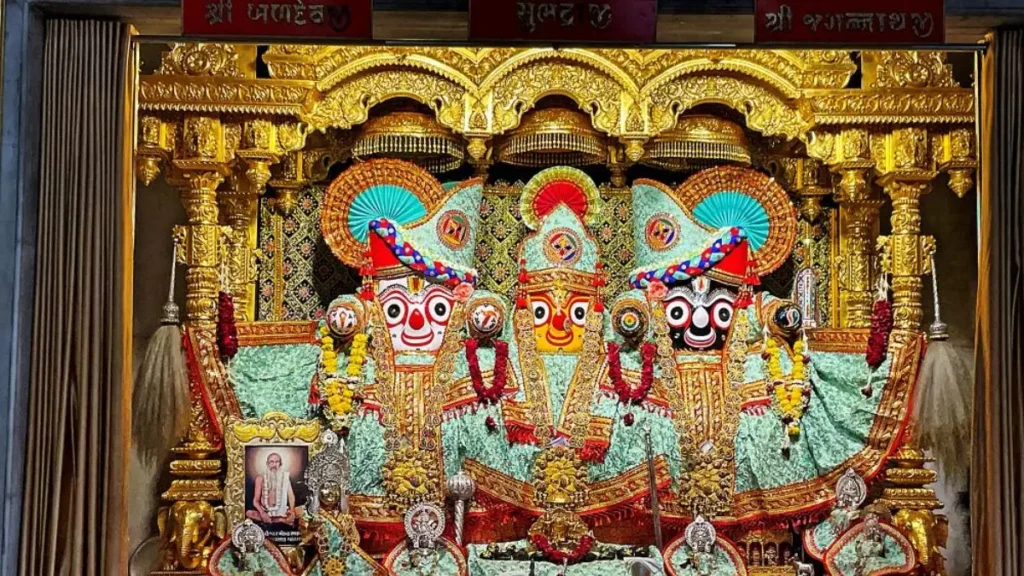
The temple’s origins go back roughly 450 years, when a wandering ascetic named Shri Hanuman Dasji, a devotee of Ram Bhakt Hanuman, arrived at what was then a quiet forested spot on the edge of the city and installed an idol there to pray. His successor, Shri Sarangdasji, was a devoted follower of Lord Jagannath. During a visit to the original Jagannath Temple in Puri, he felt inspired to install idols of Jagannath, Baldevji, and Subhadraji at the same site and that’s how it became Ahmedabad’s Jagannath Mandir.
Between 1996 and 2000, the temple complex underwent a major renovation, with the deities ceremonially reinstalled on a raised platform called the Ratna Vedi, and a large auditorium added for devotees to gather for bhajans and religious events.
Also Read : Manek Chowk Night Market, Ahmedabad
The Ahmedabad Rath Yatra
The temple is best known for organising the Rath Yatra, or chariot festival, every year on Ashadha Shukla Beej the same day as the more famous Rath Yatra in Puri. The tradition began in 1878, inspired by a dream that a saintly figure named Narsinhdasji Maharaj reportedly had of Lord Jagannath himself.
Today, it’s considered the third-largest Rath Yatra in India, after Puri and Kolkata, and is celebrated as a Lokotsav (public festival) across Gujarat. A few traditions make it distinct:
- Mangla Aarti is performed in the early hours, traditionally by a senior dignitary, before the procession begins
- The Gujarat Chief Minister performs the Pahind Vidhi ceremonially sweeping the road with a golden broom ahead of the chariots, a role usually reserved for royalty in Puri’s version of the festival
- Elephants lead the procession, getting the first glimpse of the deities as per tradition
- The chariots built from coconut wood by the Khalas community of Bharuch, who also serve as traditional chariot pullers cover roughly 14-16 km through Ahmedabad’s old city
- The yatra halts at Saraspur, where local residents serve a community feast called Maha Bhoj to the entire procession, before the chariots return to the temple by evening
If you’re visiting specifically for the festival, expect heavy crowds, road closures across the old city, and tight security plan your day around the procession route rather than against it.
Darshan Timings
- Morning: 4:30 AM – 1:00 PM
- Evening: 3:00 PM – 9:00 PM
- Note: The temple observes a midday closure between 1:00 PM and 3:00 PM, so plan your visit outside this window
- Darshan is generally free; if you’re visiting during Rath Yatra, arrive well before sunrise if you want to witness the Mangla Aarti and the start of the procession
Best Time to Visit
For a peaceful darshan, early mornings on a regular weekday are your best bet, before the temple gets busy with local devotees. If you specifically want to experience the spectacle of the Rath Yatra, plan your trip around late June or early July, when the festival is typically held (the exact date follows the Hindu calendar and shifts slightly each year). Outside festival season, the temple and its surrounding Jamalpur neighbourhood are calm enough to explore comfortably any time of year.
Also Read : Science City Ahmedabad
How to Reach Jagannath Temple
By Train: Kalupur (Ahmedabad Junction) is the nearest major railway station, just a short auto or cab ride from the temple in Jamalpur.
By Road: The temple is centrally located in the old city and easily reached by auto-rickshaw, taxi, or local bus from anywhere in Ahmedabad.
By Air: Sardar Vallabhbhai Patel International Airport is around 10–12 km away, roughly a 30–40 minute drive depending on traffic.
Who Should Visit
- Devotees and pilgrims – a significant Vaishnav shrine with a centuries-old lineage
- Culture and festival enthusiasts – witnessing the Rath Yatra here is a genuinely unique experience if your travel dates line up with it
- History lovers exploring old Ahmedabad – the temple sits within the city’s historic Jamalpur – Kalupur pol (neighbourhood) cluster, worth combining with a broader old-city walk
- Families – a calm, welcoming temple outside festival days, suitable for visitors of all ages
Where to Eat Near Jagannath Temple
Jamalpur and the surrounding old city are within easy reach of Ahmedabad’s most iconic food streets. After darshan, head toward the Law Garden and Manek Chowk areas for classic Gujarati bites, or explore the old city’s famous night food scene. For a full rundown of what to eat across the city, check out our guides to famous foods in Ahmedabad and best street food in Ahmedabad.
Other Places to Visit Nearby
- Kalupur Swaminarayan Temple – one of Ahmedabad’s oldest Swaminarayan temples, a short drive away
- Bhadra Fort and Teen Darwaza – historic Ahmedabad landmarks in the old city
- Manek Chowk – famous jewellery market by day, buzzing street-food hub by night
Also Read : Atal Bridge Ahmedabad
Frequently Asked Questions (FAQs)
The temple is open from 4:30 AM to 1:00 PM and again from 3:00 PM to 9:00 PM daily. It’s best to plan your visit outside the midday closure window between 1:00 PM and 3:00 PM.
It’s celebrated annually on Ashadha Shukla Beej, which falls in late June or early July depending on the Hindu calendar. The exact date changes slightly each year, so it’s worth checking closer to your travel dates.
The temple is believed to be around 400 to 450 years old, founded by the ascetic Shri Hanuman Dasji and later dedicated to Lord Jagannath by his successor, Shri Sarangdasji, after a visit to Puri.
This ritual, called the Pahind Vidhi, symbolically clears the path for Lord Jagannath’s chariot. In Ahmedabad, it’s traditionally performed by the sitting Chief Minister, unlike in Puri, where it’s typically done by descendants of the former royal family.
Yes, darshan at the temple is free for all visitors throughout the year, including during the Rath Yatra festival.
The temple is close to Kalupur railway station, just a short ride away, and about 10–12 km from Sardar Vallabhbhai Patel International Airport, roughly 30–40 minutes by road.
Final Thoughts
Whether you visit for a quiet morning darshan or time your trip around the roar of the Rath Yatra, Jagannath Temple offers a genuine window into Ahmedabad’s living religious traditions. It’s an easy, meaningful stop for anyone exploring the old city. Planning your Ahmedabad trip? Roach the road less traveled with us drop your questions in the comments and we’ll help you plan the rest of your visit!
