Inside a 17th-century Mughal palace in Ahmedabad’s Shahibaug neighbourhood, the Sardar Vallabhbhai Patel National Memorial tells the story of the man often called the “Iron Man of India” the leader credited with unifying over 500 princely states into a single nation after independence. Housed in the historic Moti Shahi Mahal, the memorial combines Mughal-era architecture, interactive multimedia exhibits, and a genuinely reflective atmosphere. This guide covers the memorial’s history, what to see, timings, entry fees, and how to plan your visit.
A Brief History of Moti Shahi Mahal
The building itself predates the memorial by several centuries. Builders constructed Moti Shahi Mahal between 1618 and 1622 for Mughal Crown Prince Khurram, who served as the Governor of Gujarat at the time. Khurram later became Emperor Shah Jahan, the visionary behind the Taj Mahal. During the British era, colonial authorities converted the palace into a cantonment residence for senior officials.
In 1878, a 17-year-old Rabindranath Tagore stayed at the palace. Historians believe this visit inspired his famous short story, The Hungry Stones.
From 1960 to 1978, the building served as Raj Bhavan, the official residence of the Governor of Gujarat. It was later transformed into the Sardar Vallabhbhai Patel National Memorial.
The memorial was established under the leadership of then Gujarat Chief Minister Babubhai Jasbhai Patel. In 2013, the memorial underwent a major renovation. The project introduced interactive multimedia exhibits and modern visitor facilities.
Dinsha Patel and the Sardar Vallabhbhai Patel Memorial Society led the renovation. The upgraded memorial was inaugurated in the presence of distinguished guests, including Dr. Manmohan Singh and Narendra Modi.
What to See at the Memorial
Life-Size Statues and the “Three Barristers”
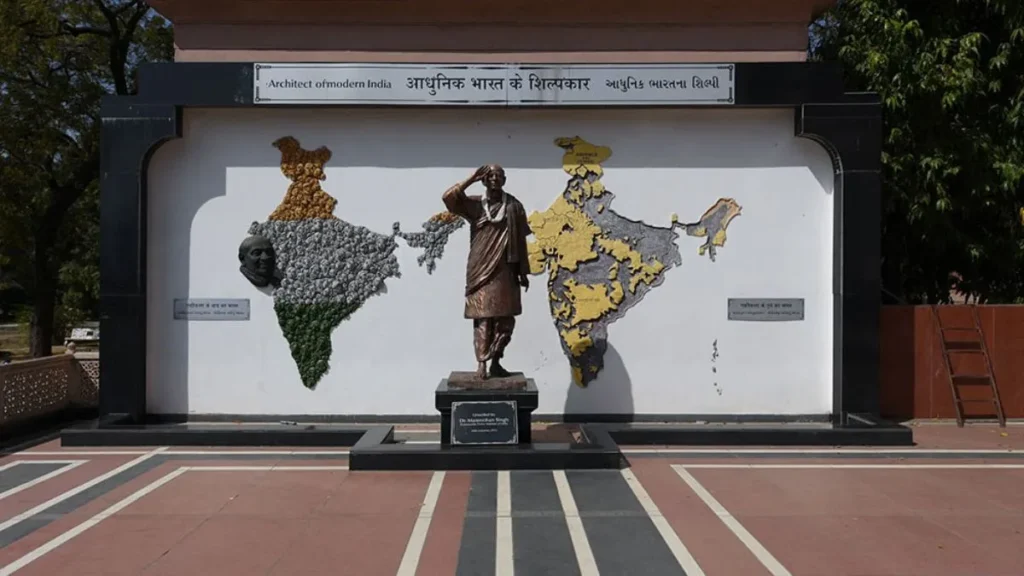
Outside the building stands a life-size statue of Sardar Patel in a saluting pose, captioned “The Architect of Modern India.” Inside the grounds, a striking statue depicts Patel seated in conversation with Mahatma Gandhi and Jawaharlal Nehru, known as “The Three Barristers Who Fought for India.”
Interactive Multimedia Halls
Two multimedia halls use experiential, interactive displays to walk visitors through Patel’s life and the broader Indian independence movement from the Vedic period through Mughal rule, British suppression, and the eventual freedom struggle.
Rabindranath Tagore Room
On the first floor of the right wing, a dedicated room honours Rabindranath Tagore’s connection to the building, with portraits, photographs, statues, and preserved paintings from his time here.
Historical Artefacts and Photographs
The memorial displays photographs from various stages of Patel’s life, alongside artefacts including a replica of the Indian National Flag as designed by the Indian National Congress in 1930.
3D and Laser Shows
The memorial runs 3D shows (typically 7:00 PM to 7:45 PM on Saturdays and Sundays) as well as laser light shows on the premises a popular add-on for evening visitors, ticketed separately from general museum entry.
Timings and Entry Fee
- Timings: Generally listed as 9:00 AM to 6:00 PM (some sources cite 9:30 AM to 5:00 PM), open Tuesday to Sunday
- Weekly closure: Closed every Monday
- Museum entry fee: Approximately ₹20 for adults and ₹10 for children/students (a few sources list free admission, so it’s worth confirming current pricing at the counter)
- 3D show: Separately ticketed at roughly ₹30 for adults and ₹10 for children, typically shown weekend evenings
- Photography: Generally permitted without flash throughout the memorial
- Time needed: Budget 1–2 hours to see the galleries and grounds thoroughly
Best Time to Visit
November to February offers Ahmedabad’s most pleasant weather. Therefore, it is the ideal time to explore the memorial and its landscaped gardens. However, the monsoon season (July to October) also provides an enjoyable experience because most exhibits remain indoors. Additionally, the surrounding gardens become lush and vibrant after the rains. Finally, if you prefer a quieter visit, plan your trip on a weekday morning or afternoon, as these hours are usually less crowded than weekends.
How to Reach Sardar Vallabhbhai Patel National Memorial
By Metro: Usmanpura Metro Station is the nearest, about 1.5 km away, followed by a short auto ride or walk.
By Train: Ahmedabad (Kalupur) Railway Station is roughly 6 km away, about a ₹80–100 auto ride.
By Road: AMTS bus routes 42, 46, and 52 connect to Shahibaug; taxis and auto-rickshaws are also readily available. Parking is available on the memorial premises.
By Air: Sardar Vallabhbhai Patel International Airport is about 9 km away, roughly a ₹200–300 taxi ride.
Who Should Visit
- History and independence-movement enthusiasts – a detailed, well-curated look at Patel’s role in unifying modern India
- Architecture lovers – the Mughal-era Moti Shahi Mahal building is itself a significant heritage structure
- Students and school groups – regularly used for educational tours by schools across Ahmedabad
- Families looking for a reflective, indoor-friendly stop – a calm alternative to Ahmedabad’s busier attractions
Where to Eat Near the Memorial
The memorial premises include food courts and small eateries on-site. For a fuller meal, Ahmedabad’s old city and its famous food streets are a short drive away. Check out our guides to famous foods in Ahmedabad and best street food in Ahmedabad for more options.
Other Places to Visit Nearby
- Sabarmati Ashram – Mahatma Gandhi’s former residence and one of India’s most important freedom movement landmarks, perfect to combine with this memorial on the same day.
- Kankaria Lake – A popular family-friendly lakefront featuring boating, toy train rides, a zoo, and evening attractions.
- Jagannath Temple – One of Ahmedabad’s most revered temples, famous for its annual Rath Yatra festival.
- Manek Chowk – A bustling heritage market that transforms into one of Ahmedabad’s most famous late-night street food destinations.
- Science City Ahmedabad – A modern educational and entertainment hub featuring an aquarium, robotics gallery, IMAX theatre, nature park, and interactive science exhibits for visitors of all ages.
Frequently Asked Questions (FAQs)
Museum entry is generally around ₹20 for adults and ₹10 for children or students, though a few sources note free admission, so it’s worth confirming current pricing on-site. The 3D show is ticketed separately at roughly ₹30 for adults.
Most sources list hours as 9:00 AM to 6:00 PM, Tuesday to Sunday, with a few citing 9:30 AM to 5:00 PM instead. The memorial is closed every Monday.
The memorial is housed inside Moti Shahi Mahal, a Mughal-era palace built between 1618 and 1622 for Prince Khurram (later Emperor Shah Jahan) during his time as Governor of Gujarat.
A 17-year-old Rabindranath Tagore stayed at the palace in 1878, an experience believed to have inspired his short story “The Hungry Stones.” A dedicated room inside the memorial honours this connection.
Around 1 to 2 hours is generally enough to see the museum galleries and grounds thoroughly, though history enthusiasts may want to spend longer.
Both sites played a significant role in India’s independence movement, and visitors often explore them together as part of a full day discovering Ahmedabad’s freedom-struggle heritage.
Final Thoughts
The Sardar Vallabhbhai Patel National Memorial offers a thoughtful look at one of India’s most influential leaders. The museum is housed inside a historic palace with a fascinating past. Its history spans the Mughal era, British rule, and even a stay by a Nobel laureate. It is a meaningful stop for anyone exploring Ahmedabad’s heritage attractions.
Planning your Ahmedabad trip? Roach the road less traveled with us. Drop your questions in the comments, and we’ll help you plan the rest of your visit.
