At the crossroads of Gujarat and Rajasthan, where the Aravalli hills descend toward the Meshwo River in a valley of unusual beauty, there stands a temple that has been drawing pilgrims for at least a thousand years. Shamlaji Temple dedicated to Lord Vishnu in his form as Gadadhara Shamlaji is one of the three most important Vishnu temples in Gujarat, one of the 154 most significant Vaishnava pilgrimage sites in all of India, and is reverently called ‘Dakshin Dwarka’ the Southern Dwarka.
The temple’s history is deep and layered. The present structure was built in the 11th century in the magnificent Solanki (Maru-Gurjara) architectural style. The idol enshrined within it has a history that runs further still hidden in a pond during Muslim invasions, recovered by an Adivasi farmer who found it while ploughing, worshipped with a single lamp, and eventually reinstalled with royal patronage. The Kartik Purnima Melo that draws tens of thousands to Shamlaji every November is one of North Gujarat’s most attended religious fairs.
This TravelRoach guide covers the full story of Shamlaji Temple the mythology, the architectural grandeur, the sacred idol, the legends of the temple’s origin, the Kartik Purnima Mela, the remarkable Buddhist archaeological site of Dev ni Mori just 2 km away, darshan timings, how to reach, and all the nearby pilgrimage and heritage sites that make an Aravalli district visit genuinely rewarding.
Shamlaji Temple – Quick Information
| Detail | Information |
| Full Name | Shri Shamlaji Vishnu Mandir / Shamlaji no Medo |
| Also Known As | Dakshin Dwarka (Southern Dwarka); Dholi Dhajawala (Bearer of the White Flag) |
| Location | Shamlaji village, Aravalli district, North Gujarat on the banks of Meshwo River |
| Deity | Lord Vishnu as ‘Shamlaji’ (Gadadhara / Sakshi Gopal) Trivikrama form |
| Idol Description | Black stone idol; four arms holding Gada (mace), Chakra (discus), Padma (lotus), Shankha (conch); right hand now holds a golden flute (Krishnaized) |
| Significance | One of Gujarat’s three most important Vishnu temples; one of India’s 154 major Vaishnava pilgrimage sites |
| Temple Built | 11th century Solanki / Chalukya period |
| Architectural Style | Maru-Gurjara (Solanki) style Nagara architecture |
| Material | White sandstone and brick; two storeys supported on rows of pillars |
| Sacred River | Meshwo River flows below the temple in a scenic valley |
| Darshan Timings (Morning) | 6:00 AM – 12:30 PM |
| Darshan Timings (Evening) | 4:00 PM – 8:30 PM |
| Entry Fee | Free – no entry fee for darshan |
| Main Festival | Kartik Purnima Melo – full moon of Kartik month (October–November) |
| Other Festivals | Navratri, Janmashtami, Dev Diwali |
| Archaeological Site Nearby | Dev ni Mori (Buddhist stupa) ~2 km from temple |
| Distance from Ahmedabad | ~130 km (~2.5 hours by road) |
| Distance from Gandhinagar | ~145 km (~2.5 hours) |
| Distance from Idar Fort | ~47 km (~1 hour) |
| Distance from Polo Forest | ~50 km (~1 hour) |
| Nearest Railway Station | Shamlaji Road Station (~13 km) |
| Nearest Airport | SVP International Airport, Ahmedabad (~130 km) |
About Shamlaji – Dakshin Dwarka and the Aravalli Setting
Why Shamlaji is Called Dakshin Dwarka
Dwarka – on Gujarat’s Saurashtra coast is one of the four Char Dham pilgrimage sites in Hinduism and the most sacred city associated with Lord Krishna. To be called ‘Dakshin Dwarka’ the Dwarka of the South is a title that places Shamlaji in extraordinary spiritual company. This designation reflects the depth of devotion that Shamlaji commands among Vaishnavites of Gujarat and Rajasthan, and the belief that a pilgrimage to Shamlaji carries a merit comparable to that of Dwarka itself.
The comparison is not merely about geography. Shamlaji’s deity Gadadhara Vishnu, also worshipped as Sakshi Gopal is understood in the Vaishnava tradition as a form that encompasses both Vishnu’s cosmic power and Krishna’s intimate, pastoral divinity. The temple’s unique incorporation of cow idols alongside the principal deity depicting Krishna’s childhood as a cowherd strengthens the Krishna connection that earns Shamlaji its Dwarka parallel.
The Meshwo River and the Setting
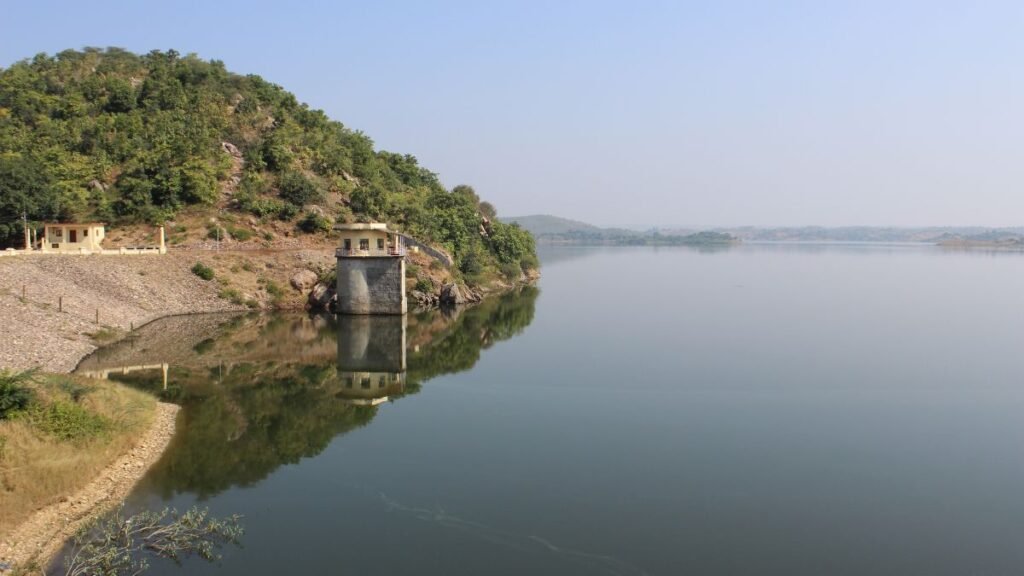
The setting of Shamlaji Temple is one of its most distinctive features and one that the temple’s founders clearly understood when they chose this location. The temple stands on the banks of the Meshwo River (also spelled Meshvo), in a valley where the river meanders over its rocky bed through densely forested Aravalli hills. A natural lake sparkles in the hills around the river. The combination of the sacred temple, the river, the hills, and the forest creates a landscape that has the quality of a natural mandala everything arranged around a sacred centre.
The location at the Gujarat-Rajasthan crossroads has historically made Shamlaji a cultural meeting point for pilgrims, merchants, and rulers from both states. The carvings on the outer walls of the temple reflect this dual cultural context scenes from Gujarati and Mewar-Rajasthan life are depicted alongside the mythological narratives of the Ramayana and Mahabharata. The temple has absorbed and reflects the shared heritage of both states.
Also Read: Suvali Beach, Surat
The History of Shamlaji Temple – From Ancient Times to Today
Ancient Origins – Before the Present Temple
The site at Shamlaji carries evidence of human activity stretching back far before the present temple was built. Archaeological excavations near the site have revealed a microlith settlement known locally as Dhek-Vadlo stone tool remains suggesting habitation from ancient times. The Buddhist stupa of Dev ni Mori, just 2 km away, dates to the Mauryan period establishing that this stretch of the Meshwo River valley was a place of cultural and religious significance from at least the 3rd century BCE.
Multiple ruins of temples, scattered idols, and ancient brick-works surrounding the current temple site establish the antiquity of the location as a religious centre. The present temple is simply the most recent and most complete expression of a sacred geography that has been active for over two millennia.
The Solanki Construction – 11th Century
The present Shamlaji temple was built in the 11th century during the reign of the Solanki (Chalukya) dynasty of Gujarat the same period and the same architectural tradition that produced the Modhera Sun Temple and the elaborate stepwells of the region. The Solanki period was one of the golden ages of Gujarati art and architecture, characterised by intricate stone carving, sophisticated spatial planning, and the integration of mythological narrative into architectural ornament.
The Shamlaji temple in its Solanki form was a two-storey structure built of white sandstone and brick, supported on rows of pillars, and profusely carved with religious imagery. The outer walls bore scenes from the Ramayana and Mahabharata, carvings of Vishnu and Lakshmi-Narayana, and scenes from the Bhagavata Purana an entire visual theology rendered in stone. The Maru-Gurjara architectural style the fusion of Rajasthani and Gujarati temple-building traditions is clearly expressed in the building’s proportions, its carved shikhara (spire), and the density of its ornamental programme.
Muslim Invasions and the Hidden Idol
After the decline of the Solanki dynasty, the Shamlaji region passed through periods of political uncertainty. During the 14th century, as Muslim rulers of Delhi extended their reach into Gujarat, temples across the region faced destruction and damage. The idol of Shamlaji the sacred black stone image of Gadadhara Vishnu was at risk. According to historical and devotional tradition, the Vaishnavite custodians of the temple concealed the principal idol in a pond called the Karambuj Kund to protect it from desecration. They then migrated, leaving the land largely to the local Adivasi farming communities.
The Adivasi’s Discovery and the Idol’s Return
One of the most moving episodes in Shamlaji’s history involves not a king, a priest, or a saint but an unnamed Adivasi farmer. Over time, as the location of the hidden idol faded from living memory, a tribal man ploughing his fields came across the idol in the earth. Recognising its sacred character, he began worshipping it in the simple way he knew by lighting a lamp each day. His faith and devotion, offered without elaborate ritual or institutional backing, was rewarded: the tradition holds that his fields yielded abundantly.
When the Vaishnavas eventually returned and heard of the idol’s recovery, they resumed formal worship. The idol was subsequently reinstalled in the temple during the period of the Idar State’s patronage. Guru Vallabhacharya the founder of the Pushtimarg Vaishnava tradition visited Shamlaji in 1565 CE and formally rejuvenated the pilgrimage, placing it firmly within the Vaishnava network of sacred sites. Around 1860 CE, the King of Idar installed the idol in the temple in its current form and position.
The Three Origin Legends of Shamlaji
Like many of India’s most ancient sacred sites, Shamlaji’s origin is explained through multiple mythological narratives that have been told and retold across generations. Three distinct legends explain how this particular spot became sacred:
Legend 1 – Brahma’s Pilgrimage and the Divine Manifestation
In the first legend, Lord Brahma the creator of the universe set out on a great journey to find the most sacred tirtha (holy site) on earth. He travelled across the subcontinent, visiting rivers, mountains, and holy places. When he reached Shamlaji on the banks of the Meshwo River, he found it so beautiful and so charged with divine presence that he stopped. He performed penance here for one thousand years.
Lord Shiva, pleased with Brahma’s devotion, appeared before him and asked him to perform a yajna (ritual fire sacrifice). At the very beginning of the yajna at the moment when the fire was lit and the sacred offerings began Lord Vishnu manifested himself in the form of Shamlaji and became enshrined at this spot. The place where a thousand years of penance culminated in a divine manifestation was thereby established as a site of permanent sacred power.
Legend 2 – Vishwakarma’s Temple Built in One Night
The second legend explains the temple’s architectural achievement through divine agency. Vishwakarma – the divine architect and craftsman of the gods, builder of Lanka and Dwarka in the sacred narratives undertook to construct a temple at Shamlaji in a single night. His workmanship was so fast and so extraordinary that the entire structure was completed before dawn.
But as the night ended and morning light began to show in the east, Vishwakarma realised he could not take the temple back with him to the divine realm his commission was complete but morning had come. He had to leave the temple exactly as it stood, at the spot where he had built it, and return to the gods without it. The temple remained. This legend reflects the belief common to several extraordinary temple sites in India that the building is not the work of human hands but of divine craft.
Legend 3 – The Adivasi Farmer and the Lamp
The third legend is the most intimate and in many ways the most powerful. An Adivasi farmer a simple tribal cultivator going about his daily agricultural work was ploughing his land when his plough struck something hard in the soil. He uncovered the idol of Shamlaji the divine image that had been hidden here long ago. He did not know the elaborate rituals of Vaishnava worship. He did not have priests or scholars or temple managers around him. He had only himself, his faith, and his lamp. He began worshipping the idol the only way he could: by lighting a lamp before it every day and offering his honest devotion.
The divine responded. His fields yielded abundantly. His simple, unadorned, daily act of lighting a lamp before a mud-covered idol in his field was accepted as genuine worship. This legend carries a profound theological message about the nature of devotion in the Vaishnava tradition that it is the quality and sincerity of the offering, not its institutional correctness, that the divine recognises.
The Temple – Architecture and What to See
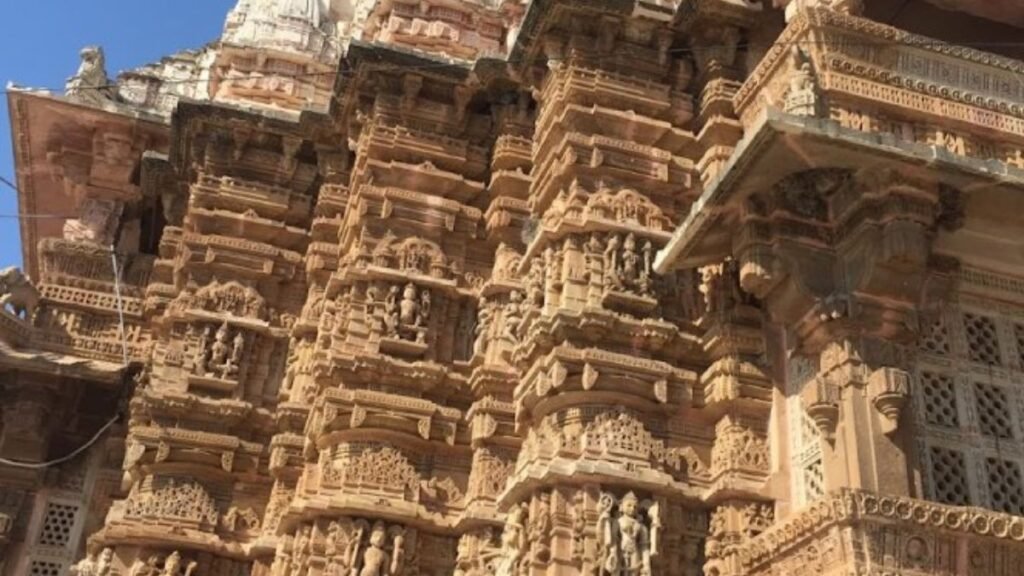
The Exterior – Solanki Carving at Its Finest
The exterior walls of Shamlaji Temple are one of the most remarkable surfaces of 11th-century carved stonework in North Gujarat. Four layers of decorative belts circle the outer wall each belt carrying different imagery:
- First layer: Lion ornaments with lion’s mouth motifs – protective and royal symbolism
- Second layer: Elephant skin carvings referencing Vishnu’s cosmic mythology (Gajendra Moksha the salvation of the elephant) mentioned in both the Mahabharata and Ramayana
- Third layer: Scenes from the life of the people of Gujarat and Mewar-Rajasthan a rare secular narrative element woven into the sacred architectural programme
- Fourth layer: Episodes from the Ramayana and Mahabharata the great epic narratives that define Hindu cultural consciousness
The outer walls also carry carved images of Lord Vishnu, Lakshmi-Narayana, and scenes from the Bhagavata Purana. The base of the Garuda image (the divine eagle vehicle of Vishnu) bears an important inscription. The white silk flag (dhvaja) that flies from the temple’s summit is visible from a considerable distance it is the reason Shamlaji is also called Dholi Dhajawala (Bearer of the White Flag).
The Sanctum – Gadadhara Vishnu
At the heart of the temple, in the inner sanctum (garbhagriha), stands the principal idol: the black stone image of Lord Vishnu in the Trivikrama form the cosmic form in which Vishnu strode across the three worlds in three steps to reclaim the universe from the demon Bali. The idol stands with four arms holding the four divine attributes: Gada (mace), Chakra (discus), Padma (lotus flower), and Shankha (conch shell).
The mace the Gada is unusually large in this representation, which is why the deity is specifically called Gadadhara (bearer of the mace). In recent centuries, the temple’s tradition has incorporated a Krishnaization of the idol: the right hand now holds a small golden flute, connecting the Vishnu form to Krishna’s pastoral identity as the divine musician of Vrindavan. This blending of Vishnu’s cosmic power with Krishna’s intimate, musical grace is one of the theologically distinctive features of Shamlaji worship.
Uniquely among Vishnu temples, Shamlaji’s sanctum also worships cow idols alongside the principal deity depicting Krishna’s childhood as a cowherd (Govinda) among the cows of Vrindavan. This is one of the very few Vishnu temples in India where this aspect of Krishna’s earthly manifestation is formally incorporated into the ritual worship space.
The Sacred Pond – Shamlaji Kund
Adjacent to the temple is the Shamlaji Kund the sacred pond used by devotees for ritual purification before entering the sanctum. Bathing in or touching the waters of the Kund is considered a purifying act before darshan. The pond also carries historical significance as the body of water associated with the tradition of hidden and recovered idols across the site’s complex history.
The Meshwo River Ghat
The river Meshwo flows just below the temple complex in its rocky valley, and a ghat (stepped bathing area on the riverbank) allows pilgrims to take a sacred bath in the river before the temple visit. This riverside setting the temple above, the river below, the Aravalli hills surrounding both is one of the most visually beautiful pilgrimage environments in North Gujarat.
The Kartik Purnima Melo – Shamlaji’s Biggest Festival
The most important annual event at Shamlaji is the Kartik Purnima Melo the fair held on the full moon day of the Hindu month of Kartik, which falls in October or November of the Gregorian calendar. This is the main annual festival specifically associated with Shamlaji Temple and draws tens of thousands of pilgrims from across Gujarat, Rajasthan, and neighbouring states.
The Kartik Purnima is a day of particular auspiciousness in Vaishnava tradition it is Dev Diwali, the Diwali of the gods, when the devas (divine beings) are believed to light lamps to celebrate the defeat of the demon Tripurasura by Lord Shiva. For Vaishnavites, it is also an auspicious time for bathing in sacred rivers and pilgrimage to major shrines. At Shamlaji, the combination of the full moon, the river, and the sacred shrine creates an atmosphere of extraordinary devotional power.
The fair itself is a complete festival event commercial stalls selling agricultural goods, handicrafts, and food; cultural performances; devotional music; and continuous queues of pilgrims entering the temple for darshan through the night of the full moon. The Meshwo River is lit with diyas (oil lamps) floated on the water. The temple complex is illuminated. The atmosphere of a major Hindu mela the energy, the devotion, the commerce, the community is fully present and genuinely moving.
If you are planning a visit to Shamlaji, timing it for the Kartik Purnima Melo is the most complete way to experience the tirth at its most alive. Book accommodation in Himmatnagar (~45 km) or Modasa (~50 km) well in advance the Shamlaji area itself has limited accommodation options and they fill up completely during the mela.
Dev ni Mori – The Buddhist Stupa 2 km Away
Two kilometres from Shamlaji Temple lies one of Gujarat’s most significant archaeological discoveries: Dev ni Mori the remains of a Buddhist stupa and monastery that dates to the Mauryan period and beyond. This site adds an extraordinary historical dimension to any Shamlaji visit.
Dev ni Mori was excavated by archaeologists and revealed a Buddhist complex that includes the remains of a stupa (a domed reliquary mound), vihara (monk’s quarters), and various sculptural fragments. A remarkable discovery was a stone relic casket containing what are believed to be the physical relics of the Buddha himself a 1,500-year-old stone box found within the stupa’s core. The terracotta figurines and sculptures recovered from the site are among the finest examples of early Buddhist art from Gujarat.
The significance of Dev ni Mori is considerable: it establishes that the Meshwo River valley near Shamlaji was not merely a Hindu pilgrimage centre but a multi-faith sacred landscape. Buddhism flourished here during the Mauryan and Gupta periods. The Jain community also had historical claim to Shamlaji Temple itself (the temple was under Jain governance for many years before the Vaishnavas reclaimed it). The area around Shamlaji is, in miniature, a map of India’s layered religious history.
If you are visiting Shamlaji with any interest in archaeology or in the layers of Indian religious history, the 2 km drive to Dev ni Mori is essential. Combine it with your Shamlaji visit without exception.
Harischandra ni Chauri -The 11th-Century Enigma
Near the Shamlaji Temple complex stands Harischandra ni Chauri an 11th-century structure of two square giant pillars supporting an arc, built in the same Solanki period as the main temple. The structure is remarkable for what it does not contain: there is no idol inside the inner sanctum. The space within is empty.
Local and mythological tradition identifies Harischandra ni Chauri as the summer palace of the legendary King Harishchandra of Ayodhya one of the most celebrated figures in Hindu tradition, famous for his absolute commitment to truth even in the face of extreme personal suffering. The association with Harishchandra whose story is told in the Mahabharata and was the favourite tale of Mahatma Gandhi’s childhood adds a layer of legendary history to the architectural site.
The combination of the Solanki architectural quality, the mysterious empty sanctum, and the mythological connection to Harishchandra makes this an intriguing stop alongside the main Shamlaji Temple visit. Allow 20 to 30 minutes here.
Also Read: Kalika Mata Temple, Pavagadh Hill
Best Time to Visit Shamlaji Temple
October to March — Best Season
Winter is the ideal time to visit Shamlaji. The weather in North Gujarat’s Aravalli district is cool and pleasant from October to February 15 to 25 degrees Celsius and the Meshwo River valley landscape is at its most green and scenic in the post-monsoon months. The morning light on the carved temple exterior in November and December is particularly beautiful. Darshan queues are manageable on weekday mornings in this season.
Kartik Purnima (October / November) – For the Mela
If attending the Kartik Purnima Melo the main annual festival is your purpose, plan your visit specifically around the full moon day of Kartik. This typically falls in late October or November. The fair runs for several days around the main full moon night. Arrive a day before the peak night to secure accommodation and orient yourself. The full moon night itself with the river lit by diyas and the temple in full festive illumination is one of North Gujarat’s most atmospheric religious events.
Navratri (September / October) – Festival Atmosphere
Navratri is celebrated at Shamlaji with devotional intensity the nine nights of Goddess Durga’s worship are observed here with particular enthusiasm given the temple’s position as a major pilgrimage centre. The temple area and surrounding market are lively and colourful during Navratri.
Janmashtami (August / September) – Krishna’s Birth
The birth anniversary of Lord Krishna is particularly significant at Shamlaji given the temple deity’s deep connection to Krishna the flute, the cow idols, the Sakshi Gopal dimension of the worship. The Janmashtami celebration at Shamlaji has a distinctive character that reflects this dual Vishnu-Krishna identity.
Early Morning – Always Best for Darshan
Regardless of season, the morning darshan session arriving by 6:30 AM gives you the most peaceful, least crowded, and most spiritually potent experience at Shamlaji. The morning aarti is the first sacred event of the day. The carved exterior of the temple catches the early morning light at its most dramatic. The river below is at its most reflective and calm. Plan your arrival accordingly.
How to Reach Shamlaji Temple
| From | Distance | Mode | Approx. Time |
| Ahmedabad | ~130 km | Car / Bus (via Kheralu–Shamlaji highway) | 2.5 hours |
| Gandhinagar | ~145 km | Car / Bus | 2.5–3 hours |
| Himmatnagar | ~45 km | Car / Bus | 1 hour |
| Idar Fort | ~47 km | Car | 1 hour |
| Polo Forest (Vijaynagar) | ~50 km | Car | 1 hour |
| Khedbrahma | ~25 km | Car / Bus | 30–40 minutes |
| Rajkot | ~200 km | Car / Bus | 3.5 hours |
| Shamlaji Road Railway Station | ~13 km | Train + Taxi/Bus | 20 minutes from station |
| SVP Airport, Ahmedabad | ~130 km | Flight + Taxi/Bus | ~2.5 hours |
By Road
From Ahmedabad, the drive to Shamlaji is approximately 130 km via the Ahmedabad-Himmatnagar-Shamlaji highway. The route passes through Kheralu and Satlasana and gradually enters the Aravalli foothills as you approach Shamlaji. The road is in good condition and the drive particularly the final 40 km through the hills is scenic. Google Maps navigation to ‘Shamlaji Temple, Aravalli’ is accurate.
By Bus – GSRTC
GSRTC state buses run regularly from Ahmedabad’s Geeta Mandir and Paldi bus stands to Shamlaji. The journey takes approximately 3 to 3.5 hours by bus. Direct services and connection-based services via Himmatnagar are available. Check current schedules at the bus stand or on the GSRTC website. From Shamlaji village, the temple is walkable from the bus stop.
By Train
Shamlaji Road Railway Station is approximately 13 km from the temple and is connected to Ahmedabad and other cities on the Ahmedabad-Delhi broad gauge line. From the station, hire a local taxi or auto-rickshaw for the 13 km drive to the temple (approximately ₹150 to ₹250 one way). The station has limited train services check Indian Railways for current schedules before planning a train visit.
Facilities at Shamlaji Temple
- Dharmashalas (pilgrim lodges) – Available near the temple complex; basic and affordable accommodation primarily for Vaishnava pilgrims. Book in advance during Kartik Purnima and major festival periods.
- Bhojanalayas (dining halls) – Simple vegetarian food (Gujarati thali, dal-rice, roti) available near the temple and in the market area. Prices are very affordable.
- Shops and bazaar -The market around the temple sells puja materials (flowers, coconuts, agarbatti), devotional items, bangles, local handicrafts, and food.
- Shamlaji Kund – The sacred pond for ritual bathing before darshan; well-maintained and always accessible during temple hours.
- River Ghat – The steps leading to the Meshwo River for a sacred bath before the temple visit.
- Prasad Counters – Authorised prasad counters near the sanctum entrance sell flowers, coconuts, and prepared prasad.
Travel Tips for Shamlaji Temple
- Remove footwear before entering the temple premises – footwear storage facilities are available near the entrance gate.
- Dress modestly – men should avoid sleeveless or shorts; women should cover their heads with a dupatta or shawl before entering the inner sanctum.
- For the best darshan experience, arrive by 6:30 AM for the morning session – the queue is shortest at opening time and the atmosphere is most peaceful.
- Carry cash for puja materials, donations, and the market – digital payment is not reliably available at most temple stalls and dharamshalas.
- Combine with Dev ni Mori and Harischandra ni Chauri – these two sites are within 2 km and add significant historical and cultural depth to the visit.
- During Kartik Purnima Mela – book accommodation in Himmatnagar (~45 km) or Modasa (~50 km) at least 2 weeks in advance. Do not arrive without confirmed accommodation.
- Plan a North Gujarat Circuit – Shamlaji pairs naturally with Idar Fort (47 km) and Polo Forest (50 km) for a 2-day North Gujarat heritage, pilgrimage, and nature itinerary.
- Photography is generally allowed outside the sanctum – check with temple staff before photographing the principal idol inside the inner sanctum.
Also Read: Idar Fort, Sabarkantha
Nearby Attractions to Combine with Shamlaji
- Dev ni Mori (Buddhist Archaeological Site) ~2 km | One of Gujarat’s most important Buddhist archaeological sites. Remains of a stupa and monastery dating to the Mauryan period, with a stone relic casket believed to contain relics of the Buddha. A remarkable 2 km detour that adds extraordinary historical depth to the Shamlaji visit.
- Harischandra ni Chauri Near Shamlaji temple | An 11th-century Solanki structure of two giant pillars with an arc — the legendary summer palace of King Harishchandra with a unique empty sanctum. 20 to 30 minutes.
- Khedbrahma ~25 km | An ancient town and pilgrimage site on the Sabarmati River near the Gujarat-Rajasthan border. Significant for the Brahma Kund and associated temples.
- Idar Fort ~47 km | North Gujarat’s most impressive hilltop fort — the ‘unconquerable’ Aravalli fortress where the folk song of traditional Gujarati marriages was born. Trek to the Roothi Rani no Mahel. Read our full TravelRoach guide.
- Polo Forest, Vijaynagar ~50 km | A 400 sq km ancient forest with 10th–15th century Solanki temple ruins, the Harnav River, wildlife, trekking, and eco-camping. One of North Gujarat’s finest nature destinations.
- Himmatnagar ~45 km | Sabarkantha district headquarters. Founded by Sultan Ahmad Shah I as a defensive outpost. Practical base for accommodation and dining when visiting the Shamlaji–Idar–Polo Forest circuit.
Frequently Asked Questions (FAQs)
Shamlaji Temple in Aravalli district is famous for being one of Gujarat’s three most important Vishnu temples and one of India’s 154 major Vaishnava pilgrimage sites. The temple is known by the title ‘Dakshin Dwarka’ (Southern Dwarka), reflecting the deep spiritual significance accorded to it by Vaishnavites of Gujarat and Rajasthan. It is built in the Solanki architectural style of the 11th century, features a remarkable black stone idol of Vishnu as Gadadhara in the Trivikrama form, uniquely incorporates cow idols depicting Krishna as a cowherd, and hosts the major annual Kartik Purnima Melo that draws tens of thousands of pilgrims every October or November.
Shamlaji Temple is open for darshan in two sessions daily: morning from 6:00 AM to 12:30 PM, and evening from 4:00 PM to 8:30 PM. Entry for darshan is free there is no ticket or entry fee. The best time for a peaceful, uncrowded darshan is the morning session, arriving by 6:30 AM when the temple opens. During festival periods especially Kartik Purnima the temple operates for extended hours with continuous queue management. Always confirm current timings with the temple trust (Shri Shamlaji Vishnu Mandir Trust) before visiting.
From Ahmedabad, Shamlaji Temple is approximately 130 km away about 2.5 hours by road. Take the Ahmedabad–Himmatnagar highway and then continue on the state road toward Kheralu and Shamlaji. GSRTC state buses run from Ahmedabad’s major bus stands to Shamlaji (approximately 3 to 3.5 hours). By train, Shamlaji Road Railway Station is 13 km from the temple take a train from Ahmedabad to Shamlaji Road and then a local auto-rickshaw (approximately ₹150 to ₹250) to the temple.
The Kartik Purnima Melo is the most important annual event at Shamlaji Temple a major religious fair held on the full moon day (Purnima) of the Hindu month of Kartik, which falls in October or November of the Gregorian calendar. It is one of North Gujarat’s most attended religious fairs, drawing tens of thousands of pilgrims from Gujarat, Rajasthan, and neighbouring states. The fair includes devotional activities, river lamp-floating ceremonies, commercial stalls with agricultural goods and handicrafts, cultural performances, and continuous temple darshan through the night of the full moon. Book accommodation in Himmatnagar or Modasa (both ~45 to 50 km away) well in advance if attending the mela.
Dev ni Mori is a remarkable Buddhist archaeological site located approximately 2 km from Shamlaji Temple. Excavations here revealed the remains of a Buddhist stupa (a sacred mound containing relics), a vihara (monastery for monks), and sculptural fragments dating from the Mauryan period onward. A particularly significant discovery was a stone relic casket believed to contain the physical relics of the Buddha himself estimated to be approximately 1,500 years old. The site is one of the most important pieces of evidence for the flourishing of Buddhism in Gujarat’s Aravalli region during the ancient period and adds an extraordinary layer of historical depth to any Shamlaji visit.
Shamlaji is called Dakshin Dwarka the Southern Dwarka because of the deep spiritual equivalence accorded to it by Vaishnavites compared to the sacred city of Dwarka on Gujarat’s Saurashtra coast. Dwarka is one of Hinduism’s four Char Dham pilgrimage sites and the most sacred city associated with Lord Krishna. Shamlaji’s deity Gadadhara Vishnu, also worshipped as Sakshi Gopal is understood to encompass both Vishnu’s cosmic power and Krishna’s intimate divinity, and the temple’s incorporation of cow idols (reflecting Krishna’s childhood as a cowherd) strengthens this connection. For devotees, a pilgrimage to Shamlaji carries spiritual merit comparable to Dwarka itself.
Three distinct legends explain Shamlaji’s sacred origin. In the first, Lord Brahma searched the earth for the most sacred site, found Shamlaji on the Meshwo River, and performed a thousand years of penance here. Lord Shiva instructed him to begin a yajna (ritual sacrifice), during which Lord Vishnu manifested as Shamlaji and was enshrined at the spot. In the second, Vishwakarma (the divine architect) built the entire temple in a single night but could not take it with him when morning came, leaving it for humanity. In the third and most intimate legend, a simple Adivasi farmer found the temple’s principal idol while ploughing his fields and began worshipping it daily by lighting a lamp a devotion so sincere that his fields yielded abundantly, and through which the lost idol was returned to the world.
Final Thoughts
Shamlaji Temple has been receiving pilgrims for over a thousand years. In that time it has been built, carved, hidden, recovered, renovated, patronised by kings, worshipped by tribal farmers, disputed between communities, and finally settled into its current life as one of North Gujarat’s most important Vaishnava shrines and one of its most beautiful Solanki architectural monuments.
The Meshwo River still flows below it in its rocky valley. The Aravalli hills still surround it with forest. The white silk flag still flies from the shikhara. The morning aarti still begins at 6 AM. And 2 km away, in a field that once belonged to a Buddhist monastery, the stone relic casket of the Buddha sits in an archaeological museum, quietly keeping company with the ancient sacred landscape it helped to create.
Come to Shamlaji for the darshan. Stay for the river and the hills. Go to Dev ni Mori. Then drive to Idar Fort and climb the Aravalli before the evening turns golden. That is a North Gujarat day worth keeping.
