In Gujarat’s traditional marriages, there is a folk song that has been sung for centuries: ‘Ame Ederio Gadh Jitya Re Aanand Bhayo’ ‘We conquered Idar Fort and we rejoiced.’ The song exists because for much of its history, conquering Idar Fort was considered almost impossible. The fort sits atop a steep, rocky Aravalli hill so naturally fortified that it required no elaborate engineering the hill itself was the defence.
Idar Fort, also called Idar Gadh or Idariyo Gadh, is one of North Gujarat’s most compelling and undervisited historical destinations. Perched high above the Aravalli Range in Sabarkantha district about 111 to 120 km from Ahmedabad it carries over a thousand years of royal history across multiple dynasties: Chavda, Solanki, Vaghela, Rathore Rajputs, Mughals, and Marathas. Today it offers not just history but one of Gujarat’s best beginner-friendly hill treks, a legendary palace story, panoramic Aravalli views, and a town filled with ancient Jain temples and a centuries-old wooden toy craft.
This TravelRoach guide covers the fort’s deep history, the famous Roothi Rani no Mahel and its story, the trek route, everything to see in Idar town, how to reach, the best time, and all the nearby attractions including the extraordinary Polo Forest.
Idar Fort – Quick Information
| Detail | Information |
| Full Name | Idar Fort (Idar Gadh / Idariyo Gadh / Ilva Durga ancient name) |
| Location | Idar town, Sabarkantha district, North Gujarat |
| Position | Perched on the Aravalli Range natural hill fortification |
| Ancient Reference | Mentioned as ‘Ilva Durga’ in the Mahabharata |
| Earliest History | 10th–11th century CE Chavda dynasty built first fort on the hill |
| Notable Dynasties | Chavda, Solanki, Vaghela, Parihar, Rathore Rajputs, Mughals, Marathas |
| Famous Structure | Roothi Rani no Mahel (Angry Queen’s Palace) on the highest granite peak |
| Entry Fee | No formal fee the fort is free to access |
| Trek Difficulty | Easy to moderate beginner-friendly |
| Trek Duration | 1.5–3 hours return (to Roothi Rani Mahel and back) |
| Best Time for Trek | Early morning (5–6 AM) for sunrise; October to March for best conditions |
| Distance from Ahmedabad | ~111–120 km (~2–2.5 hours by road) |
| Distance from Himmatnagar | ~30 km (~40 minutes) |
| Distance from Polo Forest | ~50 km (~1 hour) |
| Distance from Shamlaji Temple | ~47 km (~1 hour) |
| Nearest Railway Station | Himmatnagar (~30 km); Idar has a smaller station with limited trains |
| Nearest Airport | Sardar Vallabhbhai Patel International Airport, Ahmedabad (~107–120 km) |
| Idar Also Famous For | Handmade wooden toy making a centuries-old traditional craft |
About Idar Fort and Idar Town
The Name — City of Forts
The name Idar is derived from the Sanskrit word ‘Idra’, meaning fortress or stronghold. In Gujarati, Idar literally translates to ‘city of forts’ a name that perfectly reflects the town’s historical character. The fort itself Idargadh or Idar Gadh sits at the southern end of the Aravalli Range, the ancient mountain chain that stretches from Rajasthan into Gujarat, and has shaped the strategic significance of this location for over a thousand years.
Idar town sits at the point where Gujarat’s semi-arid plains give way to the Aravalli foothills. It is a cotton ginning town, a dairy cooperative hub, and a pilgrimage centre for the Jain community. But above all these modern identities, it is a place defined by the massive granite hill above it, the palace at its base, and the stories that have accumulated in the rocks over a millennium.
The Entrance to Idar – The Clock Tower Gate
Arriving in Idar, the first thing that announces the town’s historical character is the three-storey clock tower that serves as the entrance gateway. This distinctive structure features an arch and a semi-circular dome a blend of Rajput and Islamic design that reflects the layered heritage of the town. The road from the gate leads through a traditional bazaar all the way to the base of the fort hill. This bazaar street, with its toymakers, sweet shops, and textile vendors, is one of the most authentic old-town commercial streets in North Gujarat.
The Town Walls and Ancient Gateways
Idar was once surrounded by a brick wall with three gateways each with its own historical identity. Mira Darwaja and Dhuleta Darwaja, both marked with red handprints, each recording the sati rite of women who gave their lives at these gates across centuries. The third, Gantino Darwajo, is a rock-cut passage that historically served as the main route from Idar to Rajasthan a physical gateway between two states, carved through the living rock. Only portions of the original fortification walls survive today, but the gateways remain as atmospheric remnants of the old fortified town.
The History of Idar Fort – A Thousand Years of Dynasties
Ancient Origins – Ilva Durga in the Mahabharata
The ancient name of the fort Ilva Durga appears in texts as old as the Mahabharata, suggesting that this strategic hill was recognized as a significant defensive position from the earliest periods of recorded Indian history. The earliest known historical references to Idar as a settled kingdom date to the 10th and 11th centuries CE, when the Chavda dynasty built the first formal fort structure on the hill. After the Chavdas, the Solanki dynasty (who also built the Modhera Sun Temple) and then the Vaghelas held the region in succession.
The Parihar and Rathore Rajput Kingdoms
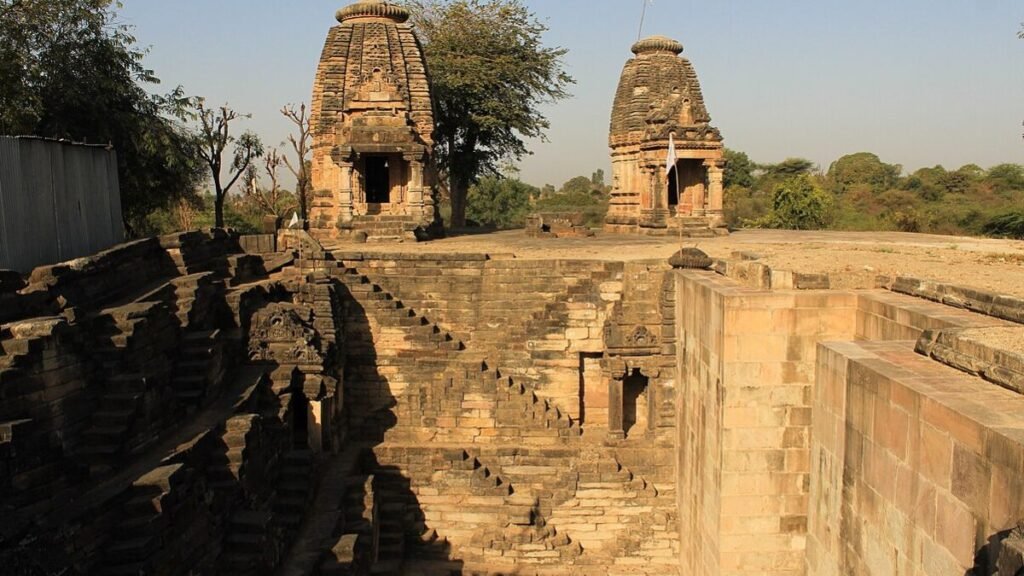
By approximately the 10th century CE, Idar came under the rule of the Parihar kings a Rajput clan who established Idar as a significant regional kingdom. The Parihar king of Idar is also credited with establishing the ancient city of Polo (now Polo Forest) as a gateway settlement between Gujarat and Rajasthan. In the 15th century, the Rathore Rajputs originally from Marwar in Rajasthan established their dominance in Idar, beginning a dynasty that would rule the region for several centuries, through the Mughal and Maratha periods and into the British era.
The Rathore rulers of Idar were celebrated for their fierce independence and military capability. The local saying so difficult that to take Idargadh is to achieve the impossible circulated because the fort’s natural rocky defences, steep pathways, and multiple fortified gateways made it genuinely formidable. The folk song sung at marriages ‘Ame Ederio Gadh Jitya Re Aanand Bhayo’ was a metaphor for the achievement of a seemingly impossible task.
Also Read: Nishkalank Mahadev Temple, Bhavnagar
Akbar, the Mughals, and the Proud Exile
In 1573 CE, the Mughal Emperor Akbar invaded and captured Idar. The Rathore Rao Narayanji (also called Narandas) was driven from the fort and took refuge in the Polo Forest the dense ancient woodland ~50 km to the north that had historically sheltered the kings of Idar during their darkest hours. Even with a serious ulcer on his back, Rao Narayanji continued to lead resistance against the Mughals from his forest refuge, harassing their forces without surrender. He eventually retook Idar.
However, the story of his exile produced one of Idar’s most famous local legends ,the story of the Roothi Rani ,which is described in detail below. After Akbar’s invasion, the Mughals eventually granted Idar as a jagir (feudal land grant) to the Rathore clan, allowing them to continue ruling as vassals.
The Maratha Period and British Rule
During the turbulent 18th century, the Maratha Empire’s expanding power reached Idar. The fort changed hands, and at one point a local noble named Surajmal, Thakor of Chandni, played a decisive role in saving Idar from Maratha control. His success, however, made him arrogant ,and his eventual assassination at the Roothi Rani’s Palace by Prince Bhavanisingh (heir to the Idar throne) became another dark chapter in the fort’s long story.
During the British era, Idar was a princely state within the Mahi Kantha Agency. The ruling family entered a subsidiary alliance with the British East India Company while maintaining internal authority. It was during this period that the Daulat Mahal the palace at the foothills of the fort was built by Maharaja Dowlatsinhji in the early 20th century. After Independence in 1947, Idar’s princely state was integrated into India and became part of Gujarat state in 1960.
What to See at Idar Fort – Key Attractions
1. Daulat Mahal – The Palace at the Foothills
At the end of the main bazaar road and immediately beneath the fort hill stands the Daulat Mahal the palace built by Maharaja Dowlatsinhji in the early 20th century. The palace is a large building with carved balconies notable for their intricate stonework. It is the last point accessible by road and the natural starting point for the fort trek. The palace is in partial use and partial ruin a compelling combination of faded grandeur and Aravalli hill backdrop.
2. The Fort Pathway – Gates, Ramparts, and the Plateau
From the Daulat Mahal, a steep pathway leads upward through more than one gateway and fortified section to the fortress plateau a tableland raised high above the surrounding plains, with ramparts filling in the natural gaps between the hilltop crests. Walking this path, the defensive genius of the fort becomes immediately clear: each section of the ascent is overlooked by the section above, meaning any attacker would be visible and vulnerable at every step. The multiple gateways create a series of chokepoints that made storming the fort an extremely costly proposition.
3. Roothi Rani no Mahel – The Angry Queen’s Palace
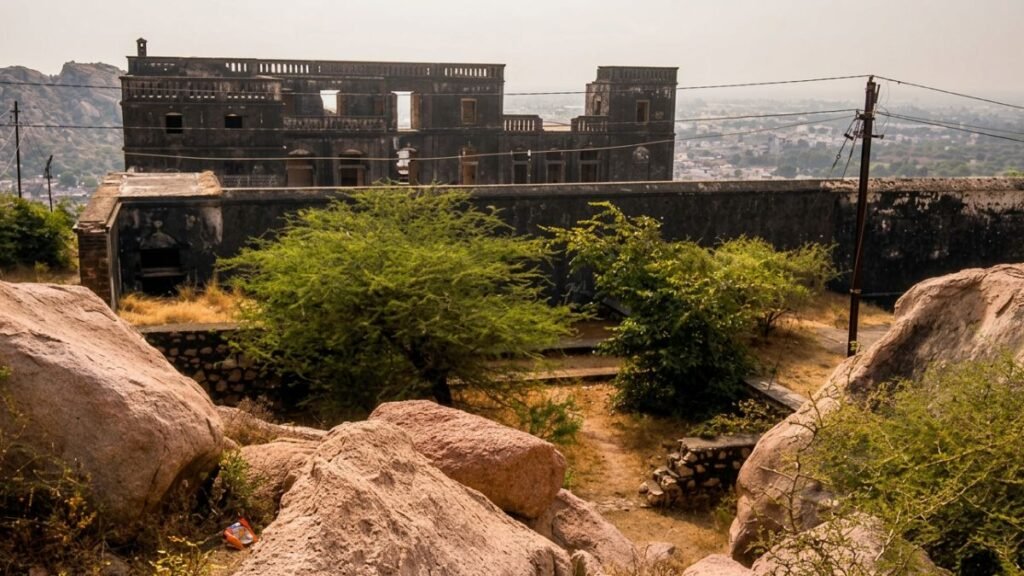
The most celebrated structure on Idar Fort is the Roothi Rani no Mahel literally the Palace of the Angry (or Displeased) Queen perched on an enormous granite peak at the highest point of the hill. The building is a domed structure of fine stone, approximately 25 feet long, 19 feet broad, and 12 feet high. The views from this peak of the entire Idar valley, the Aravalli hills stretching toward Rajasthan, and the town below are extraordinary.
The Full Story of the Roothi Rani
When Rao Narayanji was driven from Idar by Akbar’s forces in 1573 and took refuge in the Polo Forest, he endured great hardship including a serious ulcer on his back that caused him constant pain. Despite this, he continued to resist. One day, while his queen was looking into a mirror, she noticed the Rao’s reflection bent with pain from the ulcer. She shook her head, involuntarily expressing her hopelessness about his chances of retaking Idar.
The Rao noticed her expression in the mirror and asked what she meant. She said honestly and perhaps unwisely that from what she saw, she had no hope that he would regain his throne. The Rao was deeply offended and left. He did eventually retake Idar. But when he returned victorious to the fort, he refused ever to see the queen’s face again.
The queen humiliated, lonely, and refusing to live in her husband’s palace after such treatment had a dwelling built on the highest granite peak of the hill. There she passed the rest of her life, surrounded by the Aravalli panorama, in self-imposed exile atop the fort she had watched her husband win back.
The palace she built is the Roothi Rani no Mahel. It stands there still, on the highest point of Idar Fort, looking out over the plains and hills. In Gujarati the name on the display board reads ‘Rukhi Rani nu Maliyu’ Rukhi (displeased, sulking) Queen’s abode. Whether you call her angry or displeased, the location says everything perched above everything, refusing to come down.
Also Read: 5–6 Day Trips in Gujarat Under ₹15K
4. Shantinath Shwetambar Jain Dersar — The Hilltop Jain Temple
Approximately 450 steps up the Idar Gadh is the Shantinath Shwetambar Jain Dersar an ancient and architecturally remarkable Jain temple dedicated to Shantinath, the 16th Jain Tirthankara. The temple is considered a historical gem by the Jain community and features significant architectural details. This is one of the main reasons Idar has long been an important Jain pilgrimage destination the combination of the fort’s temples with the town’s numerous Jain shrines makes it one of North Gujarat’s Jain heritage centres.
5. Hatheli Lake and the Chhatris
Hatheli Lake, also called Idar Lake, is said to have been built by Rao Ranmal one of the early Rathore rulers of Idar. The western bank of the lake is lined with domed cupolas chhatris raised over the ashes and memorials of the leading families of Idar’s princely history. The combination of the lake, the chhatris, and the fort hill in the background creates one of the most picturesque settings in Idar. A morning or evening walk by the lake is a peaceful counterpoint to the fort trek.
6. The Old Town Bazaar and Wooden Toy Workshops
Idar is one of India’s traditional wooden toy-making centres a craft that has been practised here for centuries. The town’s artisans produce hand-carved and hand-painted wooden toys, dolls, animals, and decorative items using locally sourced wood and traditional techniques. Walking through the old bazaar street, you can see craftsmen at work in small workshops, watch the toys being shaped and painted, and purchase directly from the makers. Idar’s wooden toys have been exhibited nationally and are among Gujarat’s most distinctive artisanal products.
The Idar Fort Trek – Complete Guide
Trek Overview
The Idar Fort trek is one of Gujarat’s most accessible and rewarding hilltop experiences for beginners. The route is primarily over solid rock with stone steps at steeper sections, making it manageable for most visitors. The best starting point is just beyond the Daulat Mahal (palace at the foothills), near the electric pole that marks the beginning of the main ascent trail.
| Detail | Information |
| Starting Point | Daulat Mahal (Palace) at the foothills, near the electric pole |
| Destination | Roothi Rani no Mahel (highest point) + fort plateau |
| Trek Distance (One Way) | ~1–2 km from Daulat Mahal to Roothi Rani Mahel |
| Trek Difficulty | Easy to moderate beginner-friendly |
| Trek Surface | Solid rock for most sections; stone steps at steeper stretches |
| Estimated Duration | 1–2 hours return for Roothi Rani Mahel; up to 3 hours for full fort exploration |
| Sunrise Trek | Start at 5:00–5:30 AM from Daulat Mahal; reach summit for sunrise |
| Guide | Not mandatory but helpful ask a local at the base for the correct path |
| Entry Fee | No fee the fort is free to access |
| Best Season | October to February (cool, clear; excellent panoramic views) |
| Avoid | Summer afternoons (April–June) Sabarkantha temperatures can exceed 45°C |
The Trek Route — Step by Step
The route to the Roothi Rani Mahel begins just after the Daulat Mahal. The initial section has a few path options follow the trail near the electric pole, which is the most reliable route. The path ascends through rocky terrain with occasional steps carved into the hillside. At several points, the path passes through or between ancient stone gateways the same fortified chokepoints that made Idar so difficult to storm in battle.
As you ascend, the views of the town below and the Aravalli hills stretching northward towards Rajasthan open up progressively. The final section to the Roothi Rani Mahel crosses solid granite rock take care on the descent, as the rock can be slippery after rain. If possible, ask a local for the correct path at the start the route has a few branches and a local guide prevents confusion and saves time.
Sunrise Trek – The Most Memorable Experience
The sunrise trek to Idar Fort is considered one of the best in North Gujarat. Start from the base by 5:00 to 5:30 AM, reach the highest point (Roothi Rani Mahel or the fort plateau) before the sun rises, and watch the light come up over the Aravalli Range. The combination of the cool early morning air, the silence of the rock, and the first light touching the plains below Idar is deeply moving. The fort has also been referred to as ‘Ranivas’ in trekking circles a name associated with these sunrise experiences.
Safety on the Trek
- Wear non-slip trekking shoes or sneakers rock surfaces can be slippery after rain
- Carry water – there are no water sources on the hill
- Do not descend in haste – the rocky sections require careful footing on the way down
- Avoid the trek in summer afternoons (April to June) – the exposed granite rock absorbs and radiates intense heat
- Go in a group of at least 2–3 people – the fort area is quiet and isolated; groups are safer
- Carry a charged phone with GPS/maps – mobile signal on the hill can be weak
Also Read: Bet Dwarka: Complete Travel Guide to Lord Krishna’s Sacred Island in Gujarat
Best Time to Visit Idar Fort
October to February – Best Season
Post-monsoon and winter months are the ideal time to visit Idar Fort. The Aravalli hills are green from the monsoon rains, the air is cool and clear, and the panoramic views from the fort top are at their best. The trek is comfortable in the cool morning air. Sunrise treks from October to January are particularly magical cold wind at the summit and warm golden light breaking over the Aravalli range is an experience worth the early start.
Monsoon (July to September) – Scenic but Slippery
The monsoon transforms the Aravalli hills around Idar into an unusually lush landscape. Waterfalls appear on the hillsides and the rocky fort hill is dramatically atmospheric in overcast light. However, the rock surfaces become very slippery during and after rain extra caution is essential on the trek. The views, when the clouds lift between showers, are extraordinary.
March to May – Manageable with Early Starts
Spring heat arrives from March and intensifies through May. Visit on a weekday and start the trek by 6 AM to complete the climb before the temperature peaks. The route is manageable in the morning; afternoon visits in April and May are strongly not recommended.
April to June – Summer (Avoid Afternoon)
Sabarkantha district summer temperatures can reach 45 to 49 degrees Celsius. The exposed granite rock of the fort amplifies this heat. Early morning visits (before 8 AM) are possible but midday and afternoon visits should be completely avoided in these months.
How to Reach Idar Fort
| From | Distance | Mode | Approx. Time |
| Ahmedabad | ~111–120 km | Car / State Bus (GSRTC) | 2–2.5 hours |
| Gandhinagar | ~120 km | Car / Bus | 2–2.5 hours |
| Himmatnagar | ~30 km | Car / Local bus / Auto | 35–45 minutes |
| Polo Forest (Vijaynagar) | ~50 km | Car | 1 hour |
| Shamlaji Temple | ~47 km | Car / Bus | 1 hour |
| Khedbrahma | ~70 km | Car / Bus | 1.5 hours |
| Ambaji | ~130 km | Car | 2.5 hours |
| SVP Airport, Ahmedabad | ~107–120 km | Flight + Taxi / Bus | 2–2.5 hours |
By Road (Best Option)
Idar is best reached by private car or hired taxi from Ahmedabad. Take National Highway 48 from Ahmedabad towards Vadodara and exit towards Himmatnagar, then continue on the state highway to Idar. The total distance is approximately 111 to 120 km and the drive takes about 2 to 2.5 hours. Alternatively, take the direct Ahmedabad-Himmatnagar-Idar route via Kheralu. Both routes are in good condition and well-signed.
By GSRTC Bus
Gujarat State Road Transport Corporation buses run regularly between Ahmedabad and Idar. These are frequent and affordable a practical option for solo travellers and those without private vehicles. From the Idar bus stand, the fort base (Daulat Mahal) is accessible by local auto-rickshaw in a few minutes.
By Train
Himmatnagar Junction is the nearest major railway station approximately 30 km from Idar and is connected to Ahmedabad and several other cities. From Himmatnagar, hire a local taxi or take a bus to Idar. Idar itself has a smaller railway station with limited train connections. Check current schedules before planning a train journey.
Where to Stay in Idar
- Hotel Anjali – One of the well-known accommodation options in Idar town. Basic and comfortable.
- Hotel Royal Stay – Another option in the town centre, suitable for a one-night stay before or after the fort trek.
- Suraj Garh Resort – A more comfortable resort option in the Idar area for those seeking better amenities.
- Polo Forest Resorts (~50 km) – For those combining Idar with Polo Forest, the Polo Forest Resort, Polo Retreat, and Fern Sattva Resort offer excellent forest stays.
- Himmatnagar (~30 km) – The district headquarters has a wider range of accommodation options across all budgets.
Food in Idar
Idar is a Gujarati town with a strong local food culture. Restaurant options are modest but authentic.
- Hotel Volga – Known for a variety of Indian cuisine including Gujarati, North Indian, and South Indian options. A reliable sit-down meal stop.
- Ma No Visamo Garden Restaurant – A popular local restaurant with a garden setting. Good for families.
- Govardhan Dalbati – Specialises in dal baati churma the classic Rajasthani-influenced dish popular in North Gujarat.
- Local dhabas and tea stalls along the bazaar street for authentic Gujarati snacks (dhokla, thepla, fafda, gathiya) at very affordable prices.
- Local sweet shops – for Gujarati mithai, mohanthal, and local sweets.
Things to Do In and Around Idar
1. Trek the Fort and Visit Roothi Rani Mahel
The primary experience at Idar Fort the trek to the highest point and Roothi Rani no Mahel. Plan 2 to 3 hours for the complete experience. Detailed trek guide is provided above.
2. Sunrise Trek
Start by 5 AM from Daulat Mahal, reach the summit before the sun rises, and watch the Aravalli dawn unfold below you. This is the single best experience Idar Fort offers.
3. Explore the Jain Temples
Idar is a significant Jain pilgrimage centre. The Shantinath Shwetambar Jain Dersar on the fort hill (450 steps) is the most important, but the town also has numerous other Jain temples in the town and at the fort base. Each has its own history and architectural character. Allow time to explore them without rushing.
4. Walk the Old Town Bazaar and Visit Wooden Toy Workshops
Idar’s traditional bazaar street is one of the most authentic in North Gujarat. The wooden toy workshops are particularly worth visiting watch craftsmen hand-carve and hand-paint traditional Gujarati wooden toys using techniques passed down for generations. Buy directly from the artisans for the most authentic and affordable prices.
5. Visit Hatheli Lake
An early morning or evening walk along the lake and its chhatri-lined western bank is peaceful and historically interesting. The reflection of the fort hill in the lake makes for excellent photography.
6. Day Trip to Polo Forest (~50 km)
Polo Forest near Vijaynagar is one of Gujarat’s finest day trip destinations from Idar 400 sq km of ancient forest with 10th–15th century temple ruins, the Harnav River, the Vanaj Dam, trekking trails, birdwatching, and camping. Plan a full day for Polo Forest or combine an early Idar Fort sunrise trek with an afternoon Polo Forest exploration.
Nearby Attractions to Combine with Idar Fort
- Polo Forest, Vijaynagar ~50 km | One of Gujarat’s finest heritage forests. Ancient Shiva and Jain temples from the 10th–15th century, the Harnav River, dense forest, trekking trails, and camping. A must-combine with Idar for a 2-day North Gujarat itinerary.
- Shamlaji Temple ~47 km | A major Hindu pilgrimage temple dedicated to Lord Vishnu (Shamlaji a form of Vishnu/Govind), located on the banks of the Meshwo River. Timings: 6 AM – 11:30 AM and 2:15 PM – 8:30 PM. One of Gujarat’s most visited pilgrimage sites.
- Dev ni Mori ~50 km (near Shamlaji) | A fascinating archaeological site where a Buddhist seminary, ancient stupas, and viharas were unearthed. One of Gujarat’s most important Buddhist archaeological discoveries.
- Himmatnagar ~30 km | Sabarkantha district headquarters. Founded by Sultan Ahmad Shah I in 1426 CE to control the activities of the Rao of Idar. Some historical monuments, local markets, and the Himmatnagar Railway Station for onward connections.
- Khedbrahma ~70 km | An ancient town and religious site on the Sabarmati River near the Gujarat-Rajasthan border. Important pilgrimage destination for Hindus. Gateway to the Aravalli forest region.
- Poshina – Darbargadh Heritage Hotel ~130 km near Ambaji | A historical palace of the Poshina princely state now converted into a heritage hotel. Located in the Aravalli foothills near Ambaji. Exceptional for heritage stays and tribal culture experiences.
- Ambaji Temple ~130 km | One of Gujarat’s most important Shakti Peethas the Ambaji Mata temple that draws millions of devotees annually, especially during Bhadarvi Purnima.
Frequently Asked Questions (FAQs)
Idar Fort locally called Idar Gadh or Idariyo Gadh is famous for its extraordinary natural fortification atop the Aravalli Range in Sabarkantha district, North Gujarat. It is famous for its thousand-year history across multiple dynasties including the Rathore Rajputs, Mughals, and Marathas; the Roothi Rani no Mahel (Angry Queen’s Palace) on the highest peak and its remarkable story; the panoramic sunrise views over the Aravalli hills; its ancient Jain temples; its centuries-old wooden toy-making craft; and the folk song ‘Ame Ederio Gadh Jitya Re Aanand Bhayo’ sung at traditional Gujarati marriages to celebrate a victory as impossible as conquering Idar Fort.
No. Idar Fort does not have a formal entry fee it is a natural hill fortification and free to access. The trek to the fort and all its structures, including the Roothi Rani no Mahel and the Jain temples on the hill, is free. There is no ticket counter or gate fee. Simply arrive at the Daulat Mahal (palace) at the foothills and begin your ascent. Carry water as there are no facilities on the hill itself.
The Idar Fort trek is rated easy to moderate and is beginner-friendly. The route from Daulat Mahal to the Roothi Rani no Mahel is approximately 1 to 2 km one way. The path is primarily over solid rock with stone steps at steeper sections. Most visitors with a moderate fitness level can complete it comfortably. The trek takes approximately 1 to 2 hours return. Descending requires more care than ascending take it slowly on the rock sections. Non-slip footwear is essential. Avoid the trek on hot summer afternoons.
The Roothi Rani no Mahel the Angry Queen’s Palace sits on the highest granite peak of Idar Fort. When the Rathore Rao Narayanji was driven from Idar by Akbar’s forces in 1573 and took refuge in Polo Forest while suffering from a serious ulcer, his queen observing his pained posture in a mirror shook her head and said she had no hope he would retake Idar. The Rao was deeply offended. He did retake Idar, but when he returned victorious, he refused ever to see the queen’s face again. The queen, refusing to live in the palace after such treatment, had a small dwelling built on the highest peak of the fort and spent the rest of her life there, alone, overlooking the valley.
Idar is approximately 111 to 120 km from Ahmedabad about 2 to 2.5 hours by road. The best route is via Himmatnagar on the Ahmedabad-Himmatnagar State Highway, then continuing to Idar. GSRTC state buses run frequently between Ahmedabad and Idar and are a comfortable, affordable option. By train, take any service to Himmatnagar Junction (approximately 30 km from Idar) and then hire a local taxi or bus to Idar. The nearest airport is Sardar Vallabhbhai Patel International Airport in Ahmedabad, approximately 107 to 120 km away.
Idar is famous for three things beyond the fort: its position as a significant Jain pilgrimage centre (the town has numerous Jain temples and the hilltop Shantinath Jain Dersar); its centuries-old handmade wooden toy industry Idar craftsmen produce traditional wooden toys, dolls, and decorative items that are sold across Gujarat and exhibited nationally; and its proximity to Polo Forest (~50 km) and Shamlaji Temple (~47 km), making it a natural base for exploring North Gujarat’s most important heritage, pilgrimage, and nature destinations in a single trip.
Yes, with appropriate preparation. The fort trek is rated easy to moderate and most children aged 8 and above can manage the main ascent comfortably with adult supervision. Wear proper footwear, carry water, and avoid summer afternoons. The old town bazaar and wooden toy workshops are excellent for children and make the trip culturally enriching. Plan the fort trek in the morning and spend the afternoon exploring the town, Hatheli Lake, and the wooden toy market. The drive from Ahmedabad (2 to 2.5 hours) is also manageable for most families as a day trip.
Final Thoughts
Idar Fort is Gujarat’s most underrated hilltop a place that rewards the curious, the historically inclined, and anyone who has ever wondered what it would feel like to stand on a rock that was considered unconquerable for a thousand years. The view from the Roothi Rani no Mahel across the Aravalli hills toward Rajasthan, down over the old town and its bazaar and its clock tower gate is one of North Gujarat’s finest panoramas. And the story of the queen who built a palace on the highest peak rather than accept an unjust treatment is one of the most quietly powerful stories in the region.
Combine Idar with the Polo Forest and Shamlaji Temple for a full 2-day North Gujarat circuit. Start the first morning with a 5 AM sunrise trek to the Roothi Rani Mahel. Then let the Aravalli do the rest.
