There is a hill in the Panchmahal district of Gujarat that has been drawing pilgrims for over a thousand years. Before Champaner was built as a royal capital at its feet, before the Mughals arrived, before the ropeway was installed in 1986 Pavagadh Hill and its Kalika Mata Temple were already here. Ancient, powerful, and deeply revered.
Perched at approximately 762 metres above sea level, the Kalika Mata Temple is one of India’s 51 sacred Shakti Peethas the spot where the right toe of Goddess Sati fell to earth, creating a site of immense divine energy that has drawn devotees, sages, and seekers for over ten centuries. The temple is part of the Champaner-Pavagadh Archaeological Park, a UNESCO World Heritage Site, making Pavagadh one of the rare places in India where pilgrimage, history, architecture, and trekking all come together in a single destination.
This complete TravelRoach guide covers the temple’s deep history and mythological significance, the three ways to reach the summit, the Udan Khatola ropeway, darshan timings, the Champaner archaeological monuments at the base, Navratri celebrations, how to reach, what to wear, and everything else you need for a meaningful visit.
Pavagadh Kalika Mata Temple – Quick Information
| Detail | Information |
| Temple Name | Kalika Mata Temple (Mahakali Mata Temple) |
| Deity | Goddess Kalika / Mahakali fierce form of Goddess Durga (Chandi) |
| Location | Summit of Pavagadh Hill, Panchmahal District, Gujarat |
| Elevation | ~762 metres (2,500 ft) above sea level |
| Significance | One of the 51 Shakti Peethas Goddess Sati’s right toe fell here |
| Temple Age | 10th–11th century CE oldest temple in the Pavagadh area |
| UNESCO Status | Part of Champaner-Pavagadh Archaeological Park (UNESCO World Heritage Site, 2004) |
| Darshan Timings (Regular) | 6:00 AM – 9:00 PM (daily) |
| Navratri Timings | 4:00 AM – 8:00 PM (or 24 hours on peak Ashtami/Navami days) |
| Temple Entry Fee | Free , no ticket required |
| Ropeway (Udan Khatola) | From Maachi Plateau to near summit; ropeway timings 6 AM – 6 PM (last return 7:30 PM) |
| Steps (Full Trek) | ~2,000 steps from the base |
| Steps After Ropeway | ~250 steps from ropeway drop-off to temple |
| Photography | Not permitted inside the sanctum (sanctum is a no-camera/phone zone) |
| Dress Code | Modest — no shorts or sleeveless; women must cover head inside sanctum |
| Leather Items | Not permitted inside temple premises |
| Distance from Vadodara | ~46–50 km (~1 hour by road) |
| Distance from Ahmedabad | ~160 km (~2.5–3 hours by road) |
| Distance from Surat | ~120–130 km (~2–2.5 hours by road) |
| Nearest Railway Station | Vadodara Junction (~46 km); Halol (~14 km from Pavagadh base) |
| Nearest Airport | Vadodara Airport (~48–54 km) |
The History and Mythology of Pavagadh and Kalika Mata Temple
The Shakti Peetha — Where Sati’s Toe Fell
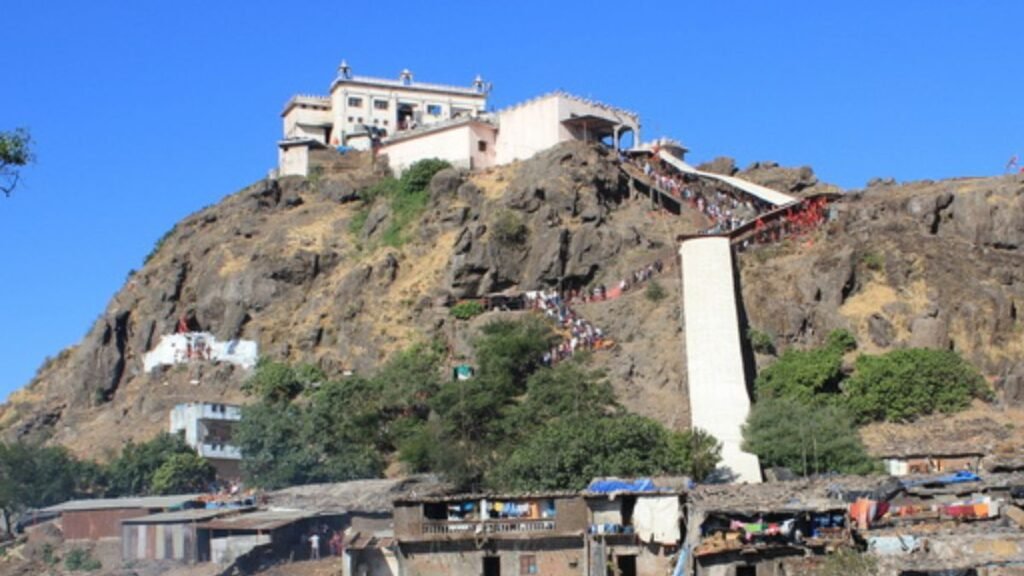
The Kalika Mata Temple at Pavagadh is one of the 51 Shakti Peethas the sacred sites created when the body of Goddess Sati fell to earth in pieces as Lord Vishnu used his Sudarshana Chakra to cut her body while Lord Shiva carried her in grief after her death. At Pavagadh, it is believed that the right toe of Sati fell at the highest point of the hill. This makes the site one of the most powerful and sacred locations in the Shakti tradition of Hinduism.
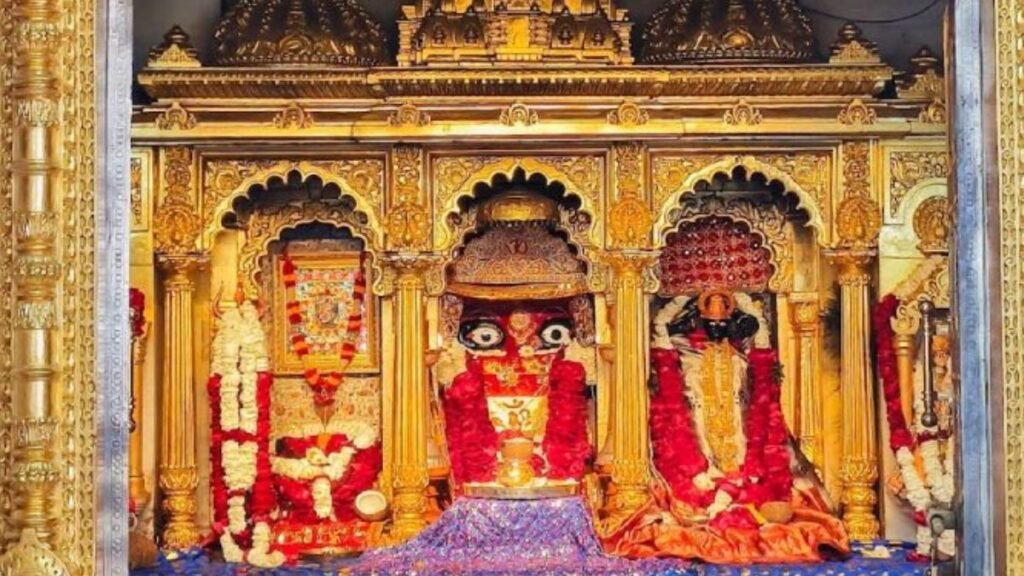
The goddess worshipped here is Mahakali the Great Black Mother in her fierce, protective form. The central idol in the sanctum is the mukhwato, depicted only as the face of the goddess, painted red. She is flanked by Bhadrakali (also called Kali) on her right and Bahuchara Mata on her left. The Kali Yantra worshipped in the temple is also believed to date from the 10th or 11th century. This is not a newly established site of worship this is a place of continuous, unbroken devotion spanning over a thousand years.
Also Read: 7-Day Gujarat Itinerary
The Ancient Origins
The temple dates from the 10th to 11th centuries CE and is the oldest temple in the Pavagadh area. According to tradition, the goddess Kalika Mata was initially worshipped by the local Bhil and Koli communities the indigenous tribal peoples who have lived on and around the hill for centuries. Later, the sage Vishwamitra is believed to have performed deep tapasya (meditation and austerities) on the summit of Pavagadh Hill and formally installed and invoked the goddess here in her full divine form. The temple is described in Gangadas Pratap Vilasa Natakam a drama text from the 15th century indicating its already-established significance by that period.
The hill also has a significant Jain heritage. In 1113 CE, Acharya Aryarakshitsuri a reformist Jain monk ascended the hill with the intention of performing Sallekhana (ritual fasting unto death) in protest against corruptions within the Jain monastic order. According to Jain tradition, Goddess Mahakali appeared before him and persuaded him to live and instead found a new, reformed order of Jainism. He founded the Achalgacch (also called Viddhipaksh) sect at Pavagadh in 1113 CE, and installed Mahakali as the protecting deity of the new gaccha. Pavagadh was thus an important Jain pilgrimage centre from the 12th century onwards.
The Rajput Capital and Sultan Mahmud Begada
For centuries, Pavagadh was the capital of the local Rajput chiefs known as the Patai Raval clan. The ruins of Patai Raval’s palace are still visible on the hill today, along with ancient fortifications that once made Pavagadh one of the most formidable hillforts in Gujarat. In 1484 CE, Sultan Mahmud Begada of the Gujarat Sultanate laid siege to Pavagadh. The siege lasted twenty months a testimony to the strength of the hill’s fortifications and the determination of its defenders. When Pavagadh finally fell, Sultan Mahmud Begada constructed a new planned city at the base of the hill: Champaner which he made his royal capital and developed into one of the finest cities in 15th-century India.
Champaner flourished for 23 years as the Sultan’s capital before the Mughal Emperor Humayun captured it in 1535 CE. Thereafter, the city was gradually abandoned and nature reclaimed its buildings. What remains mosques, stepwells, fortifications, water systems, and residential quarters was declared a UNESCO World Heritage Site in 2004 as part of the Champaner-Pavagadh Archaeological Park.
The 2022 Temple Renovation
In 2022, the Kalika Mata Temple underwent significant renovation. The most visible change was the construction of a new shikhara (temple spire) a new tower that now crowns the temple in the traditional Hindu architectural style. The dargah (tomb shrine) of Sadan Shah Pir a Sufi saint whose mausoleum had been integrated into the old temple structure for centuries, creating an extraordinary example of Hindu-Muslim coexistence was shifted to a nearby location during the renovation. The new shikhara formally restored the temple’s classical Hindu architectural character.
The Legend of the Navratri Garba
One of the most beloved legends associated with Kalika Mata and Pavagadh involves Navratri. According to oral tradition, Goddess Kali once attended a Navratri Garba celebration disguised as a beautiful young woman, so moved was she by the deeply religious devotion of her devotees. The local king, Patai Jaisinh, was captivated by her beauty and attempted to hold her hand. The goddess warned him three times to stop. When he persisted, she revealed her true form and cursed him and his kingdom with destruction. This legend is recounted to explain the eventual fall of the Rajput kingdom at Pavagadh — and it remains the most famous story associated with the temple.
Inside the Kalika Mata Temple – What to Expect
The Sanctum and the Three Goddesses
The Kalika Mata Temple is a two-storey structure. The sanctum on the ground floor houses three divine images: Kalika Mata in the centre depicted as the mukhwato, only the face of the goddess, painted bright red with Bhadrakali (Kali) to her right and Bahuchara Mata to her left. The visual of the central idol — just a red face, powerful and direct is unlike the typical full-body deity images found in most Hindu temples, and carries an intensity that strikes most visitors immediately.
The Kali Yantra (a sacred geometric diagram representing the goddess’s energy) is also worshipped in the temple and is believed to date from the 10th–11th century making it among the oldest continuously worshipped yantras in Gujarat.
The Open Chowk and Altars
In front of the main sanctum is a large open courtyard (chowk) with two altars used for sacrificial offerings during major festivals. During Navratri and other important occasions, the temple is decorated with an elaborate array of lights that transforms the hilltop into a luminous celebration visible for miles across the Panchmahal plains below.
The Dargah of Sadan Shah Pir
Before the 2022 renovation, the old temple structure uniquely incorporated a Muslim dargah the mausoleum of Sadan Shah Pir, a revered Sufi saint within its walls. The temple spire was domed in an Islamic style housing this shrine, and the Hindu sanctum sat beneath it. This extraordinary coexistence of Hindu and Islamic religious spaces within a single structure was one of the most remarkable architectural features of the old Pavagadh temple and a powerful symbol of the region’s syncretic heritage. After the 2022 renovation, the dargah was respectfully relocated to a nearby site.
Also Read: Hidden Gems of Gujarat
What Devotees Offer
- Coconut – offered at the feet of the goddess
- Red chunri (sacred cloth) – tied as an offering of devotion; red is the colour of Kali Mata
- Flowers – red and orange flowers are traditional
- Sweets – prasad in the form of ladoo or batashe
- Incense (agarbatti) – lit at the altar
Ready-made prasad packets are available from authorised counters near the temple entrance. Purchase only from authorised vendors. Leave leather items (bags, belts) in the lockers provided near the entrance. Mobile phones and cameras are strictly not permitted inside the sanctum.
How to Reach the Temple Summit – Three Options
Reaching the Kalika Mata Temple requires ascending Pavagadh Hill. There are three distinct approaches, and most visitors combine them: drive to Maachi, take the ropeway, then climb the final 250 steps.
Option 1 – Full Trek (The Traditional Pilgrimage Route)
The most traditional and spiritually significant way to visit Kalika Mata is to walk the entire route on foot – approximately 5 km of jungle footpath from the lower road access point to the summit, involving approximately 2,000 steps. The full trek takes approximately 1.5 to 2 hours one way at a moderate, devotional pace.
The trek route passes through the ruins of Patai Raval’s palace, smaller shrines dedicated to various deities, viewpoints overlooking the Champaner plains, and a lively stretch of shops and food stalls. Many dedicated pilgrims and trekkers prefer this route as an act of devotion and for the forest surroundings along the path.
Best For: Dedicated pilgrims, trekkers, those seeking the full spiritual experience | Difficulty: Easy to moderate | Duration: 1.5–2 hours up
Option 2 – Drive to Maachi + Ropeway (Most Common)
The most popular approach for most visitors is to drive up the well-maintained hill road to the Maachi Plateau the last point accessible by vehicle park the car, and take the Udan Khatola ropeway (cable car) from Maachi to near the summit. After the ropeway drops you off, there are approximately 250 steps remaining to climb to the temple entrance.
The ropeway ride is scenic offering aerial views of the forested Pavagadh Hill and the plains below and takes only a few minutes. It makes the temple accessible for senior citizens, families with young children, and those who cannot manage the full trek.
Best For: Families, senior citizens, time-limited visitors | Duration: 15–30 mins total after parking at Maachi
Option 3 – Drive to Maachi + Short Trek
Some visitors prefer to park at Maachi and walk the shorter jungle trail from Maachi to the summit without using the ropeway. This path passes Dudhiya Lake a scenic small lake near the ropeway station and then involves a steep climb of approximately 1 km to the temple. This is a middle path between the full 5 km trek and the ropeway shortcut.
Best For: Those who want some trekking without the full 2,000-step climb
Udan Khatola – The Pavagadh Ropeway
The Udan Khatola (literally ‘flying vessel’) is the cable car system that has operated on Pavagadh Hill since 1986. It runs from the Maachi Plateau up to a point near the summit, making the temple accessible to pilgrims of all ages and physical abilities. The ropeway is the single most-used facility for visiting Kalika Mata Temple.
| Detail | Information |
| Operating Since | 1986 |
| Route | Maachi Plateau to near the hilltop (just below the temple) |
| Steps After Ropeway | Approximately 250 steps from drop-off to temple entrance |
| Ropeway Timings | 6:00 AM – 6:00 PM | Last return: 7:30 PM |
| Capacity | Approximately 400–800 passengers per hour |
| Ride Duration | A few minutes (short, scenic aerial ride) |
| Maintenance Closures | Periodic maintenance closures always verify operational status the day before visiting |
| Best Advice | Check ropeway status one day before your visit, especially during monsoon and Navratri peak days |
During Navratri and major festival days, the ropeway can have long queues. It is strongly advisable to arrive early (before 7 AM) on festival days if you plan to use the ropeway. During occasional maintenance closures, the only option to reach the temple is the full foot trek.
Darshan Timings at Kalika Mata Temple
| Period | Darshan Timings | Notes |
| Regular Days | 6:00 AM – 9:00 PM | Daily. Morning aarti at 6 AM is the most peaceful time. |
| Navratri (9 nights) | 4:00 AM – 8:00 PM (or 24 hours on Ashtami/Navami) | Largest crowds of the year. Advance ropeway check recommended. |
| Morning Aarti | At temple opening (approximately 6:00 AM) | Best time for devotees fewer crowds, cool air, powerful atmosphere. |
| Evening Aarti | Approximately at sunset / early evening | Timing varies check with temple staff on the day. |
| Entry Fee | Completely Free | No ticket required for temple darshan. |
| Live Darshan/Streaming | Not available | Physical presence mandatory. |
Navratri at Pavagadh — Gujarat’s Most Sacred Festival Destination
Navratri is the single most important festival at Kalika Mata Temple, Pavagadh and the most crowded. During the nine nights of Navratri (typically in September–October by the Gregorian calendar), lakhs of devotees from across Gujarat and neighbouring states climb Pavagadh Hill to seek the blessings of Mahakali. The temple operates 24-hour darshan on peak days (Ashtami and Navami) to accommodate the extraordinary volume of pilgrims.
The atmosphere during Navratri at Pavagadh is unlike anything else in Gujarat. The approach roads, the Maachi Plateau, and the entire hillside are filled with devotees many dressed in traditional Gujarati attire, many fasting, many singing devotional songs. The smell of incense, the sound of bells, and the pre-dawn queue that stretches for hundreds of metres along the hill path create a spiritual energy that is deeply moving even for non-religious visitors.
The other major festival at Pavagadh is on Chitra sud 8 a day in the Hindu month of Chaitra (March–April) when a large fair is held at the temple, attended by thousands. Devotees of the Chodhri community have a tradition of making at least one lifetime pilgrimage to Pavagadh.
Planning for Navratri Visits
- Arrive before 5 AM on peak Navratri days – the queue begins forming in the early pre-dawn hours
- Check the ropeway operational status and timing before arriving – special extended hours may apply during Navratri
- Book accommodation in Halol or Vadodara well in advance – hotels fill up quickly during Navratri
- Wear comfortable, flat walking shoes – you will be standing in queues and climbing steps for extended periods
- Carry water and light snacks — the wait can be long
Champaner – The UNESCO World Heritage Site at Pavagadh’s Feet
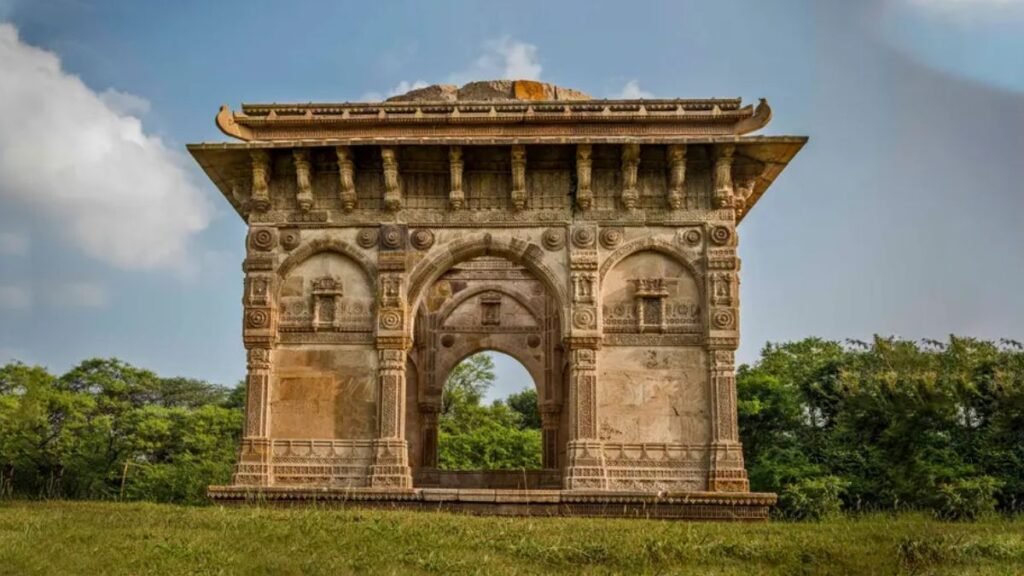
No visit to Pavagadh is complete without exploring the remarkable ruins of Champaner at the base of the hill. The Champaner-Pavagadh Archaeological Park declared a UNESCO World Heritage Site in 2004 contains the best-preserved 15th century Islamic city in India, built by Sultan Mahmud Begada as his royal capital after capturing Pavagadh in 1484 CE.
What to See in Champaner
- Jami Masjid – The crown jewel of Champaner. One of the finest mosques in India, with five ornate minarets, a vast prayer hall, and extraordinary stone latticework and carvings. A masterpiece of Indo-Saracenic architecture. Allow at least 45 minutes here.
- Shaher ki – A smaller but beautiful mosque within the old city walls. The stone carvings on the facade are exceptional.
- Nagina Masjid – An exquisitely proportioned mosque known for the gem-like quality of its stone carving hence ‘Nagina’ (jewel).
- Kevda Masjid – A mosque with an unusual combination of Hindu decorative elements and Islamic architecture — a fascinating example of syncretic craftsmanship.
- Ek Minar ki Masjid – A single-minareted mosque, unusually asymmetrical and distinctive.
- Helical Stepwells – Ancient stepwells with spiralling staircases and intricately carved walls. Among the finest examples of Gujarati stepwell architecture outside of Adalaj.
- Vada Talav – A large lake within the Champaner complex. Offers pleasant views of the old city and the hill beyond.
- Ruins of Ancient Fortifications – The walls and gates of the old Champaner city can be explored on foot. Multiple bastions and gateways are scattered through the site.
The Champaner archaeological site is spread over several kilometres and requires at least 2 to 3 hours for a satisfactory visit. An Archaeological Survey of India (ASI) ticket grants entry to the protected monuments. The Champaner ruins are best visited in the morning when the light is soft and the heat manageable.
Also Read: 5-Day Gujarat Trip Plan: Pilgrimage & Coastal Getaway
Best Time to Visit Pavagadh and Kalika Mata Temple
October to March – Best Season Overall
The post-monsoon and winter months offer the most comfortable conditions for both the hill trek and the Champaner exploration. Temperatures are cool and pleasant, the vegetation on the hill is green from the monsoon, and visibility from the summit viewpoints is excellent -on clear days you can see the Champaner plains stretching for kilometres in every direction. This is also when Navratri falls (September–October), making an October visit particularly rich in both spiritual and natural beauty.
Navratri (September / October) – For the Festival Experience
If you want to experience the full spiritual power of Kalika Mata Temple, plan your visit during Navratri. The nine nights transform Pavagadh into one of Gujarat’s most charged religious destinations. Be prepared for very large crowds, early morning queues, and a level of devotional energy that is rarely equalled anywhere in the state.
Early Morning Visits -Year-Round
Regardless of when you visit, early morning (arriving at Maachi by 6:30 to 7 AM) is always the best time of day. The morning aarti is the most peaceful, the light on the hill is golden and clear, queues are shorter, and the cool air makes the step-climb far more comfortable. Early morning visits are particularly recommended between April and June when afternoon temperatures can be intense.
April to June – Hot but Manageable with Early Starts
Summer heat in Panchmahal can be significant. If visiting in these months, plan strictly for early morning. Arrive at Maachi by 7 AM at the latest, complete darshan and the Champaner exploration by noon, and leave before the afternoon heat peaks. Carry plenty of water.
July to September – Monsoon (Scenic but Slippery)
The monsoon makes the hillside lush and dramatically beautiful the forest path is deeply green and waterfalls appear along the lower sections. However, the steps and paths can be slippery when wet, and the ropeway may have periodic maintenance closures during this season. Check ropeway status before visiting.
How to Reach Pavagadh and Kalika Mata Temple
| From | Distance | Mode | Approx. Time |
| Vadodara | ~46–50 km | Car / Taxi / Bus (via Vadodara–Halol highway) | 1 hour |
| Ahmedabad | ~160 km | Car / Bus (via NH48 and Vadodara-Halol highway) | 2.5–3 hours |
| Surat | ~120–130 km | Car / Bus (via NH48 then Vadodara route) | 2–2.5 hours |
| Anand / Nadiad | ~90 km | Car / Bus | 1.5–2 hours |
| Godhra (Panchmahal HQ) | ~24 km | Car / Bus | 35–40 minutes |
| Halol | ~14 km from Pavagadh base | Car / Auto / Local bus | 20–25 minutes |
| Vadodara Railway Station | ~46 km | Train + Taxi/Bus to Pavagadh base | — |
| Halol Railway Station | ~14 km from Pavagadh base | Train + Auto/Taxi to base | — |
| Vadodara Airport | ~48–54 km | Flight + Taxi | ~1–1.5 hours |
By Road
Pavagadh is most conveniently reached by private car or hired taxi. From Vadodara, take the Vadodara–Halol State Highway (SH-87) directly to Champaner and then to Pavagadh. The road is in good condition for most of the route. From Champaner, a clearly marked road with a large gate leads up the hill to the Maachi Plateau. Follow the road all the way to Maachi for parking near the ropeway station.
From Ahmedabad, take NH48 towards Vadodara, exit towards Halol, and follow the Champaner-Pavagadh road. The entire journey is approximately 160 km and takes 2.5 to 3 hours.
By Bus
GSRTC (Gujarat State Road Transport Corporation) buses run regularly from Vadodara and Ahmedabad to Halol and Champaner. From Champaner’s Pavagadh Bus Depot (approximately 6–7 km from the Maachi Plateau), local share autos and jeeps run up to the Maachi level. This is a practical and affordable option for solo travellers and small groups.
By Train
Vadodara Junction is the nearest major railway station well-connected to Mumbai, Ahmedabad, Delhi, Surat, and all major Indian cities. From Vadodara, hire a taxi (approximately ₹600–₹800) or take a bus to Halol and then a shared vehicle to the hill. Halol also has its own railway station, closer to Pavagadh at approximately 14 km from the base.
Where to Stay Near Pavagadh
Halol – Closest Town
Halol, approximately 14 km from the Pavagadh base, has several budget guesthouses and basic hotels suitable for a one-night stay. Halol is primarily a transit and industrial town but offers clean, affordable accommodation for pilgrims and travellers.
Vadodara – Best Range of Options
Vadodara (Baroda), approximately 46 to 50 km from Pavagadh, offers the widest range of accommodation from budget lodges to luxury hotels. Staying in Vadodara and doing Pavagadh as a day trip is the most comfortable option for most visitors. From Vadodara, an early departure (by 7 AM) gets you to the Maachi parking by 8 AM for a relaxed morning darshan. Combine with a Champaner exploration and return to Vadodara for dinner.
Gujarat Tourism Accommodation
The Gujarat Tourism Development Corporation (GTDC) operates a few accommodation options in the Champaner-Pavagadh area. Check the Gujarat Tourism website (gujarattourism.com) for current availability and booking. These options are directly adjacent to the UNESCO site and offer good access to both Champaner and the hill.
Food Near Pavagadh
- Tea stalls and food stalls along the climb available at Maachi level and at various points on the trekking route. Simple chai, biscuits, and snacks are easily available.
- Dhabas at Maachi Plateau basic meals (dal, rice, roti) available near the parking and ropeway area. Affordable and functional.
- Prasad counters near the temple coconut, flowers, red chunri, and sweetened prasad packets available from authorised vendors outside the sanctum.
- Champaner town a small bazaar at the base with tea stalls and simple eateries.
- Halol town (~14 km) the best option for a proper meal before or after the visit. Multiple local Gujarati restaurants and dhabas serve thali, tea, and snacks.
- Vadodara (~46 km) the best dining destination for the region. Excellent Gujarati thali restaurants, cafes, and restaurants of all types.
Travel Tips for Visiting Pavagadh and Kalika Mata Temple
- Arrive early aim to be at Maachi Plateau by 6:30 to 7:00 AM. Darshan opens at 6 AM and early morning is the most peaceful, coolest time for the climb and for worship.
- Check the ropeway status before leaving the Udan Khatola has periodic maintenance closures. Call ahead or check Gujarat Tourism’s website the day before your visit.
- Dress modestly -men should wear full trousers (no shorts) and avoid sleeveless shirts. Women should wear a saree, salwar kameez, or equivalent modest attire, and cover their head when inside the sanctum. This is strictly observed.
- Leave leather items behind – bags, belts, and footwear made of leather are not permitted inside the temple premises. Use the lockers provided near the entrance.
- No cameras or phones in the sanctum – keep your phone outside or in the locker when entering the inner sanctum for darshan.
- Carry water – the climb, even the 250 steps after the ropeway, can be physically demanding in warm weather. Stay hydrated.
- Combine Champaner with your visit -the UNESCO World Heritage Site at the base of the hill is extraordinary and easily combined into the same day. Spend 2 to 3 hours there before climbing the hill or after descending.
- Plan at least 5 to 6 hours total – 2 to 3 hours for Champaner exploration, then the hill climb and darshan at Pavagadh. A full day is ideal.
- Avoid Navratri weekends unless you specifically want the festival experience -crowds during Navratri evenings and Ashtami/Navami can be very large.
- Carry cash – parking fees, ropeway tickets, prasad, and food stalls along the route are cash-only.
Nearby Attractions to Combine with Pavagadh
- Champaner-Pavagadh Archaeological Park At the base | UNESCO World Heritage Site. Jami Masjid, Shaher ki Masjid, Nagina Masjid, helical stepwells, Vada Talav, and ancient fortifications. Essential alongside the Pavagadh visit.
- Vadodara (Baroda) ~46 km | Laxmi Vilas Palace (one of India’s largest private palaces), Baroda Museum, Fateh Singh Museum, Sayaji Baug, Maharaja Fateh Singh Museum. A full day’s sightseeing city.
- Shoolpaneshwar Wildlife Sanctuary / Zarwani Waterfall ~100 km via Narmada | For a nature add-on from the Vadodara base. Read our full guide on TravelRoach.
- Dabhoi Fort ~25 km from Vadodara | A 13th-century Vaghela Rajput fort with four remarkably carved gateways considered among the finest examples of medieval fort architecture in Gujarat.
- Sardar Patel Museum, Anand ~90 km | A visit to Anand, the dairy capital of India, and the AMUL dairy cooperative origin story a fascinating and inspiring piece of modern Gujarat history.
Frequently Asked Questions (FAQs)
Pavagadh is famous for two interrelated things: the Kalika Mata Temple at its summit one of India’s 51 sacred Shakti Peethas, where the right toe of Goddess Sati is believed to have fallen and the Champaner-Pavagadh Archaeological Park at its base, a UNESCO World Heritage Site containing the best-preserved 15th-century Islamic city in India. Together, they make Pavagadh one of the most spiritually and historically rich destinations in Gujarat, attracting both pilgrims and heritage tourists from across India and the world.
No , temple darshan at Kalika Mata Temple is completely free. There is no ticket required to enter the temple. The ropeway (Udan Khatola) has a separate ticket that is charged at the Maachi ropeway station. Vehicle parking at Maachi also has a fee. For the Champaner UNESCO monuments at the base of the hill, the Archaeological Survey of India charges a separate entry ticket. But the temple itself is free for all devotees.
On regular days, Kalika Mata Temple is open for darshan from 6:00 AM to 9:00 PM daily. During Navratri, darshan begins at 4:00 AM and may continue 24 hours on peak days like Ashtami and Navami. The morning aarti at 6:00 AM is the most peaceful and spiritually charged darshan of the day. There is no live darshan or online streaming available physical presence at the temple is required.
There are three ways to reach the temple. The most common is to drive up the hill road to the Maachi Plateau, park the vehicle, take the Udan Khatola (cable car) ropeway from Maachi to near the summit, and then climb approximately 250 steps to the temple. The ropeway operates from 6:00 AM to 6:00 PM. Alternatively, visitors can trek the full route on foot approximately 5 km with 2,000 steps from the lower access point which takes 1.5 to 2 hours one way. The third option is to drive to Maachi and walk a shorter jungle trail (~1 km) without using the ropeway.
Pavagadh is one of the 51 Shakti Peethas sacred sites created when the dismembered body of Goddess Sati fell to earth in pieces as Lord Vishnu cut her body to relieve Lord Shiva’s grief. At Pavagadh, it is believed that Sati’s right toe fell at the highest point of the hill. This makes the site one of the most powerful locations in the Shakti tradition of Hinduism. The goddess worshipped here is Mahakali ,the Great Black Mother in her most powerful and protective form. The temple dates from the 10th–11th century and has been a continuous site of worship for over 1,000 years.
The Champaner-Pavagadh Archaeological Park is a UNESCO World Heritage Site declared in 2004, containing the remarkably preserved ruins of Champaner the royal capital built by Sultan Mahmud Begada after capturing Pavagadh in 1484 CE. The site includes the Jami Masjid (one of India’s most beautiful mosques), Shaher ki Masjid, Nagina Masjid, Kevda Masjid, helical stepwells, ancient fortifications, and the ruins of the 15th-century city. It is absolutely worth visiting ideally in the morning before or after climbing the hill and requires 2 to 3 hours for a satisfying exploration.
Yes. The Udan Khatola ropeway makes the Kalika Mata Temple accessible for elderly visitors, families with young children, and those who cannot manage the full 2,000-step climb. After the ropeway, there are approximately 250 steps remaining manageable for most people with handrails available. For very young children or elderly visitors who cannot manage steps at all, the ropeway option still gets you very close to the temple. Plan a weekday visit to avoid the busiest crowds, and arrive early in the morning for the most comfortable conditions.
Final Thoughts
Pavagadh is one of those places that carries layers the layer of a thousand years of devotion to Mahakali, the layer of a Rajput kingdom lost to a 20-month siege, the layer of a Muslim capital that became a UNESCO treasure, and the layer of millions of pilgrims who have climbed these steps in the dark before dawn, red chunri in hand, seeking the blessing of the goddess who has sat on this hill since the 10th century.
The ropeway makes it accessible. The 2,000 steps make it meaningful. The Jami Masjid makes it extraordinary. And the goddess just the mukhwato, just the red face makes it unforgettable.
Plan a full day. Start with Champaner at 8 AM when the light is soft and the site is quiet. Climb the hill by noon. Take darshan. Watch the plains below from the summit. Return in time for the evening.
