Let’s start with the thing most travel pages leave out: Rampara is not open to walk-in visitors.
You need prior permission from the Gujarat Forest Department to enter. Travellers who drive out without it get turned away at the gate reviewers say so plainly. And the reason access is tight is genuinely interesting: Rampara has been part of Gujarat’s Asiatic lion gene pool programme, with forest officials confirming it as a breeding site.
Several travel sites still list standard opening hours, a “nominal entry fee” and even “safari booking” as though Rampara Wildlife Sanctuary were an ordinary tourist destination. However, it isn’t. As a result, following outdated advice could leave you facing a 60 km drive with no entry.
Instead, this Travel Roach guide explains how to request permission, what wildlife you may encounter and why access is restricted. It also covers Rampara’s history as the Wankaner royal hunting grounds, how to reach the sanctuary and what you can explore nearby if your permit doesn’t come through.
Quick Facts at a Glance
| Detail | Information |
| Location | Near Wankaner, Morbi district, Gujarat Khijadiya / Bhojpara Vidi area, 363621 |
| Area | Approx. 15 sq km, with hillocks along its boundaries |
| Established | Declared a sanctuary in November 1988 |
| Governing body | Gujarat Forest Department |
| Former use | Shooting reserve of the princely state of Wankaner |
| Timeline | Acquired by government 1975 → reserve forest 1983 → sanctuary 1988 |
| Biodiversity | 280+ plant species, 130+ bird species, ~20 mammal species, plus reptiles |
| Conservation role | Part of Gujarat’s Asiatic lion gene pool programme |
| Access | Prior permission required from the Rajkot or Wankaner forest office |
| Distance from Wankaner railway station | Approx. 15 km, about 20 minutes |
| Distance from Rajkot | Approx. 42–65 km (sources differ considerably) |
| Best time to visit | October to March |
Read This First: Access Is Restricted
The single most important fact about Rampara is that you cannot simply visit it.
Consistent reports from visitors and listings confirm:
- The sanctuary is not open to the general public A permit is required in advance.
- Permission comes from the Gujarat Forest Department specifically the Rajkot or Wankaner forest office.
- Visitors who arrive without permission are refused entry One reviewer put it simply: they went without permission and couldn’t go inside.
- The lion breeding programme is the likely reason access is so controlled. One visitor report states it is no longer open for tourists for this reason.
What this means in practice:
- Apply before you plan anything else Contact the Wankaner or Rajkot forest office well in advance.
- State your purpose clearly birdwatching, research, photography, education. Serious, specific requests are more likely to be considered.
- Don’t assume approval Permission is at the department’s discretion, and the breeding programme may mean it isn’t granted at all.
- Have a backup plan If your request is declined, the surrounding area still has plenty to offer see below.
Correcting the Travel Listings
A few specific errors are worth flagging, because they’re widely copied.
“Open 6:00 AM to 6:00 PM, nominal entry fee.” Some sites list this as though Rampara runs like a standard public sanctuary. It doesn’t. There are no walk-in hours to plan around if you haven’t got permission.
“Safari booking available.” At least one listing uses this phrasing in its headline. There’s no evidence of a public safari operation at Rampara, and a lion breeding site is precisely the kind of place that wouldn’t have one.
“Nestled amidst the Aravalli Range.” One listing says this. It’s wrong Rampara sits in the Saurashtra region, near Wankaner. The Aravallis are in north Gujarat and Rajasthan, hundreds of kilometres away. Any page that gets the mountain range wrong shouldn’t be trusted on opening hours either.
The distance from Rajkot is quoted as anything from 42 km to 65 km across sources. The official Gujarat Tourism figure is 65 km; others measure from Rajkot Junction or use different routes. Check on a map.
The Lion Connection
This is what makes Rampara more significant than its 15 square kilometres suggest.
Gujarat’s Asiatic lions the only wild population of this subspecies left anywhere in the world live mainly in and around Gir Forest. Relying on one population creates a serious conservation risk: one epidemic or natural disaster could threaten the entire species.
Gujarat has pursued a gene pool programme to strengthen genetic diversity and resilience among its Asiatic lions. In 2012, Additional Chief Conservator of Forests H.S. Singh publicly confirmed that the state already ran a gene pool programme at Rampara Vidi near Wankaner. He also announced plans to move lions to a new gene pool centre at Barda Sanctuary in Porbandar.
Rampara now serves as an alternate site for Asiatic lion breeding in Gujarat.
What this does not mean: You will not watch lions from a jeep. Breeding programmes aim to protect animals from human disturbance, so the forest department restricts access to the area.
What it does mean: This small, quiet, former royal hunting ground has a role in keeping one of the world’s rarest big cats from extinction. That’s worth knowing even if you never get inside.
The History: From Royal Shooting Reserve to Sanctuary
Rampara’s story runs straight through the Wankaner royal family.
Before 1975, the land was a shooting reserve belonging to the princely state of Wankaner the same Jhala Rajput dynasty whose palaces now form the Royal Oasis heritage hotel in town.
In 1975, the government acquired it. 1983, it was declared a reserve forest. In November 1988, it was notified as a sanctuary to protect the natural vegetation and wildlife.
The word “vidi” as in Rampara Vidi means a grassland or grazing reserve in Gujarati, and it’s a good description of what the landscape is: shrubby plains interspersed with grass, ringed by low hillocks.
The irony is hard to miss: royal hunting grounds now protect wildlife and help animals survive. This transformation reflects the history of many wildlife sanctuaries across India.
What Lives at Rampara
For a small sanctuary in a dry landscape, the biodiversity numbers are genuinely impressive.
The Landscape
Around 15 sq km of terrain that’s flat in the middle and rolling elsewhere, with hillocks along the boundaries. Two streams run through it, bringing water to otherwise parched land and they’re what make the sanctuary work. Over 280 plant species have been recorded.
Mammals – Around 20 Species
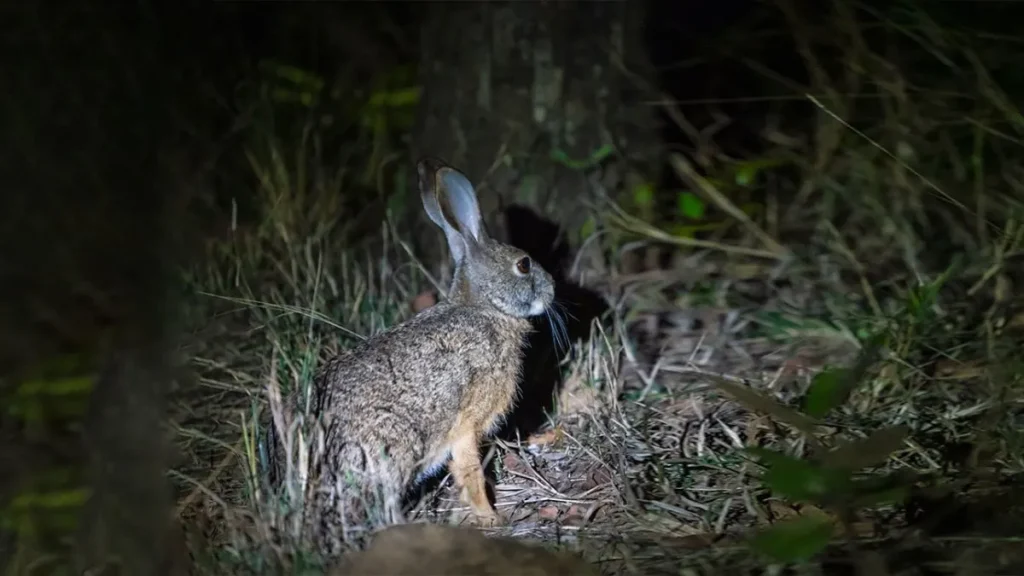
- Nilgai (blue bull) the sanctuary’s signature species, and reportedly abundant
- Wolf
- Striped hyena
- Jackal
- Fox
- Deer species
Birds – 130+ Species
- Crested serpent eagle
- White-eyed buzzard
- Black-shouldered kite
- Indian roller
- Grey francolin and partridge
- Common peafowl
- Ring dove
- Large grey babbler
- Purple sunbird
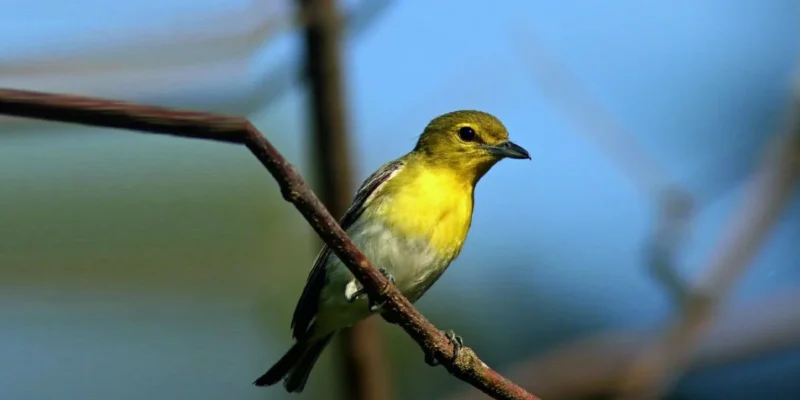
- Yellow-throated sparrow
Reptiles
A range of reptile species completes the picture.
The Watchtower
A watchtower on elevated ground in the centre of the sanctuary gives a panoramic view across the whole area including both streams. If you get permission, this is where to spend your time.
If You Get Permission: Practical Tips
- Carry your permit and ID Have both easily accessible.
- Go early Dawn is when birds and mammals are most active, and when the light is best.
- Head for the watchtower It’s the single best vantage point in the sanctuary.
- Wear walking shoes Exploring involves walking over uneven ground.
- Carry water There are no facilities to rely on.
- Bring binoculars and a long lens Wildlife here is shy and distant.
- Follow every instruction from forest staff On a site with a breeding programme, restrictions aren’t negotiable.
- Keep quiet Groups and noise are the fastest way to see nothing.
How to Reach Rampara
Rampara Wildlife Sanctuary lies near Wankaner, in the Khijadiya / Bhojpara Vidi area of Morbi district.
By Train
Wankaner railway station is the nearest, roughly 15 km away about 20 minutes by road. Wankaner has connections to Rajkot, Ahmedabad and Morbi.
By Bus
Take a bus to Wankaner from Rajkot, Morbi or Ahmedabad. From the Wankaner bus stand, hire a local taxi or auto one source estimates around ₹300–500 for the ride out, though agree the fare before you set off.
By Road
- From Wankaner: approx. 15 km
- From Rajkot: approx. 42–65 km depending on route and source the official figure is 65 km
- From Morbi: roughly 40–50 km
- From Ahmedabad: approx. 210–240 km
By Air
Rajkot (Hirasar) International Airport is the nearest.
Remember: get your permission before you make the trip.
Best Time to Visit
October to March is the season.
- October–March (Winter) – Best overall. Pleasant weather and the best chances for wildlife sightings. Some sources extend the ideal window from September to January.
- July–September (Monsoon) – The surrounding area turns genuinely green, and visitors say it’s at its most beautiful. Access conditions may vary.
- April–June (Summer) – Hot and dry. Wildlife retreats to water and shade.
Best time of day: Dawn and the last hours before dusk.
If You Can’t Get In: What to Do Instead
Permission isn’t guaranteed. Here’s how to make the trip worthwhile anyway.
Stay in Wankaner and see the town properly It’s genuinely worth a day on its own terms the Wankaner royal family’s palaces are the connection that makes Rampara’s history make sense.
Visit the region’s other wildlife sites Gujarat has several sanctuaries that are open to visitors, with a similar dry-country ecosystem.
Go birdwatching in the surrounding countryside Many of the species recorded inside Rampara also occur in the open landscape around it.
Where to Eat and Stay
At the sanctuary: nothing. Carry your own food and water.
Wankaner (approx. 15 km) – Simple local eateries and Gujarati thali joints. Roughly ₹200–400 for two. And the town has a genuinely special place to stay: Royal Oasis, the heritage hotel in the former summer villa of the Wankaner royal family – the same family whose shooting reserve became this sanctuary.
Rajkot (approx. 42–65 km) – The region’s food capital, with everything from legendary thali houses to a busy café scene.
What to try: A proper Kathiawadi thali – bajra rotla with garlic chutney, sev tameta, kadhi and chhaas.
What to pack: Theplas, khakhra and dry farsan like gathiya or sev mamra for the field.
Planning the Rajkot leg? Our best restaurants in Rajkot guide covers where to eat properly, and the top cafés in Rajkot list works for the drive back.
Places to Visit Near Rampara
| Place | Why Visit | Best For | Distance |
| Royal Oasis, Wankaner | Gujarat’s first heritage hotel, the Wankaner royals’ summer villa | Heritage travellers | ~15 km |
| Ranjit Vilas Palace | The Wankaner royal palace, with vintage cars (permission required) | Heritage lovers | ~15 km |
| Machchhu Dam | Reservoir views on the river Wankaner is named after | Couples, birdwatchers | ~15–20 km |
| Mani Mandir, Morbi | Striking royal-era temple complex | Families, photographers | ~40–50 km |
| Rajkot | Kaba Gandhi No Delo, Watson Museum, the region’s food scene | Everyone | ~42–65 km |
| Barda Hills Wildlife Sanctuary | The other lion gene pool site, in Porbandar | Wildlife lovers | ~200+ km |
The obvious pairing: read our Royal Oasis Wankaner guide. This sanctuary was the Wankaner royal family’s shooting reserve; Royal Oasis was their summer home. Same family, fifteen kilometres apart.
For the lion story: our Barda Hills Wildlife Sanctuary guide covers the other gene pool site named in the same 2012 announcement.
For another honest conservation story: our Great Indian Bustard Sanctuary guide covers a Kutch sanctuary with a similarly complicated relationship between protection and public access.
Frequently Asked Questions (FAQs)
No. Visitors need prior permission from the Gujarat Forest Department through the Rajkot or Wankaner forest office.
Access is controlled because Rampara has been associated with an Asiatic lion gene pool and breeding programme, which requires minimal disturbance.
You should not expect to see lions. With permission, visitors may spot nilgai, wolves, hyenas, jackals, foxes and many bird species.
Rampara does not have regular walk-in timings or standard entry fees. Approved visitors receive the latest visiting details from the forest department.
Rampara was a shooting reserve of the Wankaner princely state. It became a reserve forest in 1983 and was declared a wildlife sanctuary in 1988.
Rampara is about 15 km from Wankaner and approximately 65 km from Rajkot by the official Gujarat Tourism figure.
Final Thoughts
Rampara Wildlife Sanctuary covers fifteen square kilometres of former royal hunting ground and now supports the conservation of the Asiatic lion. Because of this important role, visitors cannot simply drive into the sanctuary. Apply to the Wankaner or Rajkot forest office before planning your visit. If you receive approval, arrive early with binoculars for the best chance of spotting wildlife. If your permit does not come through, stay in Wankaner anyway the town that once owned this land offers plenty to explore.
Travel Roach brings you practical travel information to help you plan your Gujarat wildlife journey with greater confidence.
Have you managed to get permission to visit Rampara? Tell us how the process worked in the comments first-hand reports are the most useful thing this page can have.