There is a street in Sidhpur, North Gujarat, that most people drive past without stopping. It does not appear in the standard Gujarat tourism brochures. It is not on the main road. It is tucked into the older parts of a mid-sized town between Mehsana and Patan, and if you find it which requires local guidance or a specific search for ‘Vohravad Paris Galli’ on Google Maps what you see will stop you.
Row after row of Victorian-era mansions in pastel pink, mint green, sky blue, and cream. Art Deco balconies. Carved teak facades. Stained glass windows the coloured glass brought from Belgium and England a century ago. Scalloped arches. Corinthian columns. Steps rising steeply from the lane to the main entrance in the manner of a London townhouse. And silence. Because the families who built these extraordinary houses the Dawoodi Bohra merchant community, whose ancestors came from Yemen and who made their fortunes in the global spice trade have mostly gone. To Mumbai, to Ahmedabad, to the Middle East, to London and New York. The havelis are locked. The caretakers watch. The mansions stand in the North Gujarat heat, looking for all the world like a lost neighbourhood of colonial Bombay that somehow ended up in the wrong city.
This TravelRoach guide covers everything: who the Dawoodi Bohras are, how they came to build European-style mansions in Sidhpur, the story of specific havelis including the extraordinary Zaveri Mansion with 365 windows, the sacred Rudra Mahalaya ruins, the Bindu Sarovar, how to reach, and how to combine Sidhpur into the perfect North Gujarat heritage day.
Bohra Vad, Sidhpur – Quick Information
| Detail | Information |
| Full Name | Bohra Vad (also Vohravad; locally known as ‘Paris Galli’) |
| Google Maps Name | Vohravad Paris Galli, Sidhpur |
| Location | Sidhpur town, Patan District, North Gujarat |
| What It Is | A neighbourhood of Victorian and European-style havelis built by the Dawoodi Bohra Muslim merchant community in the late 19th and early 20th centuries |
| Built By | Dawoodi Bohra merchants a Shia Muslim trading community originally from Yemen |
| Period of Construction | Late 1800s to early 1900s approximately 100 to 150 years ago |
| Architectural Style | Victorian / European fusion with Indian craftsmanship Art Deco, Gothic Revival, Baroque elements on Indian-built structures |
| Key Features | Pastel facades (pink, green, blue), stained glass windows, carved teak facades, scalloped arches, Art Deco balconies, Corinthian columns |
| Notable Havelis | Zaveri Mansion (365 windows one per day of the year), Mohamedally Tower |
| Current State | Most havelis locked and deserted; under caretaker supervision; families have migrated to larger cities and abroad |
| Entry Fee | No entry fee the streets are public; some private havelis accessible only with owner/caretaker permission |
| Best Time to Visit | October to March; morning for best light; weekday for quieter experience |
| Distance from Ahmedabad | ~103–130 km (~2.5–3 hours by road) |
| Distance from Patan (Rani Ki Vav) | ~30–35 km (~40 minutes) |
| Distance from Mehsana | ~37–40 km (~45 minutes) |
| Distance from Modhera Sun Temple | ~55–60 km (~1 hour) |
| Sidhpur Railway Station | In the town connected to Ahmedabad, Mehsana, and Patan |
| Other Attractions in Sidhpur | Rudra Mahalaya ruins (12th century Shiva temple), Bindu Sarovar (sacred lake), Kapilamuni Ashram |
Sidhpur – A Town of Many Layers
The Ancient Sacred Town on the Saraswati
Sidhpur is not only a town of Victorian havelis. It is, in fact, one of North Gujarat’s most ancient and layered sacred towns a place where Hindu and Islamic history overlap in ways that are simultaneously surprising and deeply representative of India’s architectural and cultural diversity.
In the Vedas, the site is mentioned as Sristhai a ‘pious place.’ It is located on the left bank of the Saraswati River (now largely dry but historically one of the most important rivers of northwestern India) approximately 24 kilometres upstream of Anhilwad Patan the ancient capital of Gujarat before Ahmedabad was founded in the 15th century. The town was renamed Sidhpur literally ‘Siddharaja’s town’ after the great Solanki king Siddhraj Jaisinh, who made it the capital of his kingdom in 1140 CE.
Sidhpur as Matru Gaya – The Unique Pilgrimage
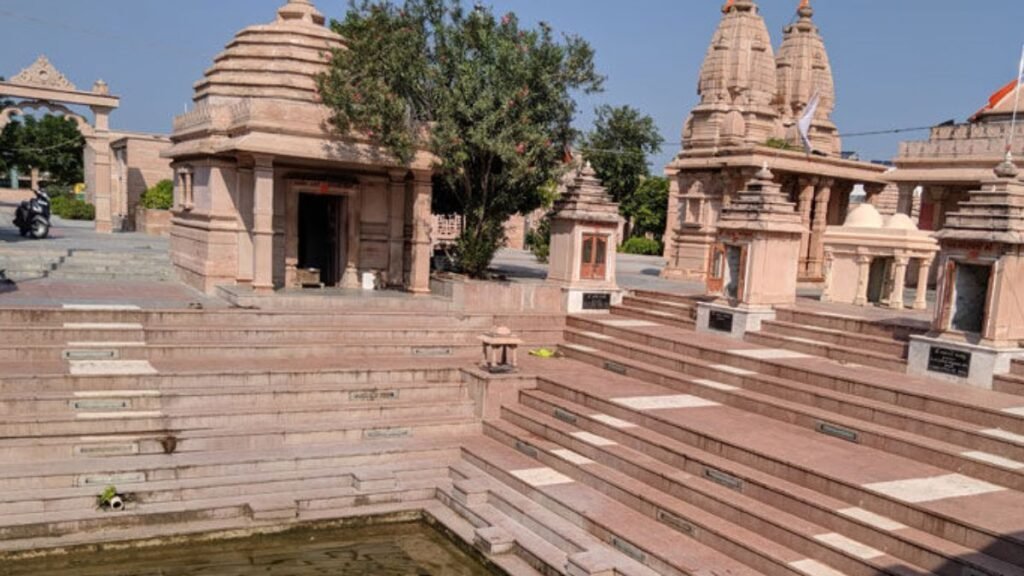
Among Sidhpur’s most distinctive identities is its sacred significance as ‘Matru Gaya’ the maternal equivalent of Gaya in Bihar, where Hindus go to perform funeral rites for deceased fathers. Sidhpur is the place where corresponding rites are performed for deceased mothers. According to Hindu tradition, the Matru Shraddh (the ritual offerings for the maternal ancestors) must be performed at Sidhpur, specifically at the Bindu Sarovar.
The Bindu Sarovar is one of the five most holy and ancient lakes in India the Pancha Sarovara (five sacred lakes). It is located at the Kapilamuni Ashram in Sidhpur, which also has three sacred kunds: the Gyan Vapika, Alpa Sarovar, and the Bindu Sarovar itself. Lord Parashurama the sixth avatar of Vishnu is said to have performed his own Matru Shraddh at Bindu Sarovar, and his temple stands here. Every year, thousands of Hindus from across India travel to Sidhpur for the Matru Shraddh rituals, a pilgrimage that has been ongoing for many centuries.
Also Read: Rani Ki Vav Patan
Rudra Mahalaya – The Temple That Was
Sidhpur’s greatest architectural monument is now a ruin. In the 12th century, King Siddhraj Jaisinh of the Solanki dynasty built the Rudra Mahalaya a magnificent temple dedicated to Lord Shiva that was considered one of the architectural wonders of medieval Gujarat. According to historical descriptions, the temple had 1,600 pillars, 12 entrance doors, a three-storey shikhara (spire), a central mandapa, porches opening on the east, north, and south, and the main sanctum in the west.
The scale of this description 1,600 pillars alone places it in the same category as the great temple complexes of Khajuraho, Puri, and the south Indian mega-temples. Early medieval Sidhpur was a city of genuine architectural ambition. In the early 14th century, the Rudra Mahalaya was destroyed by the forces of Alauddin Khilji, the Delhi Sultanate ruler. What remains today the ruins visible near the centre of Sidhpur still give a palpable impression of the original scale, with massive carved pillars and architectural fragments spread across the site. The ruins are one of the most thought-provoking heritage spaces in North Gujarat.
The Dawoodi Bohra Community – Who Built the Havelis
Origins – From Yemen to Gujarat
The Dawoodi Bohras are a Shia Muslim community whose global presence is centred in India but whose origin traces back to Yemen in the Arabian Peninsula. Several centuries ago, Ismaili missionaries from Yemen came to India specifically to Gujarat and converted a significant number of local traders to their branch of Shia Islam. These converts, who retained their Gujarati identity while adopting the faith, became the ancestors of the Dawoodi Bohra community.
The name ‘Bohra’ (also written ‘Vohra’) comes from the Gujarati word ‘voravvu’ to trade. This etymological root defines the community’s essential identity: the Bohras were and are, above all, traders. For centuries, they were among the most active merchant communities in the Indian Ocean trade network buying and selling textiles, spices, gold, and later industrial goods across routes that connected Gujarat to the Persian Gulf, the Arabian Sea ports, East Africa, and eventually Europe.
Merchants, Wealth, and the World Beyond Gujarat
By the 19th century, the most successful Bohra merchant families of Sidhpur had become genuinely wealthy in the global sense their trading networks connected them to British India, the Malay Archipelago, East Africa, the Arabian Peninsula, and Europe. They travelled to London, Paris, and colonial Hong Kong. They saw the grand townhouses of Victorian Britain and the elegant apartments of European cities. And when they returned to Sidhpur, they brought design ideas with them.
This is the origin of Bohra Vad’s extraordinary architectural character. The wealthy Bohra families who built their mansions in Sidhpur in the late 1800s and early 1900s did not build in the Mughal style or the Rajput style or even the Indo-Saracenic style that was popular among colonial-era Indian elites. They built European. They hired local craftsmen to execute European architectural motifs the arches of London townhouses, the coloured glass of Belgian churches, the Baroque ornamentation of French civic buildings in the materials and craft traditions of Gujarat. The result is a style that belongs entirely to Sidhpur and the Bohra community: a fusion that is neither purely European nor purely Gujarati but something genuinely its own.
The Community Today
The Dawoodi Bohra community is found today in significant numbers across India (Mumbai, Ahmedabad, Surat), in Pakistan, in the Middle East, in East Africa, and in the United Kingdom and the United States. In Sidhpur itself, the community’s presence has largely moved on the families who built the Bohra Vad havelis have been migrating to cities and abroad for several decades. Most havelis are now under caretaker supervision, locked for much of the year and opened only when the owner families return for occasional visits.
Dawoodi Bohra women are easily recognisable by their distinctive brightly coloured burkha (rida) unlike the black burqa associated with some other Muslim communities, the Bohra women’s traditional dress is coloured and often decorated with patterns and lace. The community is also known for its progressive approach to education: Bohra women today include significant numbers of doctors, lawyers, engineers, and entrepreneurs, particularly in the United States and United Kingdom.
The Architecture of Bohra Vad – European in India
The Visual Experience – What You See When You Walk In
Walking into Bohra Vad down the narrow lanes that branch from the main Sidhpur market street is one of the most disorienting and genuinely delightful heritage experiences in Gujarat. Nothing about the exterior of the town prepares you for what you find inside the Vohravad neighbourhood.
The lane opens into a street of mansions. They stand two and three storeys high, shoulder to shoulder, in their pastel colours a faded pink house next to a pale green one next to a cream one with a blue trim. Their facades are organised in European fashion: large windows on each floor, decorative cornices between storeys, flat or lightly pitched roofs in the manner of continental European townhouses rather than the sloping roofs of traditional Gujarati architecture. The street itself narrow, stone-paved, quiet looks more like a lane in an old neighbourhood of Bombay or Colombo than anything you associate with the Gujarat interior.
Also Read: Adalaj ni Vav, Gandhinagar
The Key Architectural Elements
- Pastel facades – pink, green, blue, cream and yellow tones, applied in layers over the years, with the oldest layers showing through the newest in places; the colours are the first thing that registers and the most immediately unusual
- Art Deco balconies – ironwork and concrete balconies in the stepped-geometric patterns of early 20th-century Art Deco; some still have their original ironwork railings
- Stained glass windows – coloured glass panels, originally imported from Belgium and England, that cast coloured light into the upper rooms; among the most distinctive single features of the havelis
- Carved teak facades – elaborate woodwork on the main doorways, window frames, and upper-storey panels; the Gujarati craftsman’s contribution to the European aesthetic
- Scalloped arches – European-influenced curved arches over windows and doorways, sometimes combined with traditional Indian bracket corbel elements
- Corinthian columns – full or engaged columns in the classical European order, rendered in stone or plaster, framing doorways and ground-floor facades
- Steep entrance steps – a direct London townhouse borrowing; the main entrance elevated above street level, reached by a short flight of external stairs
- Large rooms and wide corridors – the European domestic spatial logic of generous proportions, applied within buildings constructed using Indian labour and materials
The Zaveri Mansion – 365 Windows
The most celebrated single haveli in Sidhpur’s Bohra Vad is the Zaveri Mansion famous across Gujarat’s heritage community for one extraordinary feature: 365 windows, one for every day of the year. The Zaveri family, who built the mansion at the height of their commercial success, created a building whose window count is both a practical expression of their wealth and a visual spectacle that is unique in Gujarat’s domestic architecture.
Walking around the Zaveri Mansion which occupies a corner position in the Bohra Vad lanes the windows are immediately apparent: arranged in ranks across the facade, each one slightly different in its frame and surround, together creating a building that appears almost entirely made of glass and frame. The scale is impressive. The craftsmanship of the individual window surrounds is extraordinary. And the number 365 carries the kind of specific, deliberate ambition that only a genuinely wealthy and confident family commissioning a personal monument would have.
The Mohamedally Tower
Another landmark structure in the Bohra Vad is the Mohamedally Tower a taller, more vertical building that rises above the general roofline of the havelis and serves as a visual marker for the neighbourhood. The tower’s European classical style its proportions and ornament drawing on the columned civic towers of British colonial architecture makes it visible from several streets away and gives the Bohra Vad neighbourhood a vertical punctuation that is entirely unlike anything in the surrounding Sidhpur streetscape.
The Melancholy of Locked Doors
The most emotionally powerful aspect of walking through Bohra Vad is the silence. Most of the mansions are closed. The shutters are drawn. The elaborate teak doorways are padlocked. The painted facades are fading, peeling in places, and in some cases actively deteriorating. The stained glass in some windows has cracked or been replaced with plain glass.
The Bohra families who built these houses imagined living in them. They built 365-windowed mansions as permanent expressions of their prosperity and their presence in Sidhpur. And then the logic of the 20th century dispersed them to cities, to countries, to lives that had no place for a mansion in a small North Gujarat town. The caretakers who maintain the locked buildings are the only human presence in many of the lanes on most days. Walking through Bohra Vad on a weekday morning alone in the lane, the sun on the pastel facades, the padlocks on the doors is an encounter with what wealth and absence together look like.
The Heritage Walk – How to Explore Bohra Vad
Where to Start
Navigate to ‘Vohravad Paris Galli’ on Google Maps this is the most reliable way to find the main Bohra Vad area. The neighbourhood is in the older part of Sidhpur, not immediately visible from the main market road. Once you find the first lane of havelis, continue walking the neighbourhood extends through several interconnecting streets and lanes, and each turn reveals new havelis in varying states of grandeur and decay.
Local residents in the area are generally knowledgeable and friendly. If you ask for guidance to ‘Bohra Vad’ or ‘Zaveri Mansion,’ most locals can point you in the right direction. A local guide, if you can arrange one through your hotel or guesthouse in Mehsana or Patan, will significantly enhance the experience by providing names, histories, and family stories behind specific havelis.
How Long to Spend
Allow 1 to 2 hours for a thorough walk through Bohra Vad. This is enough time to cover the main lanes, stop at the Zaveri Mansion and Mohamedally Tower, and walk the full extent of the haveli neighbourhood. Photography enthusiasts may want 3 to 4 hours the number of compelling compositions in Bohra Vad is extraordinary, and the light changes significantly through the morning.
Photography Tips
Bohra Vad is one of the finest street photography locations in Gujarat. The best light is in the morning (8 to 11 AM) when the sun hits the pastel facades from the east at a low angle, creating warm light and deep shadows in the recessed doorways and balconies. The colours at this hour — particularly the pinks and greens — are at their most saturated. The stained glass windows photograph best when the interior of the haveli is darker than the exterior — backlit conditions that give the coloured glass its maximum luminosity.
Key shots: the padlocked ornate teak doorways (the combination of elaborate carving and mundane security hardware is particularly evocative); the Zaveri Mansion facade showing the ranks of windows; the narrow lane with havelis on both sides stretching away; the stained glass windows from outside; the Mohamedally Tower from a distance.
Best Time to Visit Bohra Vad, Sidhpur
October to March – Best Overall Season
The winter months offer the most comfortable visiting conditions. North Gujarat is pleasant from October to February 15 to 25 degrees Celsius and the morning light for photography is excellent. The quieter post-monsoon months of October and November, when the vegetation around the town is still green from the rains, give Bohra Vad a particularly atmospheric quality. December and January are the clearest for long views of the facades.
Morning – The Best Time of Day
Regardless of season, morning (8 to 11 AM) is always the right time for Bohra Vad. The light on the eastern-facing facades is warmest in the morning. The lanes are quieter before the midday heat and activity. And the combination of good light and relative silence allows you to properly absorb the strangeness and beauty of what you are looking at.
Weekdays – Best for Solitude
Bohra Vad is not yet a mainstream tourist attraction and does not draw large weekend crowds in the way that Rani Ki Vav or Modhera does. But weekday visits (Tuesday to Friday) still give you the cleanest, quietest experience of the lanes. On weekends, small groups of heritage tourists from Ahmedabad and Patan sometimes visit, which adds some life to the streets but reduces the sense of private discovery.
Also Read: Thol Lake Bird Sanctuary
How to Reach Bohra Vad, Sidhpur
| From | Distance | Mode | Approx. Time |
| Ahmedabad | ~103–130 km | Car / GSRTC Bus / Train | 2.5–3 hours |
| Patan (Rani Ki Vav) | ~30–35 km | Car / Taxi | 40–45 minutes |
| Mehsana | ~37–40 km | Car / Bus / Train | 45–50 minutes |
| Modhera Sun Temple | ~55–60 km | Car / Taxi | 1 hour |
| Gandhinagar | ~110–120 km | Car | 2.5 hours |
| Sidhpur Railway Station | Within town | Walking / Auto from station | 10 minutes by auto |
By Road from Ahmedabad
From Ahmedabad, Sidhpur is approximately 103 to 130 km by road about 2.5 to 3 hours. Take the Ahmedabad-Mehsana National Highway to Mehsana, then the state road northward to Sidhpur. GSRTC buses run between Ahmedabad and Sidhpur. Private taxis from Ahmedabad are available. Sidhpur is on the way between Mehsana and Patan making it a natural stop on the North Gujarat heritage circuit.
By Train
Sidhpur Railway Station is on the Mehsana–Taranga Hill branch line and also connected to some services from Ahmedabad. Check current train schedules on Indian Railways before planning a rail visit. From Sidhpur station, Bohra Vad is accessible by local auto-rickshaw (approximately 10 minutes, ₹50 to ₹80) or by foot if you know the route.
The Classic North Gujarat Heritage Day Circuit
The most popular and rewarding way to visit Bohra Vad is as part of the North Gujarat Heritage Triangle: Sidhpur (Bohra Vad) + Patan (Rani Ki Vav) + Modhera (Sun Temple). All three are within 60 km of each other and represent three completely different but equally extraordinary aspects of Gujarat’s heritage Islamic merchant architecture, 11th-century Hindu stepwell art, and 11th-century Solanki temple. This is one of Gujarat’s finest single-day heritage experiences.
Other Things to See in Sidhpur
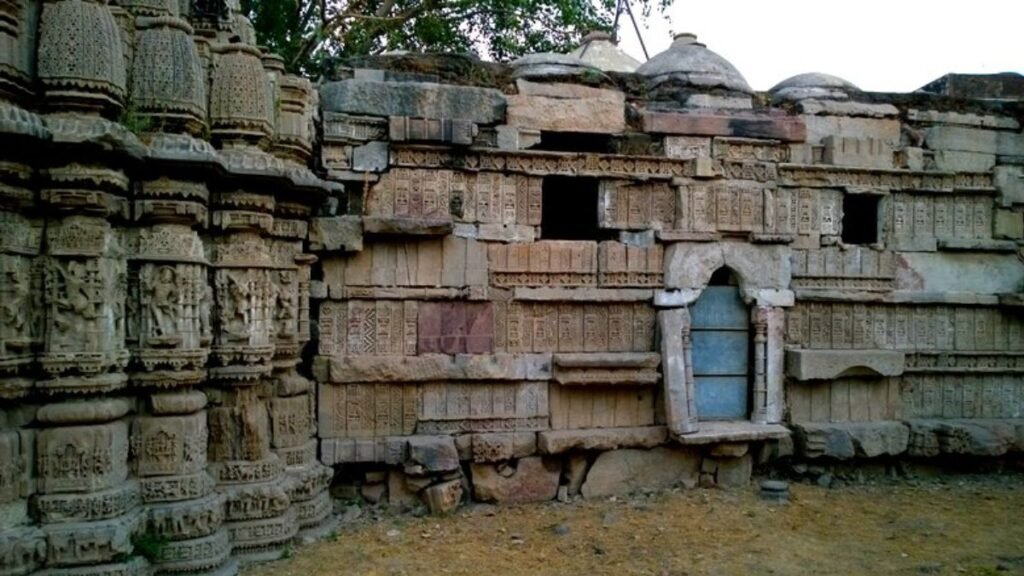
- Rudra Mahalaya Ruins Sidhpur town centre | The ruins of the 12th-century Shiva temple built by Siddhraj Jaisinh originally a structure with 1,600 pillars and 12 entrance doors, considered one of medieval Gujarat’s architectural wonders. Destroyed in the early 14th century, the ruins still give a powerful impression of the original scale. Essential if you are spending more than 2 hours in Sidhpur.
- Bindu Sarovar and Kapilamuni Ashram Sidhpur | One of India’s five most ancient sacred lakes; the site for Matru Shraddh (pilgrimage for deceased mothers). The ashram and lake setting is peaceful and historically significant. Visit if you are interested in Sidhpur’s Hindu pilgrimage dimension alongside the Bohra heritage.
- Sidhpur Old Town Bazaar Sidhpur town | The busy central market of Sidhpur is worth a walk for local colour, snacks, and the contrast with the quiet deserted Bohra Vad lanes. Good for chai and snacks before or after the heritage walk.
Nearby Heritage to Combine with Bohra Vad
- Rani Ki Vav, Patan ~30–35 km | The UNESCO World Heritage stepwell India’s most magnificent built in the 11th century. The combination of Bohra Vad (Islamic merchant architecture) and Rani Ki Vav (Hindu Solanki architecture) in one day is extraordinary. Read our full TravelRoach guide.
- Modhera Sun Temple ~55–60 km | The 11th-century Solanki sun temple another masterpiece of the same architectural tradition that produced Rani Ki Vav. All three sites together form the quintessential North Gujarat heritage day. Famous for the Uttarayan Dance Festival.
- Sahasralinga Talav, Patan ~30–35 km | The medieval artificial water tank built by Siddhraj Jaisinh — the same king who built the Rudra Mahalaya at Sidhpur. Seeing both in one day connects the monuments to the man who created them.
- Adalaj ni Vav, Gandhinagar ~110 km | The five-storey 15th-century stepwell another masterpiece of Gujarat’s vav tradition. Slightly further but worth including in a 2-day North Gujarat heritage circuit. Read our full TravelRoach guide.
Practical Tips for Visiting Bohra Vad
- Navigate to ‘Vohravad Paris Galli’ on Google Maps – this is the most reliable navigation point for Bohra Vad. ‘Bohra Vad, Sidhpur’ also works in most navigation apps.
- Ask locals for guidance – the Bohra Vad lanes are not always clearly signed and a local resident’s direction saves significant time. Most Sidhpur residents know where the Bohra havelis are.
- Morning visits are essential for good photography – the pastel facades in morning light are the primary visual experience of Bohra Vad. Afternoon light and harsh midday sun flatten the colours.
- Respect the privacy of inhabited havelis – some families still live in portions of the mansions. Do not enter private courtyards without invitation or obvious public access. The streets themselves are public.
- Do not photograph residents without permission – if you encounter caretakers or residents, always ask before photographing people.
- Combine with Rudra Mahalaya ruins – the ruins are in the same town and add the Hindu architectural dimension to what is primarily an Islamic heritage neighbourhood. Allow an extra 30 to 45 minutes.
- Bring a charged camera – the compositions in Bohra Vad are relentless. The teak doorways, the stained glass, the lane perspectives, the faded facades you will photograph more than you expect.
- No entry fees anywhere in the public streets – the experience is completely free. Carry cash for local chai stalls, puja items (if visiting Bindu Sarovar), and auto-rickshaw fares.
Frequently Asked Questions (FAQs)
Bohra Vad (also Vohravad, locally called ‘Paris Galli’) is a neighbourhood in Sidhpur, Patan District, North Gujarat, consisting of Victorian and European-style mansions (havelis) built by the Dawoodi Bohra Muslim merchant community between the late 1800s and early 1900s. The Dawoodi Bohras were wealthy global traders who travelled extensively to Europe and brought back architectural design ideas, which they incorporated into their Sidhpur family mansions. The result is a street of extraordinary pastel-coloured, Art Deco-balconied, stained-glass-windowed havelis that look entirely out of place in a North Gujarat town and for that reason, entirely unforgettable.
The Dawoodi Bohras are a Shia Muslim merchant community whose ancestors migrated from Yemen to Gujarat several centuries ago. By the 19th century, the most successful Bohra families had built trading networks connecting Gujarat to Europe, East Africa, and the Arabian Peninsula. Their global travel exposed them to European architecture Victorian London, colonial Bombay, continental cities. When they returned to Sidhpur and built their family mansions, they incorporated the design vocabulary they had seen abroad: Art Deco balconies, stained glass windows imported from Belgium and England, Corinthian columns, and the steeply stepped entrances of London townhouses. The execution was by local Gujarati craftsmen, creating a fusion that is uniquely Sidhpur’s own.
The Zaveri Mansion is the most celebrated single haveli in Sidhpur’s Bohra Vad, famous for its extraordinary 365 windows one for each day of the year. Built by the Zaveri merchant family at the height of their wealth and commercial success, the mansion’s window count is both a statement of prosperity and a visual spectacle unique in Gujarat’s domestic architecture. Walking around the Zaveri Mansion, the windows are immediately apparent arranged in ranks across the facade, each with its own surround and frame, together giving the building the appearance of being made almost entirely of glass.
Navigate to ‘Vohravad Paris Galli’ on Google Maps this is the most reliable navigation point for the Bohra Vad neighbourhood. ‘Bohra Vad, Sidhpur’ also works in most navigation apps. The neighbourhood is in the older part of Sidhpur town, not immediately visible from the main market road. Once you find the first lane of havelis, continue walking the neighbourhood extends through several interconnecting streets. Ask locals for further guidance to specific havelis like the Zaveri Mansion or Mohamedally Tower.
Sidhpur is approximately 103 to 130 km from Ahmedabad about 2.5 to 3 hours by road. From Ahmedabad, take the Ahmedabad-Mehsana National Highway to Mehsana (~60-70 km) and then follow the state road northward to Sidhpur (~37-40 km from Mehsana). GSRTC state buses run directly from Ahmedabad to Sidhpur. By train, services from Ahmedabad connect to Sidhpur via Mehsana. Sidhpur also has a railway station with direct connections from some Ahmedabad services.
Yes – and this is the strongly recommended approach. The North Gujarat Heritage Triangle of Sidhpur (Bohra Vad) + Patan (Rani Ki Vav) + Modhera (Sun Temple) covers three completely different but equally extraordinary aspects of Gujarat’s heritage within a 60 km radius. Start with Sidhpur’s Bohra Vad in the morning (2 to 3 hours), then drive to Patan for Rani Ki Vav (1.5 to 2 hours), and finally visit the Modhera Sun Temple in the late afternoon (1.5 hours). Return to Ahmedabad, Mehsana, or Patan for the night. This is one of Gujarat’s finest single-day heritage itineraries for any serious history or architecture lover.
Sidhpur has multiple layers of heritage and sacred significance. The Rudra Mahalaya a 12th-century Shiva temple built by Siddhraj Jaisinh with 1,600 pillars and 12 entrance doors, described as a medieval architectural wonder now stands as ruins but still conveys the original scale. Bindu Sarovar is one of India’s five most ancient sacred lakes and the site for Matru Shraddh the Hindu ritual for deceased mothers that makes Sidhpur a unique pilgrimage destination (the maternal equivalent of Gaya for paternal ancestors). The Kapilamuni Ashram and the Parashurama temple are associated with this tradition. Sidhpur was also the capital of King Siddhraj Jaisinh’s medieval Gujarat kingdom.
Final Thoughts
Gujarat has many extraordinary heritage destinations. Most of them are famous. The Sun Temple at Modhera, the stepwell at Rani Ki Vav, the Somnath Jyotirlinga, the Rann of Kutch these are on the lists, in the brochures, in the itineraries. Bohra Vad is not on those lists. It should be.
There is something about a place that has been beautiful without knowing it is beautiful a street that has been pastel and quiet and padlocked and waiting for a century, with no particular expectation that anyone will come that is more moving than the most famous monument. The Zaveri Mansion with its 365 windows was not built to be a heritage site. It was built for a family to live in. The family left. The windows remain. One for each day of the year, looking out at a North Gujarat street that mostly does not look back.
Drive to Sidhpur. Find the lanes. Walk slowly. Let the facades show you what wealth and travel and faith and time and departure look like when they leave their mark in stone and teak and Belgian glass.
Have you visited Bohra Vad in Sidhpur? Share your experience the haveli that surprised you most, the doorway you photographed, the lane that felt like another city entirely in the comments. TravelRoach would love to hear from every Gujarat heritage explorer who found this hidden gem.
