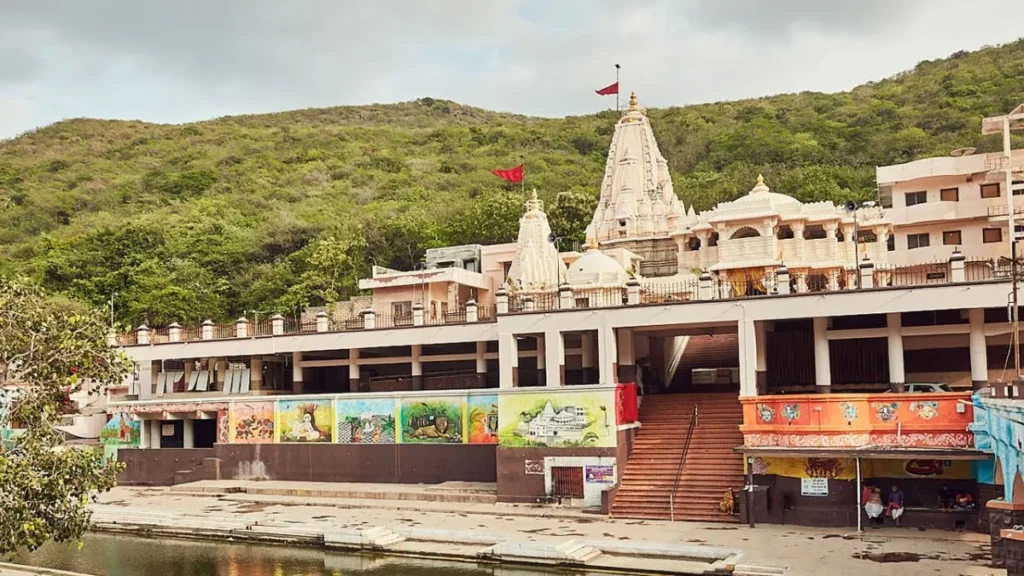
At the very foothills of Girnar hills, where the famous flight of steps to the summit begins, lies Damodar Kund a small, sacred lake considered one of Gujarat’s holiest bodies of water. Just 257 feet long and 5 feet deep, this modest kund carries centuries of mythology, ritual significance, and a cluster of ancient temples on its banks. This guide covers Damodar Kund’s history, mythology, the temples around it, timings, and how to plan your visit.
The Mythology and History of Damodar Kund
According to legend, Lord Krishna’s devotee Damodar performed penance at this very spot, and the kund takes its name from Krishna himself “Damodar” translates to “a rope around the belly,” referencing the story of young Krishna being tied at the waist by his mother, Yashoda. The site’s association with tourism and Pilgrimage Sites reportedly stretches back to the era of the Puranas.
Historically, people believe a Suryavanshi ruler named Chandraketpur built or renovated the temples along the kund’s banks. He also reportedly built the Shiva temples at nearby Bhavnath, reflecting his respect for different belief systems. King Skandagupta of the Gupta dynasty later oversaw further renovations in 462 CE. Some accounts state that Vajranabha, Lord Krishna’s grandson, installed the idols at the adjoining Damodar Hari Temple. Tradition also credits him with establishing the Dwarkadhish Temple in Dwarka.
Damodar Kund also has a strong literary connection. The site is associated with Narsinh Mehta, the celebrated Gujarati poet-saint and devoted follower of Krishna. A temple dedicated to him stands near the lakeside, adding to the spiritual and cultural significance of the area.
Rituals and Religious Significance
Damodar Kund holds deep significance for Hindu pilgrims, primarily as a site for:
- Ritual bathing, believed to purify devotees of their sins
- Immersion of ashes and bones after cremation, in the belief that departed souls attain moksha (liberation) here
- Last rites and ancestral rituals, performed by families from across India
The site becomes especially significant during Mahashivratri, when large numbers of pilgrims visit both Damodar Kund and the nearby Bhavnath Mahadev Temple as part of the wider festival.
What to See at Damodar Kund
Damodarji Temple
On the lakeside stands the temple of Damodarji, dedicated to Lord Krishna. Built from pink sandstone, it features an inner Nij Mandir and an outer Solaha Mandapa, both topped with shikaras and supported by around 84 intricately carved pillars.
Temples of Radha, Baladeva, and Vagheshwari
Alongside the main Damodarji shrine, smaller temples dedicated to Radha, Baladeva, and Goddess Vagheshwari sit nearby, forming a small devotional cluster on the ghat.
Revati Kund
A short distance away sits Revati Kund, roughly 52 feet long, 52 feet wide, and 37 feet deep. According to legend, this is where Revata settled after his daughter Revati married Lord Balarama the reason Mount Girnar also carries the names Raivatachal, Raivatgiri, or Revatak Parvat.
Muchukunda Cave
Near Revati Kund, the mythological Muchukunda Cave houses a small Krishna temple and a Shivling. According to the Mahabharata, this is where the Yavana (Greek) warrior king Kalayavan, who was pursuing Lord Krishna, was destroyed by the gaze of the sage Muchukunda.
Timings and Entry Fee
- Timings: Generally 6:00 AM to 6:00 PM (some listings note slightly later closing around 5:30 PM)
- Entry fee: Free Damodar Kund is a public pilgrimage site with no admission charge
- Facilities: The Gujarat State Government has developed basic visitor amenities here, including toilets, food stalls, and changing rooms
- Time needed: Around 30–45 minutes for the kund and its temples, longer if combining with the start of the Girnar climb
Best Time to Visit
October to February offers the most comfortable weather for visiting the kund and its surrounding temples. If you want to witness the site at its most significant, plan a visit around Mahashivratri, when Damodar Kund becomes part of a much larger pilgrimage circuit centred on nearby Bhavnath Mahadev Temple.
How to Reach Damodar Kund
By Road: Damodar Kund is about 2 km from Bhavnath Mahadev Mandir and sits directly at the base of the Girnar step-climb, making it an easy stop before or after a Girnar visit.
By Train: Junagadh Junction Railway Station is roughly 4 km away, well connected to major Gujarat cities.
By Air: Rajkot Airport, about 100 km away, is the nearest airport with regular flight connections across Gujarat and India.
Who Should Visit Damodar Kund
- Pilgrims and devotees – a significant Vaishnav site tied directly to Krishna mythology
- History and mythology enthusiasts – layered stories spanning the Mahabharata, the Puranas, and later dynastic history
- Girnar trekkers – since the site sits right at the base of the Girnar steps, it’s a natural stop before starting the climb
- Anyone doing a full Junagadh heritage circuit – pairs naturally with Uparkot Fort, the Ashoka Rock Edicts, and Girnar Hill itself
Where to Eat Near Damodar Kund
Basic food stalls near the site and around Bhavnath Taleti serve Kathiyawadi snacks like gathiya-jalebi and locho. For a fuller meal, most visitors head back into Junagadh town, just a few kilometres away. If you’re planning a wider Gujarat food trail, check out our guides to famous foods in Ahmedabad and best street food in Ahmedabad.
Other Places to Visit Nearby
- Adi Kadi Vav – An impressive historic stepwell carved into the rock of Uparkot Fort, showcasing Junagadh’s remarkable architectural heritage.
- Ashoka Rock Edicts – Ancient inscriptions attributed to Emperor Ashoka, offering a fascinating glimpse into Junagadh’s rich history and Mauryan-era heritage.
- Chorwad Beach – A peaceful coastal destination near Junagadh, ideal for enjoying sea views, relaxing by the shore, and experiencing Gujarat’s scenic coastline.
- Uparkot Fort – One of Junagadh’s most significant historic landmarks, featuring ancient fortifications, Buddhist caves, stepwells, and centuries of fascinating history.
Frequently Asked Questions (FAQs)
No, Damodar Kund is a free public pilgrimage site with no admission charge.
It’s believed that Lord Krishna’s devotee Damodar performed penance here. Hindus consider Damodar Kund a sacred place where bathing purifies sins, while immersing the ashes of the deceased may help departed souls attain moksha.
The site is generally open from 6:00 AM to 6:00 PM daily, though a few sources note a slightly earlier evening closure around 5:30 PM.
Yes, it sits directly at the base of Girnar Hill, right where the famous flight of steps to the summit begins, making it a natural stop before or after a Girnar visit.
Revati Kund and the mythological Muchukunda Cave, both tied to stories from Hindu mythology and the Mahabharata, sit just a short walk away.
It’s about 4 km from Junagadh Junction Railway Station and roughly 2 km from Bhavnath Mahadev Mandir, making it easily accessible from the city centre.
Final Thoughts
Damodar Kund may be modest in size, but it carries an outsized weight of mythology, ritual, and history a genuinely reflective stop right at the doorstep of Girnar Hill. Whether you’re visiting for pilgrimage, history, or simply as a pause before the Girnar climb, it’s a meaningful addition to any Junagadh itinerary. Planning your Junagadh trip? Roach the road less traveled with us drop your questions in the comments and we’ll help you plan the rest of your visit!
