On the banks of the Sabarmati River in Gandhinagar sits one of India’s most unusual attractions a park where you can walk among life-sized dinosaur replicas, real fossilised dinosaur eggs, and a genuine blue whale skeleton, all in the same afternoon. Nicknamed “India’s Jurassic Park,” Indroda Dinosaur and Fossil Park is one of only a couple of dinosaur museums in the entire country, and it’s a genuinely fascinating stop for kids and adults alike. This guide covers the park’s history, what to see, timings, entry fees, and how to plan your visit.
About Indroda Dinosaur and Fossil Park
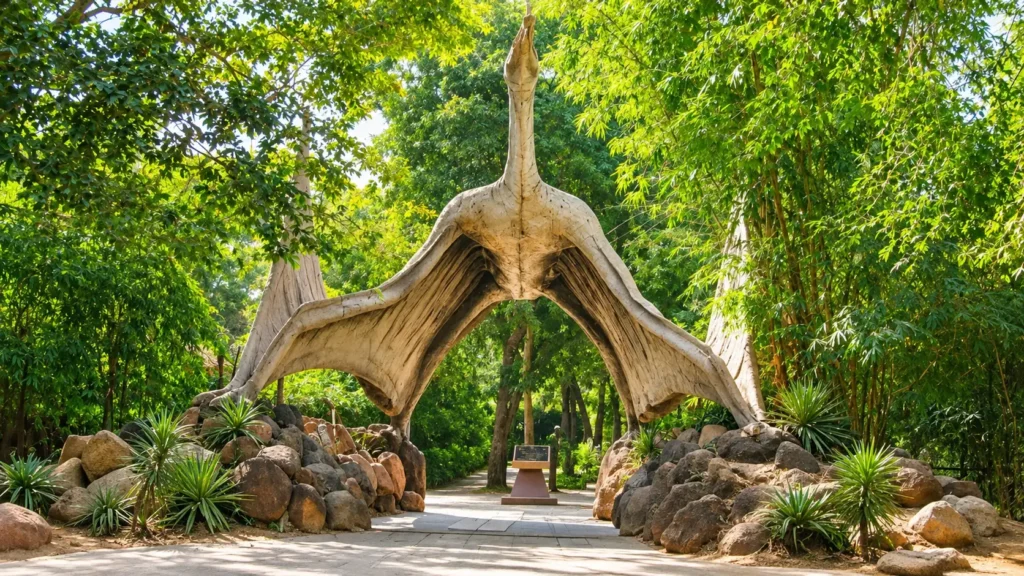
Spread across roughly 400–428 hectares along both banks of the Sabarmati River, the park is managed by the Gujarat Ecological Education and Research (GEER) Foundation. The western bank is home to Indroda Nature Park, covering the dinosaur and fossil sections, zoo, and botanical garden, while the eastern bank forms the Wilderness Park, a forested area home to nilgai, langurs, peafowl, and various birds and reptiles.
What makes Indroda genuinely significant is its fossil record: it’s considered one of the world’s largest hatcheries of dinosaur eggs and fossils, most dating to the Late Cretaceous period, roughly 66 million years ago. The region’s dinosaur bone fossil record actually goes back even further to the Middle Jurassic period, found in the Patcham formation of the Kutch basin. It’s worth noting this is a man-made fossil display park, not the actual site where these dinosaurs lived the fossils and eggs were excavated from various locations across Gujarat and brought here for public display and research.
What to See at Indroda Park
Dinosaur and Fossil Section
The park’s main draw life-sized dinosaur replicas alongside real fossilised bones, eggs, and trackways, giving visitors a genuine sense of prehistoric scale that photos simply don’t capture.
Zoo and Animal Enclosures
A modest zoo section houses crocodiles, deer, various birds, and other native species, alongside a dedicated crocodile breeding centre on the riverbank.
Marine Section
Home to skeletons of sea mammals, including an adult blue whale skeleton a striking and rarely seen exhibit for a landlocked park.
Botanical Garden
A large collection of indigenous trees, medicinal herbs, and ornamental exotic plants, offering a calmer, greener contrast to the fossil and animal sections.
Earth/Geological Section
Covers the geological history behind the fossils on display, adding useful context for visitors who want more than just the visual spectacle.
Wilderness Park (Eastern Bank)
A forested extension across the river, home to nilgai, langurs, peafowl, and a wide variety of birdlife worth exploring if you have extra time.
Timings and Entry Fee
Timings and fees vary slightly across sources, so it’s worth confirming current details before you go:
- Timings: Most commonly listed as 8:00 AM to 6:00 PM, Tuesday to Sunday, closed Mondays (a few sources cite 10:00 AM to 5:00 PM instead – check locally)
- Entry fee: Generally ₹20–30 for adults and ₹10–15 for children aged 5–12, with subsidised student tickets around ₹8 in some listings
- Time needed: Budget 2–3 hours to comfortably cover the dinosaur section, zoo, and botanical garden
Best Time to Visit
October to March offers the most comfortable weather for a park with significant outdoor walking. Early mornings, right after opening, tend to be quieter and better for wildlife viewing in the zoo section, while weekends and school holiday periods can get noticeably busier with family groups and school trips.
How to Reach Indroda Dinosaur and Fossil Park
By Road: The park is located in Sector 7, Gandhinagar, easily accessible via the Gandhinagar–Ahmedabad Highway and local roads. Taxis and auto-rickshaws provide convenient last-mile connectivity, and parking is available on-site.
By Train: Gandhinagar Capital Railway Station is the nearest, roughly 12–15 km away, well connected to Ahmedabad and other major Gujarat cities.
By Air: Sardar Vallabhbhai Patel International Airport in Ahmedabad is the nearest airport, within reasonable driving distance of Gandhinagar.
Who Should Visit
- Families with children – genuinely engaging for kids, combining dinosaurs, animals, and open green space
- Students and school groups – a strong educational draw, especially for anyone studying geology, paleontology, or biology
- Nature and wildlife enthusiasts – the zoo, botanical garden, and Wilderness Park add real value beyond the fossil exhibits
- Anyone visiting Gandhinagar – an easy, distinctive half-day stop unlike anything else in the city
Where to Eat Near Indroda Park
Gandhinagar has a range of local eateries and food courts within a short drive of the park. If you’re planning your trip around Ahmedabad, which is close by, check out our guides to famous foods in Ahmedabad and best street food in Ahmedabad for more options nearby.
Other Places to Visit Nearby
- Akshardham Temple, Gandhinagar – One of Gujarat’s most iconic spiritual and architectural landmarks, renowned for its magnificent temple complex, exhibitions, and beautifully landscaped gardens.
- Sabarmati Ashram – The historic residence of Mahatma Gandhi, this peaceful riverside ashram offers fascinating museums, preserved living quarters, and valuable insights into India’s freedom movement.
- Science City, Ahmedabad – A world-class science and entertainment destination featuring interactive exhibits, an aquarium, robotics gallery, nature park, and immersive educational experiences for visitors of all ages.
- Manek Chowk, Ahmedabad – One of the city’s most famous food and shopping destinations. By day, it’s a bustling jewellery market, while at night it transforms into a vibrant street food hub serving Ahmedabad’s iconic local delicacies.
- Nalsarovar Bird Sanctuary – Located about 60 km from Ahmedabad, this internationally recognized wetland is a paradise for birdwatchers. During winter, thousands of migratory birds, including flamingos, pelicans, and cranes, visit the sanctuary, making it one of Gujarat’s premier eco-tourism destinations.
Frequently Asked Questions (FAQs)
Entry fees are generally listed between ₹20–30 for adults and ₹10–15 for children aged 5–12, with subsidised student rates around ₹8 in some listings. It’s worth confirming current pricing at the counter before your visit.
Most sources list the park as open from 8:00 AM to 6:00 PM, Tuesday to Sunday, closed on Mondays, though a few sources cite different hours confirm locally if visiting on a specific day.
No, it’s a man-made fossil and dinosaur display park. The fossils and eggs on display were excavated from various sites across Gujarat, including the Kutch basin, and brought here for public exhibition and research.
Around 2 to 3 hours is generally enough to comfortably cover the dinosaur and fossil section, the zoo, and the botanical garden.
The park includes a small zoo with crocodiles and deer, a marine section featuring a blue whale skeleton, a botanical garden, and the forested Wilderness Park across the river, home to nilgai, langurs, and various birds.
The park is in Gandhinagar, easily reachable from Ahmedabad via the Gandhinagar-Ahmedabad Highway, making it a feasible day trip if you’re based in Ahmedabad.
Final Thoughts
Indroda Dinosaur and Fossil Park offers a genuinely rare experience in India real prehistoric fossils, life-sized dinosaur replicas, and a working zoo and botanical garden, all in one riverside park. Whether you’re travelling with curious kids or just want something different from Gujarat’s usual heritage circuit, it’s an easy, worthwhile half-day stop in Gandhinagar. Planning your Gandhinagar trip? Roach the road less traveled with us drop your questions in the comments and we’ll help you plan the rest of your itinerary!
