About 78–90 km from Ahmedabad, in the quiet village of Saragwala, lies one of the most quietly extraordinary archaeological sites in India Lothal, a 4,500-year-old port city of the Indus Valley Civilization, home to what’s widely considered the world’s earliest known dock. Long before the Egyptian pyramids were complete, Lothal’s engineers were building a sophisticated dockyard with a water-locking system, planning grid-based streets, and trading beads and gems as far as Mesopotamia. This guide covers Lothal’s history, its famous dockyard, the site museum, timings, and how to plan your visit.
A Brief History of Lothal
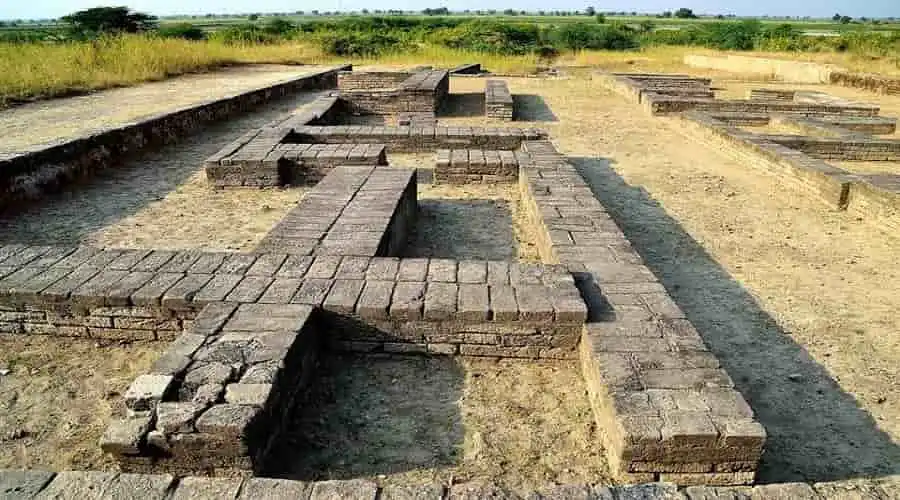
Until 1954, historians believed the Indus Valley Civilization existed mainly in present-day Pakistan and northwest India. However, that view changed when archaeologists explored the Sabarmati River region. During these explorations, they uncovered Lothal along with dozens of other ancient sites. As a result, the discoveries extended the known boundaries of the Harappan Civilization deep into Gujarat.
Lothal stands between the Sabarmati River and its tributary, the Bhogavo. Archaeologists date the city to 2200–2400 BCE, during the mature phase of the Indus Valley Civilization (roughly 3300–1300 BCE). Later, excavations from 1955 to 1962 revealed a carefully planned port city. The site included a citadel for the elite, a residential lower town, workshops, warehouses, wells, and an advanced drainage system. Moreover, this remarkable engineering predates the completion of the Egyptian pyramids.
The name “Lothal” comes from Gujarati words meaning “mound of the dead.” Coincidentally, Mohenjo-daro in present-day Pakistan carries the same meaning in Sindhi. Lothal served as a thriving trade hub, exporting beads, gemstones, and ornaments to West Asia and Africa. Many historians believe Mesopotamian sources referred to the wider Indus Valley Civilization region as “Meluhha.”
The World’s Earliest Known Dock
Lothal’s defining feature is its dockyard, which measures approximately 214 × 36 metres. Many archaeologists regard it as the world’s earliest known dock. Ancient engineers connected the dock to a former course of the Sabarmati River. This route linked Harappan cities in Sindh with the Saurashtra peninsula and supported long-distance trade.
The dock’s sophisticated engineering makes it truly remarkable. Ancient builders designed a water-locking system that allowed ships to enter safely and remain at a consistent water level despite changing tides. Some scholars believe the structure also functioned as a large water reservoir or cistern, similar to those found at other Indus Valley sites. Archaeologists continue to study the evidence, so the dock’s exact purpose remains an active topic of research.
What to See at Lothal
The Dockyard and Acropolis
Walk through the excavated remains of the dockyard, the citadel/acropolis, and the upper town, with information boards from the ASI explaining the layout and significance of each section.
The Bead Factory
Lothal was a major centre for bead-making, and remnants of workshops here reveal the scale of the city’s craft production, particularly in semi-precious stones.
Archaeological Site Museum
Built in 1976 and managed by the Archaeological Survey of India (ASI), the museum houses artefacts recovered during excavation seals featuring unicorns and bulls, carnelian and gold jewellery, standardised stone weights, a scaled model of the entire site, and a replica of a striking twin (brick-lined) burial pit discovered in the northwest cemetery.
Reference Library and Publication Counter
A small library offers material on the Harappan and Indus Valley civilizations for visitors who want to dig deeper, alongside a counter selling ASI publications on archaeological monuments.
Timings and Entry Fee
- Timings: Generally 10:00 AM to 5:00 PM
- Weekly closure: The museum is typically closed on Fridays, following standard ASI norms
- Entry fee: Nominal for Indian visitors, with a higher standard rate for foreign tourists, similar to other ASI-managed sites (some visitors report free entry to the outdoor excavation site itself, though the museum charges a small fee) — confirm current rates at the counter
- Camera fee: Around ₹25 for still cameras; professional videography needs prior ASI permission
- Time needed: Budget 1–2 hours for the museum, plus additional time to walk the excavation site and dockyard
Best Time to Visit
October to March is the recommended window, when Gujarat’s weather is at its most pleasant for walking around the open excavation site. Morning hours tend to be quieter, giving you a more relaxed pace through both the museum and the ruins.
How to Reach Lothal
By Road: Lothal is located in Saragwala village, Dholka Taluka, about 78–90 km from Ahmedabad. You can reach the site by private taxi or Gujarat State Road Transport Corporation (GSRTC) buses.
By Train: Ahmedabad Junction is the nearest major railway station. From there, Lothal is just over an hour away by road.
By Air: The closest airport is Sardar Vallabhbhai Patel International Airport in Ahmedabad. Taxis and rental cars are readily available for the onward journey to Lothal.
Who Should Visit Lothal
- History and archaeology enthusiasts – a genuine, tangible link to one of the world’s earliest urban civilizations
- Engineering and maritime history fans – the dockyard’s water-locking system is a remarkable technical achievement to see up close
- School and education groups – the museum’s scaled model and artefact displays make Harappan history accessible and engaging
- Anyone doing a broader Gujarat heritage circuit – pairs well with Ahmedabad’s old city or other Saurashtra historical sites
Where to Eat Near Lothal
Lothal is a small village with very limited dining options. Most visitors prefer to eat before or after their visit. Ahmedabad and nearby Dholka offer a wider variety of restaurants and local eateries. If you’re staying in Ahmedabad, explore our guides to famous foods in Ahmedabad and best street food in Ahmedabad. They will help you discover delicious local dishes before starting your journey to Lothal.
Other Places to Visit Nearby
- Science City Ahmedabad – Discover interactive science exhibits, an IMAX theatre, robotics, and an aquatic gallery. It offers exciting attractions for visitors of all ages. Located about 70 km from Lothal, it is a great stop for families and science lovers.
- Nalsarovar Bird Sanctuary – Visit Gujarat’s largest wetland bird sanctuary. It is famous for migratory birds, peaceful boat rides, and beautiful winter sunrises.
- Adalaj Ni Vav, Gandhinagar – Admire the stunning five-storey stepwell known for its intricate carvings, Indo-Islamic architecture, and historical significance. It’s an ideal destination for history lovers and photographers.
- Akshardham Temple, Gandhinagar – Explore one of Gujarat’s most iconic spiritual landmarks. Admire its magnificent architecture, landscaped gardens, and engaging exhibitions. Don’t miss the spectacular evening light and sound show. It is an excellent destination for families and pilgrims.
Frequently Asked Questions (FAQs)
Lothal’s dockyard measures about 214 × 36 metres. Archaeologists widely regard it as the world’s earliest known dock. It featured an advanced water-locking system that helped maintain a consistent water level for ships. Some scholars believe it also served as a water reservoir. Regardless of its exact purpose, its scale and engineering remain historically significant.
Entry fees are nominal, in line with other ASI-managed archaeological sites, with a small extra fee for still cameras. Rates for Indian and foreign visitors differ, so it’s worth confirming the current fee structure at the counter before your visit.
The site and museum generally operate from 10:00 AM to 5:00 PM, and the museum is closed on Fridays following standard ASI norms.
Archaeologists believe Lothal dates back to 2200–2400 BCE. Indian archaeologists discovered the site in 1954 while exploring the Sabarmati River region. They conducted major excavations between 1955 and 1962, revealing one of the most important cities of the Indus Valley Civilization.
Lothal is roughly 78–90 km from Ahmedabad, generally a 1.5 to 2 hour drive by road, making it a feasible day trip from the city.
The museum displays Harappan seals, jewellery, standardised weights, a scaled site model, and a replica of a twin burial pit, alongside detailed information on the excavation and the civilization’s trade links with Mesopotamia.
Final Thoughts
Lothal offers a rare chance to stand beside one of the world’s oldest known docks. It reveals the brilliance of ancient Indian engineering. The site dates back thousands of years before much of recorded history. It is a peaceful destination for anyone interested in India’s maritime heritage. Planning your Gujarat heritage trip? Travel Roach helps you discover the road less traveled. Drop your questions in the comments, and we’ll help you plan your perfect itinerary.
