Tucked into the narrow lanes of Ahmedabad’s old city, Shree Swaminarayan Mandir in Kalupur is the first temple of the Swaminarayan sect. Today, it serves as the global headquarters of the NarNarayan Dev Gadi. Built more than two centuries ago, the temple remains one of Gujarat’s most-visited pilgrimage sites. It is renowned for its ornately carved wooden ceilings, vibrant painted façades, and peaceful devotional atmosphere. Despite being located in the heart of the old city’s bustling streets, the temple offers visitors a sense of calm and spiritual serenity. This guide explores the temple’s history, architecture, darshan timings, and practical tips to help you plan your visit.
A Brief History of Swaminarayan Mandir, Kalupur
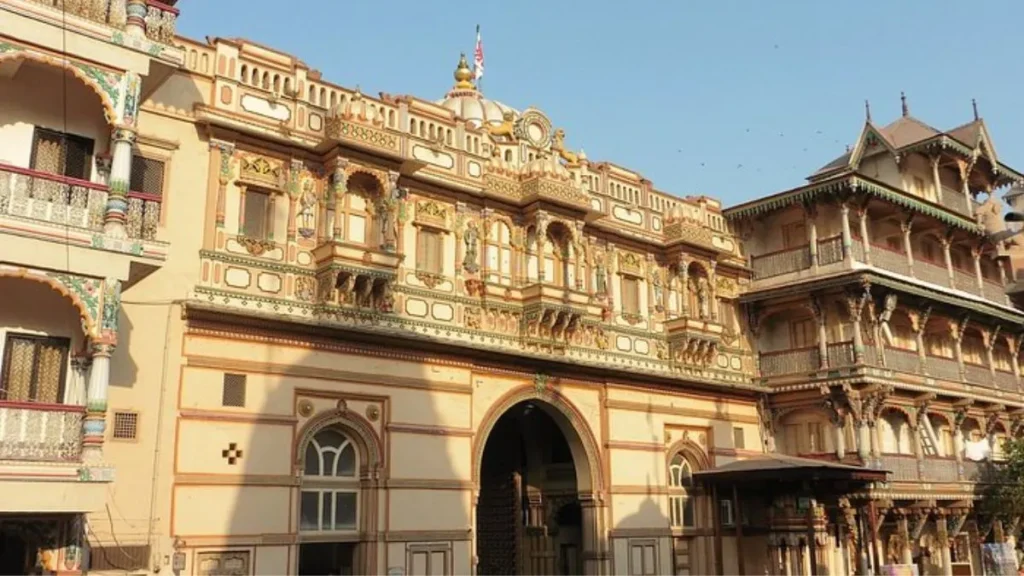
The temple’s story began in 1818 CE, when the British Imperial Government granted land in Kalupur for its construction. Swaminarayan (Sahajanand Swami), the founder of the Swaminarayan sect of Hinduism, requested the land grant. Anandanand Swami oversaw the temple’s construction. The temple officially opened on 24 February 1822. Swaminarayan personally presided over the inauguration ceremony, where around 50,000 devotees gathered.
This made it the first temple of the Swaminarayan Sampraday built according to scriptural norms. It continues to serve as the headquarters of the NarNarayan Dev Gadi, one of the two main administrative divisions (gadis) within the Swaminarayan tradition. Because of its foundational role, the temple holds immense cultural and religious significance. It attracts devotees from across Gujarat, India, and the global Indian diaspora.
Architecture and What to See
The temple is widely regarded as a striking example of early 19th-century Gujarati temple architecture, blending Rajasthani, Marathi, Gujarati, and British design influences. A few highlights worth looking out for:
- Carved wooden ceilings and balconies, showcasing rich teak craftsmanship with lace-like detailing
- Vividly painted façades and interiors, combining local Gujarati artistry with Swaminarayan sacred iconography
- Decorative sculptures, including depictions like a flying Hanuman lifting the Devgiri mountain, a South Indian-style Ganesha in a scarlet turban, and miniature figures in Maratha attire
- The sanctum deities, including NarNarayan Dev, Radha Krishna Dev, Dharmabhaktimata, Hari Krishna Maharaj, Bal Swarup Ghanshyam Maharaj, and Rangmahal Ghanshyam Maharaj, all adorned with elaborate ornamentation
- Preserved personal artefacts of Swaminarayan, kept safely within the temple complex
The temple complex also houses a multi-storey guesthouse and a medical clinic, reflecting its role as a functioning community and pilgrimage hub, not just a place of worship.
Darshan Timings and Aarti Schedule
- Temple hours: Generally 5:30 AM to 8:30 PM, open all seven days
- Midday closure: Darshan is typically closed from 12:00 PM to 3:45 PM for Bhog (the ritual food offering)
- Aarti schedule:
- Mangla Aarti – 5:30 AMShankar Aarti – 8:05 AMRajbhog Aarti – 10:30 AMSandhya Aarti – 7:15 PM
- Shayan Aarti – 8:15 PM
- Entry fee: None darshan is free for all visitors
- Photography: Not permitted inside the temple premises
- Dress and etiquette: Visit with appropriate respect; shoes must be removed before entering the temple premises
Best Time to Visit
Early mornings offer the most peaceful darshan experience, with softer light on the carvings and smaller crowds. Late afternoons work well if you’re pairing the temple with other old-city sightseeing before dinner. If you want to witness the temple at its most spectacular, plan a visit around Diwali the day after Diwali (Annakut) draws crowds in the hundreds of thousands for darshan, making it one of the most significant days on the temple’s calendar.
How to Reach Swaminarayan Mandir, Kalupur
By Train: Kalupur Railway Station (Ahmedabad Junction) is the nearest station, just a short auto ride from the temple.
By Road: Ask any local auto or cab driver for “Swaminarayan Mandir Kalupur” it’s well known in the old city. Old-city traffic can bottleneck near the temple, so if you’re already close by, walking the final 5–10 minutes through the narrow lanes is often faster than driving.
By Bus: AMTS routes connect to the Kalupur/Khadia area, with the last stretch typically covered on foot.
By Air: Sardar Vallabhbhai Patel International Airport is the nearest airport, with taxis available for the drive into the old city.
Who Should Visit
- Devotees and pilgrims – the founding temple and spiritual headquarters of the NarNarayan Dev Gadi
- Architecture and heritage lovers – a genuine showcase of 19th-century Gujarati temple craftsmanship
- Old-city heritage walkers – easily combined with nearby historic sites like Manek Chowk
- Families – a calm, welcoming space suitable for visitors of all ages, outside major festival crowds
Where to Eat Near Swaminarayan Mandir, Kalupur
The old city around Kalupur and nearby Manek Chowk is one of Ahmedabad’s richest food areas, especially in the evenings. After darshan, it’s an easy walk to explore the area’s famous night food scene. For a full rundown of what to try, check out our guides to famous foods in Ahmedabad and best street food in Ahmedabad.
Other Places to Visit Nearby
- Manek Chowk Night Market Ahmedabad – explore the city’s iconic late-night food market, known for its vibrant atmosphere, delicious street food, and unique heritage setting.
- Jagannath Temple Ahmedabad – visit one of the city’s most revered Hindu temples, famous for its centuries-old history and the grand annual Rath Yatra that attracts lakhs of devotees.
- Sidi Saiyyed Mosque – admire Ahmedabad’s iconic Tree of Life jali and one of the city’s most celebrated examples of Indo-Islamic architecture, located just a few minutes from Shree Swaminarayan Mandir.
- Science City Ahmedabad – enjoy interactive science exhibits, the IMAX theatre, aquarium, planetarium, and family-friendly attractions at one of Ahmedabad’s top modern destinations.
Frequently Asked Questions (FAQs)
No, darshan at the temple is completely free for all visitors.
The temple is generally open from 5:30 AM to 8:30 PM daily, with darshan closed between 12:00 PM and 3:45 PM for Bhog (the ritual food offering).
No, photography is not permitted within the temple premises.
It’s the very first temple built according to Swaminarayan scriptural norms and serves as the headquarters of the NarNarayan Dev Gadi, making it foundational to the wider Swaminarayan tradition.
Early mornings offer the calmest darshan with softer light on the carvings. If you want to witness the temple at its liveliest, visit the day after Diwali for the Annakut celebration.
Yes, it’s easily combined with a walk to nearby Manek Chowk, Bhadra Fort, and other old-city landmarks, making it a natural stop on any Ahmedabad heritage circuit.
Final Thoughts
Shree Swaminarayan Mandir in Kalupur offers a peaceful escape from Ahmedabad’s old-city energy. Its intricate craftsmanship, rich devotional history, and serene atmosphere have welcomed devotees and visitors since 1822. Whether you come for darshan or to admire the stunning architecture, the temple adds a meaningful stop to any Ahmedabad old-city walk. Planning your Ahmedabad trip? TravelRoach helps you discover the road less traveled. Drop your questions in the comments, and we’ll help you plan the rest of your visit!
