Spread across the forested slopes of the Satpura Range, just south of the Narmada River, Shoolpaneshwar Wildlife Sanctuary is Gujarat’s largest wildlife sanctuary and one of its most underrated. Covering over 600 sq km of dense deciduous forest, bamboo thickets, and hidden waterfalls, it’s home to leopards, sloth bears, flying squirrels, and over 150 bird species. Located close to the Statue of Unity and Sardar Sarovar Dam, it’s an easy add-on for wildlife lovers already exploring the Kevadia region. This guide covers the sanctuary’s wildlife, timings, entry rules, and how to plan your visit.
About Shoolpaneshwar Wildlife Sanctuary
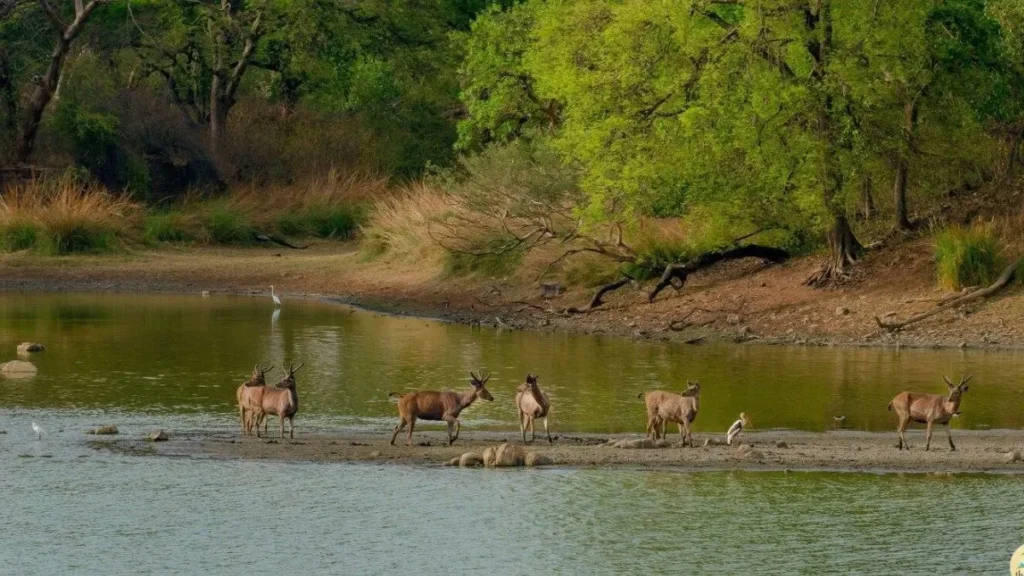
Established in 1982, the sanctuary spans roughly 607.7 sq km, making it the largest wildlife sanctuary in Gujarat. It sits along the western Satpura Range, sharing borders with Madhya Pradesh and Maharashtra, and forms part of the catchment area for the Narmada River and the Sardar Sarovar Dam reservoir.
The sanctuary takes its name from Lord Shiva, worshipped here in his Shoolpani form (carrying a “shool,” or trident). An ancient Shiva temple once stood in the area it’s now submerged beneath the Sardar Sarovar Dam’s reservoir, but the sanctuary retains its name in tribute.
Also Read : Sardar Sarovar Dam, Narmada
Wildlife You Might Spot
Shoolpaneshwar is a deciduous forest with semi-evergreen patches, home to around 575 species of flowering plants, teak, khair, sal, and extensive bamboo cover. Its animal life is genuinely diverse:
- Mammals: Indian leopard, sloth bear, rhesus macaque, four-horned antelope (chausingha), barking deer, chital, Indian porcupine, pangolin, and the sanctuary’s signature species the flying squirrel, along with the Indian giant squirrel
- Reptiles: Python, various snakes, lizards, and tortoises
- Birds: Over 150 species, including the crested serpent eagle, grey hornbill, red and grey jungle fowl, and Alexandrine parakeet a genuine draw for birdwatchers
Tigers and wild dogs have been reported historically, but haven’t been sighted in the sanctuary for over two decades, so leopards and sloth bears are the marquee sightings today.
What to Do Inside the Sanctuary
Wildlife Safaris
Guided safaris are the best way to spot the sanctuary’s wildlife, best arranged in advance through the forest department office or local tour operators, especially during peak season.
Zarwani Waterfall
Tucked deep inside the sanctuary, Zarwani Waterfall is one of the region’s most scenic spots, especially lively during and just after monsoon a popular half-day trip combined with a sanctuary visit.
Birdwatching
With over 150 recorded species, dedicated birdwatchers can easily spend a full morning here, particularly around water bodies and forest edges.
Nature Walks and Trekking
Marked and unmarked trails wind through the forest, offering a genuine, low-crowd trekking experience compared to more commercialised nature spots in Gujarat.
Timings and Entry Fee
- Timings: Generally 7:00 AM to 9:00 PM daily
- Entry fee: There is no entry fee to the sanctuary itself; safari bookings, however, are ticketed separately through the forest department or approved operators
- Advance booking: Recommended for safaris, especially during the winter peak season, since slots can fill up quickly
- Time needed: A half-day covers the basics; a full day lets you combine a safari with Zarwani Waterfall and some birdwatching
Also Read : Zarwani Waterfall, Narmada
Best Time to Visit
November to March is widely considered the best window, with cooler temperatures and the most comfortable conditions for safaris and trekking. Some visitors also recommend the monsoon months for the sheer greenery and a livelier Zarwani Waterfall, though road conditions inside the sanctuary can get trickier. Summers are quite hot and generally less comfortable for extended outdoor time.
How to Reach Shoolpaneshwar Wildlife Sanctuary
By Train: The nearest railway station is Jabugam, about 10 km away.
By Road: The closest towns are Rajpipla, Ankleshwar, and Dediapada, all well connected by road; Ankleshwar Bus Station is the nearest major bus stop. The sanctuary is also close to the Kevadia/Statue of Unity tourism zone.
By Air: Vadodara Airport is the nearest, roughly 90 km away; the nearest international airport is Sardar Vallabhbhai Patel International Airport in Ahmedabad, about 260 km away.
Who Is This Sanctuary Best For?
- Wildlife and nature enthusiasts – genuine biodiversity across mammals, reptiles, and birds in a low-crowd setting
- Birdwatchers – one of Gujarat’s richer birding destinations, with 150+ recorded species
- Trekkers – forest trails offer a real off-the-beaten-path hiking experience
- Statue of Unity travellers – an easy nature-focused add-on to a Kevadia trip
Where to Eat Near the Sanctuary
Dining options directly inside the sanctuary are minimal, so most visitors eat in Rajpipla, Dediapada, or the Kevadia/Ekta Nagar tourism zone, which has a wider range of food courts and local Gujarati eateries. If you’re combining this with a broader Gujarat trip, our Ahmedabad food guides are useful for planning a longer food trail: check out famous foods in Ahmedabad and best street food in Ahmedabad.
Other Places to Visit Nearby
- Statue of Unity – the world’s tallest statue, in the nearby Kevadia/Ekta Nagar zone
- Sardar Sarovar Dam – one of the world’s largest concrete dams, close to the sanctuary
- Zarwani Waterfall – located within the sanctuary itself, worth combining with your visit
- Rajpipla – a former princely town with palaces and heritage architecture, useful as a base
Also Read : AATAPI Wonderland, Vadodara
Frequently Asked Questions (FAQs)
There is no entry fee for Shoolpaneshwar Wildlife Sanctuary. However, the forest department and approved tour operators book and charge separately for wildlife safaris.
Key sightings include the Indian leopard, sloth bear, four-horned antelope, barking deer, flying squirrel, and Indian giant squirrel, along with over 150 bird species. Tigers were historically reported but haven’t been sighted in over two decades.
The sanctuary is generally open from 7:00 AM to 9:00 PM daily, though safari timings within this window are typically set separately by the forest department.
Yes, it’s located close to the Kevadia/Ekta Nagar tourism zone, home to the Statue of Unity and Sardar Sarovar Dam, making it an easy nature-focused add-on to that trip.
November to March offers the most comfortable conditions for safaris and sightings. Monsoon has its own appeal for lush greenery and waterfalls, though trail conditions can be more challenging.
It’s recommended, especially during the winter peak season, since safari slots through the forest department can fill up quickly.
Final Thoughts
Shoolpaneshwar Wildlife Sanctuary offers a genuinely wild, low-crowd contrast to Gujarat’s more famous tourist spots dense forest trails, a hidden waterfall, and real chances to spot leopards, sloth bears, and rare birdlife. Pair it with a Statue of Unity or Sardar Sarovar Dam visit for a well-rounded Narmada Valley trip. Planning your Kevadia trip? Roach the road less traveled with us drop your questions in the comments and we’ll help you plan the rest of your itinerary!
