Let’s be honest about something first: you probably won’t see a sloth bear.
They’re nocturnal, elusive, and spread thin across 180 square kilometres of dry deciduous forest. Reviewers who’ve spent days here say the same thing you feel the jungle, you rarely see it.
Jessore Sloth Bear Sanctuary is worth the drive anyway. It sits in the Aravalli folds on the Gujarat–Rajasthan border, protecting Jessore Hill the second-highest peak in Gujarat and acting as a living buffer between the Thar Desert and the dry deciduous forests to the south. Over 400 plant species. Leopards, hyenas, caracals, wolves. Genuinely challenging treks.
This guide covers wildlife, the Jessore Hill trek, entry fees, the crucial monsoon closure, where to stay, and how to plan it written for trekkers, wildlife enthusiasts and travellers routing through Ambaji Temple or Mount Abu.
Quick Facts: Jessore Sloth Bear Sanctuary at a Glance
| Detail | Information |
| Location | Jessore hills, Banaskantha district, Gujarat–Rajasthan border |
| Area | 180.66 sq km |
| Established | May 1978 |
| Flagship species | Sloth bear (Melursus ursinus), IUCN Vulnerable |
| Jessore Hill | Reported as Gujarat’s second-highest peak |
| Plant species | Around 406 recorded |
| Ecosystem | Buffer between Thar Desert and dry deciduous forest |
| Distance from Palanpur | Approx. 35–45 km (sources differ) |
| Distance from Ambaji | Approx. 40 km |
| Distance from Ahmedabad | Approx. 180 km |
| Entry fee | Reported around ₹500 per car verify with the forest office |
| Monsoon closure | Typically mid-July to mid-October confirm before travelling |
Read This Before You Go: The Closure
This is the single most important thing on the page.
Travellers have arrived to find the core sanctuary area shut. During closure periods, some report that the Kedarnath Temple trek route on the hill may still be accessible while the main sanctuary area is not but this varies and should never be assumed.
What to do: Contact the Banaskantha forest office or the sanctuary directly before you set out. Do not plan a trip around dates found on a travel blog, including this one. Closure windows shift year to year.
Why Jessore Matters Ecologically
Most people treat Jessore as a day trip near Ambaji. Ecologically, it’s doing something more interesting than that.
The Sanctuary Sites at a transition zone the point where the Thar Desert ecosystem gives way to the Khathiar-Gir dry deciduous forests. That makes it a working buffer against desertification creeping south from Rajasthan, which is a large part of why it was protected in the first place.
The vegetation reflects that in-between status: arid to semi-arid dry deciduous thorny scrub, with roughly 406 plant species recorded. Local species include ber, gando baval, khair, dhav, dhavado, saledi, kadaya, siras and gorad.
Add Jessore Hill reported as Gujarat’s second-highest peak, after Girnar Hills and you get a genuinely distinctive landscape for a state better known for its coastline and its desert.
The Wildlife: What’s Actually Here
The Flagship: Sloth Bear
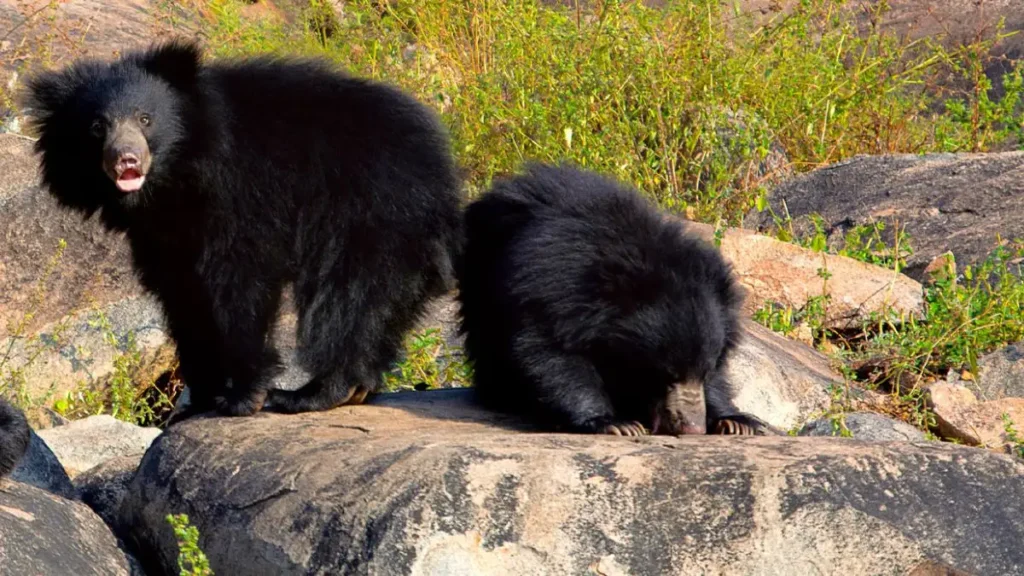
The sanctuary was created for the sloth bear, listed as Vulnerable on the IUCN Red List. They’re shaggy, myopic, largely nocturnal insect-eaters and unusual among bears in that males are reported to take a role in raising cubs.
Will you see one? Probably not. They’re elusive and active mostly after dark. Treat a sighting as a bonus, not the plan.
Other Mammals
- Leopard the sanctuary’s top carnivore
- Striped hyena, wolf, jackal and fox
- Jungle cat, caracal and Indian civet cat
- Blue bull (nilgai), wild boar, hare
- Rhesus macaque and langur
- Indian porcupine
Birds and Reptiles
Spurfowls, cuckoos, barbets, woodpeckers, treepies, flycatchers and shrikes in the scrub; spoonbills, storks, cranes and egrets around water; and a good range of raptors overhead. Reptiles include snakes, tortoises and lizards.
Trekking Jessore Hill
For many visitors, the trek is the real reason to come.
The Kedarnath Temple trek climbs from the taleti (hill base) to a temple on Jessore Hill. It’s a genuine climb rather than a walk, and trekkers rate it as challenging comparable in difficulty to the Idar Fort trek.
What to know:
- Difficulty: Moderate to hard. Not a casual family stroll.
- Guides: Strongly recommended, and available locally. Reported rates run roughly ₹500 for a regular guide and around ₹1,500 for a professional guide per group confirm current pricing.
- Timing: Start early. You do not want to be descending in fading light in leopard country.
- Safety: This is a real forest with sloth bears and leopards. Go in a group, take a forest-office guide, and don’t wander off marked routes.
- Water: Carry more than you think. The Banas river runs dry from roughly April to mid-July.
Night treks are reported by some visitors, but should only ever be attempted with an official guide and forest department permission. In a sanctuary with nocturnal bears, this isn’t the place to improvise.
Other Things to Do
1. Vishweshwar Mahadev
Why visit: A Shiva temple in the area, commonly paired with the Jessore trek on day itineraries.
Best for: Pilgrims, families
2. The Banas River
Why visit: When it’s flowing roughly monsoon through winter the river adds a lot to the landscape and is a popular stop on organised trips.
Best for: Families, photographers
Note: Usually dry from April to mid-July. Don’t plan around it in summer.
3. Stargazing
Why visit: Visitors staying at the forest rest house consistently mention the night sky. Almost no light pollution, deep Aravalli darkness.
Best for: Anyone staying overnight
4. Birdwatching
Why visit: The multi-storeyed forest supports everything from ground birds to raptors, and it’s far more reliably rewarding than mammal-spotting here.
Best for: Birdwatchers
Carry: Binoculars
Managing Expectations: An Honest Take
Read this before you build a trip around big-cat sightings.
What Jessore delivers: Real, unmanicured forest. Serious trekking. Excellent birding. Silence. Stars. A landscape unlike anywhere else in Gujarat.
What it doesn’t: Reliable wildlife sightings. There’s no established jeep-safari circuit here comparable to Gir, and long-time visitors are blunt that you can feel the jungle without seeing much of it. One reviewer described a summer visit as closer to a survival exercise than a nature walk.
Who should come: Trekkers, birdwatchers, people who like forests for their own sake.
Who should reconsider: Families expecting a zoo-like experience, or anyone whose trip is built on photographing a sloth bear.
Set expectations correctly and Jessore is superb. Set them wrong and you’ll drive 180 km to be disappointed.
How to Reach Jessore Sloth Bear Sanctuary
Jessore Sloth Bear Sanctuary sits on the Ahmedabad–Mount Abu corridor, between Palanpur and Abu, which makes it an easy add-on to a north Gujarat trip.
By Road (Recommended)
- From Palanpur: approx. 35–45 km (sources differ verify on maps)
- From Ambaji: approx. 40 km
- From Ahmedabad: approx. 180 km, roughly 3.5–4 hours
- From Mount Abu: roughly 60–70 km
- From Gandhinagar: approx. 155–165 km
A self-driven car or hired taxi is by far the most practical option. Full-day taxi packages from Ahmedabad are commonly available.
By Bus
GSRTC buses run to Palanpur and Ambaji from Ahmedabad and across north Gujarat. Onward connections to the sanctuary itself are limited arrange local transport from Palanpur or Ambaji.
By Train
Palanpur Junction is the nearest major railhead, well connected to Ahmedabad, Delhi and Mumbai.
By Air
Ahmedabad (Sardar Vallabhbhai Patel International) is the nearest major airport, roughly 180 km away.
Best Time to Visit
Post-monsoon and winter, subject entirely to the sanctuary being open.
- October–February – The best window overall. Cool, dry, comfortable for trekking, and the landscape still holds monsoon green early in the season.
- August–September – Visually spectacular, with the river flowing and the hills lush. But this often falls inside the closure period. Confirm first.
- March–June – Very hot, dry riverbeds, and difficult trekking conditions. Best avoided.
Best time of day: Start treks at first light. Wildlife is most active around dawn and dusk, and you want to be off the hill well before dark.
Where to Stay
The forest rest house is the only accommodation inside the sanctuary It has limited rooms, basic amenities and home-style food, and is reported to sit beside a lake within the forest an excellent location if you can get a booking.
Book through the forest department, well in advance Rooms are few.
Alternatives nearby:
- Ambaji (approx. 40 km) – Widest choice, from Pilgrim Sites dharamshalas to mid-range hotels, given the temple traffic
- Palanpur (approx. 35–45 km) – Standard town hotels and business accommodation
- Balaram (nearby) – Heritage palace-hotel accommodation for a more upmarket stay
- Mount Abu (60–70 km) – Hill Station hotels across all budgets, in Rajasthan
Where to Eat
There’s little in the way of restaurants near the sanctuary itself.
The forest rest house provides simple home-style meals for guests arrange in advance.
Ambaji (approx. 40 km) – Pilgrim-town food, strongly vegetarian, with Gujarati thali joints and prasad shops. Roughly ₹250–450 for two.
Palanpur – More restaurant variety, including Punjabi and Gujarati thali options. Palanpur is also known for its dairy heritage as the home of Banas Dairy.
What to carry – Standard Gujarati travel kit: theplas, khakhra, athanu, dry farsan like gathiya and sev mamra, plus at least two litres of water per person if you’re trekking.
Planning the drive up from the city? Our best street food in Ahmedabad guide covers where to eat before you set out, and famous foods in Ahmedabad is a useful primer on the region’s food.
Places to Visit Near Jessore Sloth Bear Sanctuary
| Place | Why Visit | Best For | Distance |
| Ambaji Temple | One of the 51 Shakti Peethas, a major Gujarat pilgrimage site | Pilgrims, everyone | ~40 km |
| Balaram Ambaji Wildlife Sanctuary | Neighbouring sanctuary with similar Aravalli forest | Wildlife lovers | ~30–40 km |
| Balaram Palace | Early 20th-century palace, now a heritage hotel | Heritage travellers | ~35 km |
| Kumbhariya Jain Temples | Exquisite marble temples near Ambaji | Heritage lovers | ~40 km |
| Mount Abu | Rajasthan’s only hill station Dilwara temples, Nakki Lake | Everyone | ~60–70 km |
| Danta | Small former princely town in the Aravalli foothills | Slow travellers | ~30 km |
If you enjoy Gujarat’s smaller reserves, our Barda Hills Wildlife Sanctuary guide covers a comparable forest sanctuary on the Saurashtra side.
Suggested 2-Day North Gujarat Itinerary
Day 1: Ahmedabad to Jessore
Leave Ahmedabad early and stop in Palanpur for breakfast. Continue to Jessore Sloth Bear Sanctuary and begin the Kedarnath Temple trek with a local guide. After lunch, explore Vishweshwar Mahadev and the Banas River before spending the night at the forest rest house or in Ambaji.
Day 2: Ambaji & Nearby Attractions
Start the morning with birdwatching before driving to Ambaji for temple darshan. Continue to the Kumbhariya Jain Temples and enjoy lunch before returning to Ahmedabad. Alternatively, extend your trip to Mount Abu for another day of sightseeing.
Frequently Asked Questions (FAQs)
Jessore Sloth Bear Sanctuary is located in the Jessore Hills of the Aravalli Range in Banaskantha district, Gujarat, near the Rajasthan border. It is around 35–45 km from Palanpur and about 40 km from Ambaji.
Sloth bear sightings are not guaranteed. These animals are nocturnal, shy and difficult to spot across the sanctuary’s large forest area. Visitors mainly come for trekking, birdwatching and the natural surroundings.
Entry charges are commonly reported at around ₹500 per car. Trekking guides may cost approximately ₹500 for a regular guide or ₹1,500 for a professional guide. Confirm the latest fees before visiting.
Jessore Sloth Bear Sanctuary is generally reported to remain closed from around mid-July to mid-October during the monsoon and breeding season. Closure dates can change, so check with the forest department before travelling.
The Jessore Hill trek is considered moderate to difficult because it involves a genuine climb through forest terrain. Start early, carry sufficient water and consider hiring a local or forest department guide.
Limited accommodation is reportedly available at the forest rest house inside the sanctuary. Visitors can also stay in nearby Ambaji, Palanpur, Balaram or Mount Abu and travel to Jessore by road.
Final Thoughts
Jessore Sloth Bear Sanctuary is not a safari destination and doesn’t pretend to be. It’s 180 square kilometres of genuine Aravalli forest wrapped around Gujarat’s second-highest peak, protecting a shy, vulnerable bear most visitors never glimpse. Come for the climb, the birds and the silence. Confirm the sanctuary is open before you leave, take a guide onto the hill, and carry more water than feels necessary.
Have you trekked Jessore Hill or stayed at the forest rest house? Tell us what you saw in the comments, and share the Gujarat sanctuaries you think deserve more attention. Explore more Gujarat travel guides with Travel Roach and discover offbeat destinations worth visiting.
