There are few cities in India that carry as many centuries on their shoulders as quietly as Junagadh. Chandragupta Maurya built a fort here in 319 BCE. Ashoka inscribed his edicts on a boulder at the foot of Girnar Hill in 251 BCE. The Indo-Greeks ruled it. The Sakas carved inscriptions here. The Chudasama Rajputs held it for five centuries. The Nawabs built mausoleums so ornate they look like they belong in a painting. And through all of it, Girnar Hill stood ancient, sacred, and covered in temples from multiple faiths.
Junagadh meaning ‘old fort’ is one of Gujarat’s most layered and rewarding destinations. It is a city where you climb 10,000 steps to reach Jain temples of the 12th century, walk through a Mauryan fort that was besieged 16 times and never taken, and stand before an Indo-Gothic mausoleum that looks like it was designed by an architect who read too many different history books and loved every single one of them. It is a city for history lovers, pilgrims, trekkers, wildlife enthusiasts, and anyone who wants to understand what Gujarat really is beyond its commercial present.
This TravelRoach guide covers every essential attraction Girnar Hill, Uparkot Fort, Mahabat Maqbara, the Bhavnath Fair, Sakkarbaug Zoo, and more with practical information on entry fees, timings, a 3-day itinerary, how to reach, where to eat, and the nearby day trips to Gir National Park and Somnath.
Junagadh – Quick Information
| Detail | Information |
| Location | Saurashtra region, Gujarat, India at the foothills of Mount Girnar |
| Name Meaning | ‘Juna’ = Old | ‘Gadh’ = Fort | Junagadh = The Old Fort |
| Other Names | Sorath (historical princely state name); Yonagadh (City of the Greeks) |
| City Rank | 7th largest city in Gujarat |
| Historical Age | Continuously inhabited since at least 319 BCE (Mauryan period) |
| Distance from Rajkot | ~103 km (~2 hours) |
| Distance from Ahmedabad | ~319 km (~5 hours) |
| Distance from Somnath | ~91 km (~1.5 hours) |
| Distance from Gir National Park | ~54 km (~1 hour) |
| Distance from Porbandar | ~107 km (~2 hours) |
| Nearest Airport | Rajkot Airport (~103 km) or Porbandar Airport (~102 km) |
| Railway Station | Junagadh Junction (JND) well-connected to major Gujarat cities |
| Best Time to Visit | October to March (winter); Maha Shivratri for Bhavnath Fair |
| Famous For | Girnar Hill temples, Uparkot Fort, Mahabat Maqbara, Bhavnath Fair, Gir Kesar mango, Sakkarbaug Zoo |
| Recommended Duration | 2–3 days minimum to cover all major attractions |
A Brief History of Junagadh
From Mauryas to Nawabs – 2,300 Years in One City
Junagadh is one of the oldest continuously inhabited cities in India. The Uparkot Fort was built by the Mauryan Emperor Chandragupta in 319 BCE making it one of the oldest standing fortifications in Gujarat. His grandson, Emperor Ashoka, visited the city and inscribed his famous 14 Major Rock Edicts on a massive boulder at the foot of Girnar Hill in 251 BCE edicts that still stand and are still legible today.
The city passed through the Saka (Indo-Scythian) rulers, the Kshatrapas (whose ruler Rudradaman I left his own inscription at Junagadh in 150 CE, on the same rock as Ashoka), and the Gupta Empire. The Chudasama Rajputs ruled Junagadh for nearly five centuries (approximately 875 to 1472 CE) a remarkable continuity that saw the city develop as a major regional capital. The Gujarat Sultanate and later the Mughal Empire each held the city in their periods.
In 1748 CE, the Babi (Babi-Nawabi) dynasty took control of Junagadh and ruled the princely state until Indian independence in 1947. The Nawabs including the famous Mahabat Khan II built the extraordinary mausoleums and palaces that now define much of Junagadh’s architectural character. The state’s accession to India after independence was one of the most dramatic in the nation’s history: the last Nawab, Muhammad Mahabat Khanji III, initially announced accession to Pakistan despite Junagadh being geographically surrounded by India and having an overwhelming Hindu-majority population. Following a popular uprising and Indian military action in November 1947, the Nawab fled to Pakistan. Junagadh became part of India and eventually joined the state of Gujarat in 1960.
Top Places to Visit in Junagadh
1. Girnar Hill – The Sacred Mountain of 10,000 Steps
Girnar Hill is the undisputed centrepiece of Junagadh an ancient, isolated massif rising to approximately 1,117 metres above sea level, covered in sacred temples from three different faiths, and wrapped in one of Gujarat’s most powerful pilgrim traditions. Girnar is not part of any mountain range it is a solitary volcanic formation that has been revered as a sacred site since at least the 3rd century BCE.
The climb to the summit involves approximately 9,999 to 10,000 stone steps the highest and most challenging temple climb in Gujarat. The temples are distributed across multiple peaks of the hill:
- Ambaji Mata Temple – on the Ambaji peak, at approximately 3,295 feet; one of Gujarat’s most visited Shakti temples
- Gorakshanath Peak – the highest point of Girnar (approximately 3,660 feet); home to a Hindu temple dedicated to the Nath saint Gorakshanath
- Neminath Jain Temple – on the third summit, approximately 1,000 steps below the Ambaji level; a magnificent 12th-century Jain temple complex dedicated to Neminath, the 22nd Jain Tirthankara, and one of the oldest and most sacred Jain pilgrimage sites in India
- Mallinath Jain Temple, Amba Mata, Kalika Mata – additional temples on various spurs of the hill
Girnar Ropeway (Udan Khatola): A ropeway was inaugurated in 2020, running from the Bhavnath area at the base to near the temple zone significantly reducing the physical challenge of the climb for elderly visitors and families. Even with the ropeway, there are still several hundred steps to navigate within the temple complex.
Entry Fee: No fee for the hill itself. Ropeway has a separate ticket. Individual temples at the summit may have a donation box or nominal entry.
Best Time for the Climb: Start before sunrise (5 AM) during October to February. The cooler temperature makes the climb manageable. Allow a full day going up and coming back typically takes 6 to 8 hours for most visitors.
2. Uparkot Fort – The 2,300-Year-Old Fortress
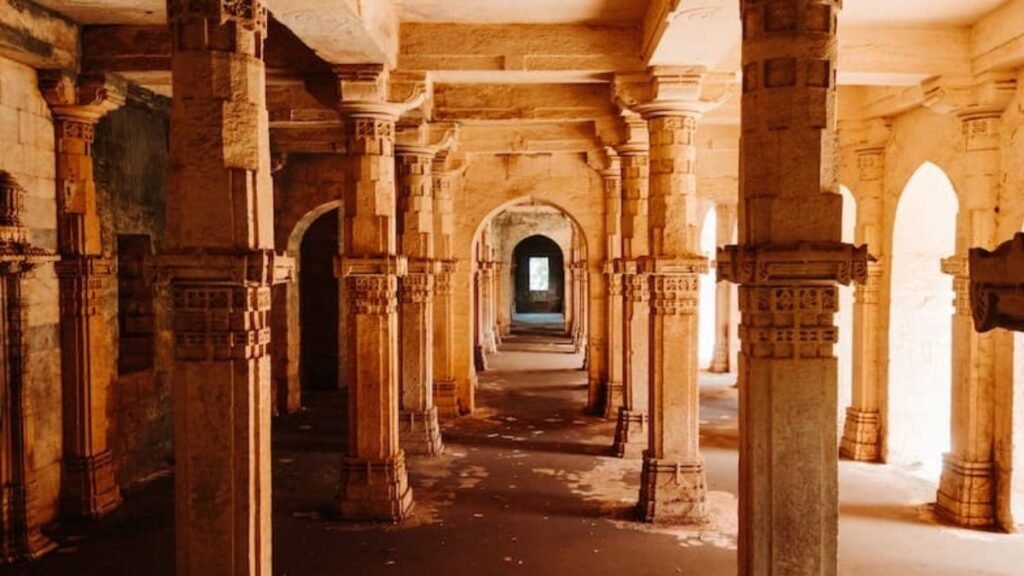
Built by Chandragupta Maurya in 319 BCE, Uparkot Fort is one of the oldest living fortifications in India. The fort sits on a plateau in the eastern part of Junagadh and was sieged at least 16 times over an 800-year period yet was never taken by siege alone. It was the city’s primary defensive citadel across multiple empires and dynasties.
The fort is entered through three monumental gateways and encompasses a considerable area of ruins, temples, caves, and ancient water structures within its walls. Key things to see inside the fort:
- Adi Kadi Vav – an 11th-century stepwell with approximately 170 steps descending to the water level. The name means ‘Adi and Kadi’, after two female slaves who are said to have been beheaded at the well’s edge their story is an integral part of the stepwell’s oral history.
- Navghan Kuvo – a magnificent circular stepwell with a spiral staircase, 41 metres deep. One of the finest stepwells in Gujarat and an engineering marvel of the 11th century.
- Khapra Kodia Caves – ancient Buddhist rock-cut chambers from the 1st-2nd century CE (Satavahana period), carved into the cliff face. The walls display decorative Buddhist motifs and the chambers are 45 metres deep into the rock.
- Bava Pyara Cave – another set of rock-cut monk dwellings within the fort, featuring elaborate carved facades
- The Nilam Cannon – a massive 16th-century bronze cannon brought from Egypt via Turkey, one of three large cannons in the fort.
- Jami Masjid – built inside the fort using pillars from an earlier temple; a fascinating example of architectural reuse
Entry Fee: ₹25 for Indian adults, ₹300 for foreign nationals | Timings: 8:00 AM – 6:00 PM (approximately)
Also Read: Bet Dwarka: Complete Travel Guide
3. Mahabat Maqbara – Gujarat’s Most Spectacular Mausoleum
If you see one building in Junagadh besides the temples, make it Mahabat Maqbara. This extraordinary mausoleum built between 1878 and 1892 CE as the tomb of Nawab Mahabat Khanji II, the 6th Nawab of Junagadh is one of the most breathtaking examples of Indo-Gothic-European-Islamic architectural fusion in India. Nothing quite like it exists anywhere else.
The Mahabat Maqbara features silver-filigree doors, carved stone balconies, spiral staircases twisting up the minarets, Gothic arched windows, European Baroque ornamentation alongside traditional Islamic geometric patterns, and ornate domes. It was designed by a local architect working under the Nawabs and synthesises architectural influences from India, Europe, and the Islamic world into a single, exuberant structure that should be overwhelming but instead is deeply harmonious.
Adjacent to the Mahabat Maqbara is the Bahauddin Maqbara the tomb of Bahauddin Bhai Hasanali Bhai, a minister of Nawab Rasul Khanji. It features blue tiling, Gothic spires, and a moulded plaster facade. Both mausoleums are free to visit and together form one of Gujarat’s most extraordinary architectural experiences.
Entry Fee: Free | Timings: Open daily (exterior can be viewed at any time; interior access may vary)
Photography: Generally permitted excellent for photography in morning and late afternoon light
4. Ashoka’s Rock Edicts – 2,300-Year-Old Inscriptions
At the base of Girnar Hill, near the main approach path, stands one of India’s most historically significant open-air monuments: a massive boulder bearing three separate sets of inscriptions spanning 700 years of history. Emperor Ashoka inscribed 14 of his Major Rock Edicts here in approximately 251 BCE moral and administrative proclamations written in Brahmi script, promoting dharma, compassion, and good governance. These edicts at Junagadh are among the most complete and well-preserved Ashokan inscriptions in existence.
On the same rock, Rudradaman I the Saka Kshatrapa ruler who controlled much of western India left his own inscription in 150 CE, recording his military victories and public works (including the restoration of the Sudarshana Lake). And in 455 CE, the Gupta Emperor Skandagupta added yet another inscription on the same boulder, celebrating his defeat of the Huns. Three empires, one rock, spanning 700 years. This is one of the most remarkable archaeological sites in Gujarat.
Entry Fee: Nominal ASI fee | Best visited early morning; the walk to the boulder is part of the Girnar approach path
5. Sakkarbaug Zoological Garden
Established in 1863 by Nawab Bahadur Khanji I, the Sakkarbaug Zoological Garden is one of the oldest zoos in India and one of the finest in Gujarat. It is particularly significant as the primary ex-situ conservation centre for the Asiatic Lion the critically endangered lion species that exists in the wild only in the Gir Forest. A visit to Sakkarbaug allows you to see Asiatic Lions up close in a carefully maintained environment.
The zoo also houses Bengal tigers, leopards, Indian rhinoceros, wolves, jackals, crocodiles, Indian python, blackbucks, nilgai, gazelles, and a wide variety of birds. Within the zoo complex is the Natural History Museum (also called the Archaeological Museum), which houses wildlife exhibits, geological specimens, and historical artifacts from the Junagadh region.
Entry Fee: ₹50 for adults, ₹20 for children | Natural History Museum: additional fee | Timings: 9:00 AM – 5:30 PM | Closed: Wednesdays
6. Darbar Hall Museum
Located near Sardar Baug (the garden complex near the old palace area), the Darbar Hall Museum is housed in the ceremonial hall of the former Junagadh royal palace. It displays the personal belongings and royal artifacts of the 19th-century Babi Nawabs ceremonial weapons, decorative palanquins, elephant howdahs, royal portraits, silver utensils, ornate carriages, and the personal effects of the Nawabs. The museum’s interiors retain the palatial character of the original hall and offer a vivid window into the opulent life of Junagadh’s last ruling dynasty.
7. Bhavnath Mahadev Temple and Damodar Kund
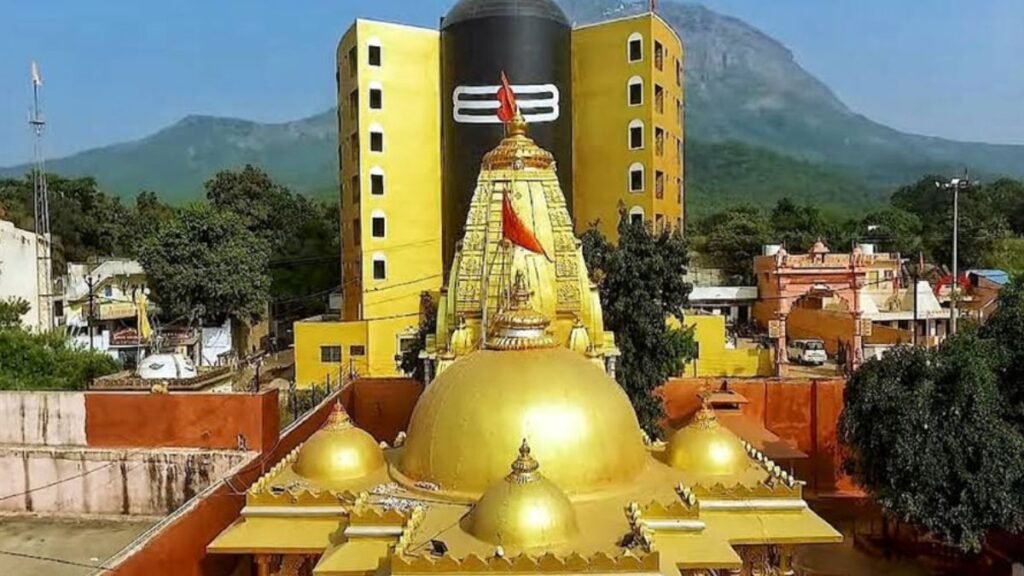
At the foot of Girnar Hill, in the hamlet of Bhavnath, stands one of Junagadh’s most important and atmospheric Hindu temples. The Bhavnath Mahadev Temple is dedicated to Lord Shiva and serves as the starting and ending point for the Girnar Lili Parikrama pilgrimage. Adjacent to the temple is Damodar Kund a large, sacred tank with the Damodarji Temple on its banks. The combination of the ancient temple, the sacred tank, the forest surroundings, and the dramatic Girnar hills rising above creates an atmosphere of deep spiritual calm.
The Bhavnath Temple is particularly famous for the Bhavnath Mela the five-day festival held during Maha Shivratri (February to March), described in detail in the festivals section below.
8. Datar Hill
Datar Hill, rising above the city of Junagadh, is a sacred site unique for its significance to both Hindus and Muslims. The shrine at the summit is dedicated to Jamiyal Shah Datar a Sufi saint and is visited by devotees of both faiths who seek his blessings. The hill offers excellent panoramic views of Junagadh city and is particularly atmospheric during the annual Urs celebration when thousands of devotees gather. The interfaith character of Datar Hill is one of Junagadh’s most moving examples of Gujarat’s syncretic religious heritage.
Also Read: Nishkalank Mahadev Temple, Bhavnagar
Festivals – The Best Times to Experience Junagadh
Bhavnath Mela – Maha Shivratri (February to March)
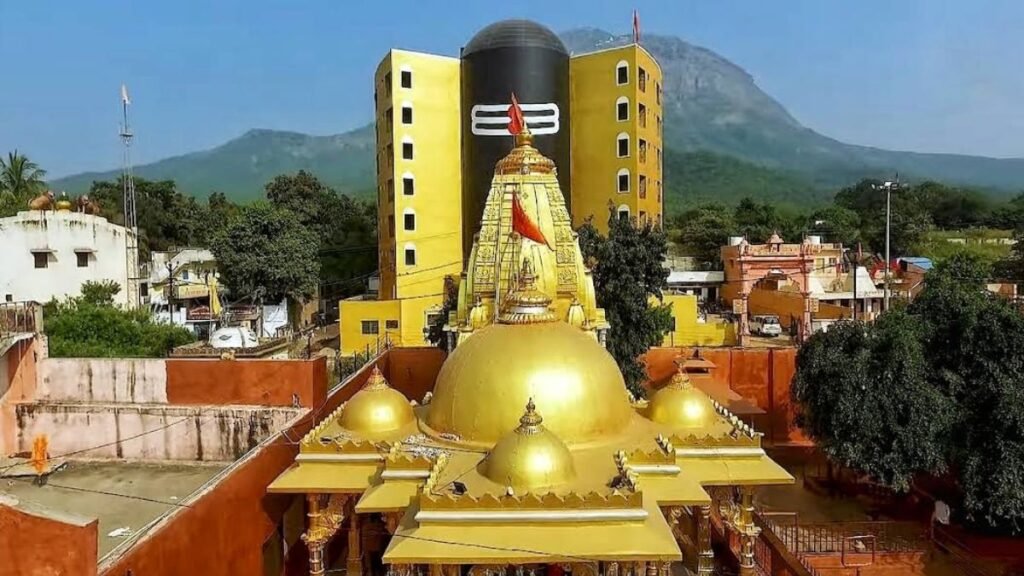
The Bhavnath Mela is one of Gujarat’s most extraordinary religious events and one of the most unforgettable spectacles in India. Held for five days around Maha Shivratri at the Bhavnath Mahadev Temple and Damodar Kund at the base of Girnar, the fair draws hundreds of thousands of devotees from across India.
The centrepiece of the fair is the midnight Maha Puja on Shivratri night: naga bavas naked sadhus and ascetics who have renounced all worldly possessions arrive seated on decorated elephants, holding flags and blowing conch shells, to perform the great puja. This procession of ash-smeared sadhus on flower-decorated elephants, moving through torch-lit crowds at midnight, against the backdrop of the Girnar hills, is one of the most powerful religious spectacles in Gujarat. If you can time a Junagadh visit to coincide with this event, you will carry the memory for decades.
Girnar Lili Parikrama – October / November
The Girnar Lili Parikrama is the annual circumambulation of Girnar Hill a 36-km walk around the entire base of the mountain that takes place during the Kartik month of the Hindu calendar (October to November, in the week following Diwali, from Ekadashi to Purnima). Over 10 lakh (1 million) pilgrims participate each year, making it one of the largest religious walks in Gujarat and one of the most extraordinary mass pilgrimage events in the state.
Pilgrims start and end at the Bhavnath Temple/Damodar Kund and walk the 36-km circuit through forest paths, tribal villages, and riverine areas at the foot of Girnar. The walk typically takes one to two days and is undertaken day and night. The atmosphere of over a million people moving through the forest, the forest itself alive with dew and early winter coolness, and the Girnar hill visible throughout the circuit is deeply moving and completely unlike anything else in Gujarat.
Navratri
Navratri is celebrated with great enthusiasm across Junagadh garba is performed at multiple venues throughout the nine nights. The city’s proximity to the sacred Girnar adds a particular spiritual intensity to the Navratri celebrations here.
Food in Junagadh – What to Eat
Junagadh is predominantly a vegetarian city in line with its Gujarati food culture. The local cuisine is simple, honest, and deeply flavoured.
Must-Try Local Items
- Gir Kesar Mango – Junagadh district is the heartland of the famous Gir Kesar mango considered among the finest mango varieties in the world. If visiting between April and June, buying directly from local farms and vendors is the definitive food experience of the city.
- Gujarati Thali – Full unlimited thali with dal, sabzi, kadhi, rotla, rice, papad, pickle, chutney, and sweet. Junagadh has several restaurants serving excellent traditional thali at very affordable prices.
- Bhajiya, Gathiya, Fafda – Gujarati deep-fried snacks available at virtually every tea stall and street corner in the city. Try with hot chai after the fort or hill visit.
- Gir Cow Ghee Products – The Gir cow breed from the Saurashtra region produces exceptional quality ghee. Local shops sell Gir cow ghee and dairy products that are widely regarded as among the finest in India.
- Local Mithai – Junagadh’s sweet shops produce traditional Gujarati mithai including mohanthal, chakli, and local specialities. The old bazaar area has several generations-old mithai shops.
Where to Eat
- Hotel Santoor – Known for an unlimited Gujarati thali. A reliable choice for a proper sit-down meal.
- Swati Restaurant – Popular with locals. Good Gujarati food at affordable prices.
- Local dhabas near Uparkot and Girnar base – Simple, authentic, and inexpensive.
- Old Bazaar tea stalls – For morning chai with bhajiya or gathiya. The authentic way to start a Junagadh day.
Suggested 3-Day Junagadh Itinerary
| Day | Morning | Afternoon | Evening |
| Day 1 — Girnar Day | 5:00 AM – Start Girnar climb. Ashoka Rock Edicts on the approach path. Begin the 10,000-step ascent. | Temple visits at various levels -Neminath Jain Temple, Ambaji Mata. Ropeway available for descent. | Return to city. Bhavnath Temple and Damodar Kund at sunset. Dinner near the bazaar. |
| Day 2 — History Day | Uparkot Fort (stepwells, caves, cannons, Jami Masjid). Allow 2–3 hours. | Mahabat Maqbara (free, no rush). Darbar Hall Museum. Sakkarbaug Zoo (close by 5:30 PM). | Evening walk through the old bazaar. Local sweets. Datar Hill at dusk if energy permits. |
| Day 3 — Day Trip | Choose: Gir National Park (54 km, jeep safari) OR Somnath Temple (91 km) + Veraval fishing port (85 km). | Continue day trip exploration. | Return to Junagadh. Final dinner. Evening at leisure. |
How to Reach Junagadh
| From | Distance | Mode | Approx. Time |
| Rajkot | ~103 km | Car / Bus / Train | 2 hours |
| Ahmedabad | ~319 km | Car / Bus / Train | 5–5.5 hours |
| Somnath / Veraval | ~85–91 km | Car / Bus / Train | 1.5 hours |
| Gir National Park (Sasan) | ~54 km | Car / Bus | 1–1.5 hours |
| Porbandar | ~107 km | Car / Bus / Train | 2 hours |
| Diu | ~147 km | Car / Bus | 2.5–3 hours |
| Dwarka | ~209 km | Car / Bus / Train | 3.5–4 hours |
| Rajkot Airport | ~103 km | Flight + Taxi / Bus | 2 hours drive |
| Porbandar Airport | ~102 km | Flight + Taxi / Bus | 2 hours drive |
By Air
The nearest airports are Rajkot Airport (approximately 103 km) and Porbandar Airport (approximately 102 km). Both have regular flights from Mumbai, Delhi, and Ahmedabad. From either airport, hire a taxi or take a GSRTC bus to Junagadh. There is no direct airport at Junagadh. For visitors coming from eastern India or far, flying into Ahmedabad and taking a train or bus to Junagadh (~319 km, 5 hours) is often the most convenient option.
By Train
Junagadh Junction (JND) is well-connected to the Indian Railways network. Regular trains run between Junagadh and Ahmedabad, Rajkot, Mumbai, Somnath (Veraval), Porbandar, Okha/Dwarka, and several other cities. The train journey from Ahmedabad to Junagadh takes approximately 5 to 6 hours. From Rajkot it is approximately 2 hours. Check current schedules on the Indian Railways website.
By Road
Junagadh is well-connected by state and national highways. GSRTC buses run frequently from Ahmedabad, Rajkot, Bhavnagar, Surat, Dwarka, Somnath, and other major Gujarat cities. Private bus services also operate on these routes. Driving from Ahmedabad takes approximately 5 to 5.5 hours; from Rajkot approximately 2 hours.
Where to Stay in Junagadh
- Budget Hotels – Scattered throughout the city, particularly on Zanzarda Road and Alkapuri Road. Clean, basic accommodation from ₹500 to ₹1,000 per night.
- Mid-Range Hotels – Several comfortable mid-range options (₹1,000 to ₹3,000 per night) near the city centre, close to the major attractions.
- Heritage and Premium Hotels – Limited premium options in the city itself; for a heritage experience, some travellers stay in Gondal (1.5 hours from Junagadh) which has the Orchard Palace and Royal Camp at Gondal former royal accommodations.
- Near Gir National Park (~54 km) – If your primary purpose is seeing Asiatic Lions, staying at one of the jungle resorts or eco-lodges near Sasan Gir is a better choice. Options range from Forest Department rest houses to premium wildlife lodges.
Nearby Attractions to Combine with Junagadh
- Gir National Park (Sasan Gir) ~54 km | The last remaining wild habitat of the Asiatic Lion. Jeep safaris run twice daily (morning and afternoon). Book well in advance online booking mandatory. Allow a full day.
- Somnath Temple ~91 km | The first and most important of India’s 12 Jyotirlingas the most sacred Shiva temples in the subcontinent. The temple sits dramatically on the Arabian Sea coast. A 2,000-year-old pilgrimage site rebuilt multiple times after repeated invasions.
- Veraval ~85 km | One of India’s most important fishing ports. The fish market and harbour at dawn or dusk are one of Gujarat’s most vivid urban scenes. Combine with Somnath into a single day trip.
- Porbandar ~107 km | Birthplace of Mahatma Gandhi. The Kirti Mandir (Gandhi Memorial) is the primary attraction. Porbandar’s beaches and its position as Gandhi’s hometown make it a deeply meaningful stop.
- Diu ~147 km | The former Portuguese colonial territory (now Union Territory). Fortified beaches, Portuguese churches, sea forts, and a distinctly different atmosphere from mainland Gujarat. A 2-day Junagadh + Diu circuit is one of Saurashtra’s best itinerary combinations.
- Girnar Taleti (Base) Within Junagadh | For those who cannot do the full Girnar climb, the area around Bhavnath Temple, Damodar Kund, and the Girnar Taleti Market at the base is itself a worthwhile 2 to 3-hour experience.
Also Read: 5-Day Gujarat Trip Plan
Practical Travel Tips for Junagadh
- For Girnar Hill – Start no later than 5:30 AM. Carry water, wear supportive shoes, and bring something warm for the summit (temperatures are noticeably cooler). A full day is needed. Do not attempt in summer afternoons (April-June).
- Book Gir Safari online in advance – jeep safaris to see Asiatic Lions must be booked through the official Gir Forest online portal. Slots fill up weeks in advance, especially from November to March.
- Maha Shivratri accommodation – book accommodation 2 to 3 months in advance if visiting for the Bhavnath Mela. The entire city fills up during the festival.
- Girnar Lili Parikrama – if participating in the parikrama walk, start preparation in advance. The 36-km walk takes most people 1 to 2 days. Carry water, food, and comfortable walking shoes. The forest path is well-defined but requires physical preparation.
- Auto-rickshaws are the primary local transport negotiate the fare before getting in, or use Ola/Uber if available. From the Junagadh Junction railway station, all major attractions are within auto-rickshaw distance.
- Vegetarian city – Junagadh is predominantly vegetarian. Non-vegetarian options exist but are limited. If you eat meat, enquire locally for current options. Gujarati thali is the default and it is excellent.
- Cash is useful – while digital payments are increasingly accepted, smaller temples, food stalls, and local shops prefer cash. Carry sufficient rupees.
- Dress modestly at religious sites – Girnar temples, Bhavnath Temple, and all other religious sites require modest dress (covered shoulders and legs). Remove footwear at all temple entrances.
Frequently Asked Questions (FAQs)
Junagadh is famous for five things above all: Girnar Hill – the sacred mountain with ~10,000 steps leading to Hindu and Jain temples dating back to the 12th century; Uparkot Fort a 2,300-year-old Mauryan fortress sieged 16 times and never taken; Mahabat Maqbara one of India’s most extraordinary Indo-Gothic mausoleums built by the Nawabs; the Bhavnath Mela the midnight Maha Shivratri festival with naga sadhus on decorated elephants; and its proximity to Gir National Park, the only remaining wild habitat of the Asiatic Lion.
A minimum of 2 to 3 days is needed to cover Junagadh’s major attractions comfortably. Day 1 should be dedicated entirely to the Girnar Hill climb and temples the ascent and descent takes most visitors 6 to 8 hours and requires an early start. Day 2 covers the historical circuit — Uparkot Fort, Mahabat Maqbara, Darbar Hall Museum, and Sakkarbaug Zoo. Day 3 can be used for a day trip to Gir National Park (54 km) for an Asiatic Lion safari, or to Somnath Temple (91 km). If you plan to attend the Bhavnath Mela or Girnar Lili Parikrama, add extra days for the festival experience.
Girnar Hill is climbed via a stone staircase of approximately 9,999 to 10,000 steps from the Girnar Taleti (base) near Bhavnath Temple. There are three options: the full climb on foot (recommended 6 to 8 hours return); use of the Girnar Ropeway (inaugurated 2020) to reach the mid-level near the temple zone, with several hundred steps still required within the complex; or a combination of ropeway up and trekking down. Start no later than 5:30 AM, carry water and snacks, wear comfortable footwear, and do not attempt in summer afternoon heat. There are tea stalls and rest points at various levels along the route.
The Bhavnath Mela is a 5-day religious fair held at the Bhavnath Mahadev Temple and Damodar Kund at the base of Girnar Hill during Maha Shivratri (February to March). It is one of Gujarat’s most spectacular religious events. The climactic moment is at midnight on Shivratri, when naga bavas naked ascetic sadhus who have renounced all worldly goods arrive seated on decorated elephants, holding flags and blowing conch shells, to perform the great Maha Puja. Over hundreds of thousands of devotees attend the fair. Accommodation in Junagadh should be booked 2 to 3 months in advance for the Bhavnath Mela period.
From Ahmedabad, Junagadh is approximately 319 km away about 5 to 5.5 hours by road. You can drive on the national highway or take a GSRTC bus from Ahmedabad’s bus depot. By train, several services run between Ahmedabad Junction and Junagadh Junction the journey takes approximately 5 to 6 hours. Flying into Rajkot (103 km from Junagadh) and then taking a taxi or bus gives the quickest overall journey from Ahmedabad. The nearest airports are Rajkot (~103 km) and Porbandar (~102 km).
Girnar Hill and temples: No entry fee for the hill; ropeway has a separate ticket (confirm current pricing at the station). Uparkot Fort: ₹25 for Indian adults, ₹300 for foreign nationals; open 8 AM to 6 PM. Mahabat Maqbara: Free to visit. Sakkarbaug Zoo: ₹50 for adults, ₹20 for children; closed Wednesdays. Darbar Hall Museum: Small entry fee (confirm at the gate). Bhavnath Temple and Damodar Kund: Free. Ashoka Rock Edicts: Nominal ASI fee. Most temples in Junagadh are free or have a small donation.
Yes – Junagadh is an excellent base for wildlife experiences. The city’s Sakkarbaug Zoological Garden is the primary ex-situ conservation centre for the Asiatic Lion and one of India’s finest zoos. Just 54 km away is Gir National Park the only place in the world where Asiatic Lions live in the wild. The park’s jeep safaris offer one of India’s most sought-after wildlife experiences. Gir is also home to leopards, hyenas, jackals, crocodiles, and hundreds of bird species. Book Gir safari slots online well in advance through the official Forest Department portal.
Final Thoughts
Junagadh is the kind of city that earns its place in your memory slowly through the accumulated weight of 10,000 steps climbed at dawn, an Ashokan edict read on a mossy boulder, a mausoleum that shouldn’t be beautiful but is, a midnight procession of sadhus on elephants that you can barely believe you are watching. It is not a city that offers quick gratification or easy sightseeing. It asks for time, effort, and a willingness to be astonished by the depth of what India has been accumulating here since 319 BCE.
Plan 3 days. Start the first morning on Girnar. End the last evening at Bhavnath. Everything in between will take care of itself.
