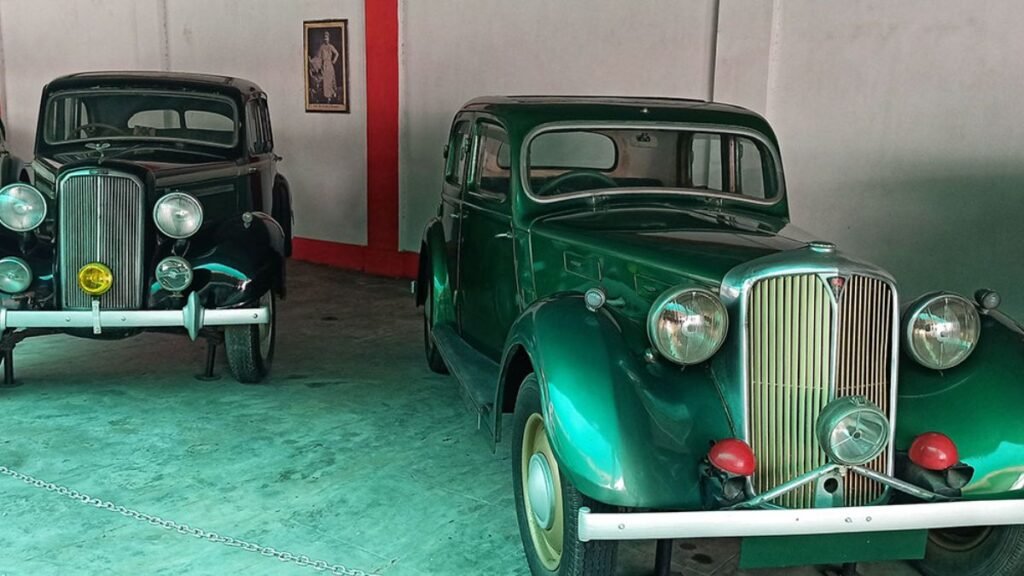
There is a farm estate on the Sardar Patel Ring Road in Kathwada, on the eastern edge of Ahmedabad, where a man spent most of his adult life collecting cars. Not any cars. The rarest, the most beautiful, the most historically significant automobiles that money and determination could find Rolls-Royces from the 1920s, Bentleys, Daimlers, a 1906 Belgian Minerva, Maybachs, Packards, French Hotchkiss cars, vehicles that belonged to Indian Maharajas and European aristocracy, vehicles that once carried royalty and were preserved with the care due to royalty.
That man was Shri Pranlal Bhogilal Patel. In 1987, the Guinness Book of World Records recognised his as the world’s largest private garage 204 cars. When he opened the Auto World Vintage Car Museum to the public in 2000, he brought the most extraordinary of his 2,200-acre Dastan Estate’s treasures more than 100 cars, all restored to running condition into a space where visitors could see them, learn their histories, and, if they wished, ride in them driven by chauffeurs in period uniforms.
Auto World Vintage Car Museum is unlike any other attraction in Ahmedabad. It is not ancient heritage. It is not a religious monument. It is a Guinness World Record-holding private car collection one man’s lifelong act of preservation opened to the world on a farm estate that feels entirely removed from the bustle of the city a few kilometres away. This TravelRoach guide covers the full story of the museum, the key cars to look for, the vintage car rides, entry fees, timings, how to reach, and practical tips.
Auto World Vintage Car Museum – Quick Information
| Detail | Information |
| Full Name | Auto World Vintage Car Museum |
| Address | Dastan Estate, Sardar Patel Ring Road, Kathwada, New India Colony, Nikol, Ahmedabad, Gujarat 382430 |
| Founded By | Shri Pranlal Bhogilal Patel passionate lifelong car collector |
| Opened to Public | 2000 |
| Currently Managed By | Director Mr. Nitin Dossa; affiliated with Vintage and Classic Car Club of India |
| Collection Size | 100–120+ vintage and classic cars; plus motorcycles, utility vehicles, horse carriages |
| Car Era | 1902 to 1970s |
| Condition | All cars restored to working/running condition |
| Guinness World Record | 1987 Pranlal Bhogilal recognised as owner of world’s largest private garage (204 cars total) |
| Estate Size | 2,200 acres Dastan Farm House |
| Key Brands | Rolls-Royce, Bentley, Maybach, Mercedes-Benz, Daimler, Cadillac, Lincoln, Packard, Auburn, Cord, Lagonda, Lancia, Chrysler, Jaguar, Austin, Minerva, Hotchkiss |
| Royal Cars | Many vehicles that belonged to Indian Maharajas and European aristocracy |
| Signature Exhibits | 1906 Minerva, 1923 Silver Ghost, 1923 Rolls 20HP (Barker body), 1927 Phantom I, 1949 Rolls-Royce |
| Entry Fee | ~₹50–₹100 per person (confirm at gate fees may vary) |
| Photography Fee | ~₹100 per phone; professional shoots by approval |
| Timings | 8:00 AM – 9:00 PM (open daily; confirm current hours before visiting) |
| Vintage Car Rides | Available additional charge; chauffeurs in period uniforms |
| Car Rentals | Cars available for hire for weddings and ceremonies |
| Facilities | Cafe/restaurant (Gujarati thali), museum shop, parking, toilets |
| Distance from SVP Airport | ~15 km (~25 minutes) |
| Distance from Kalupur Station | ~11 km (~25 minutes) |
| Distance from Nikol Metro Station | ~1.5 km (walkable) |
| Best For | Car enthusiasts, families, history lovers, photography, school trips |
| Ideal Visit Duration | 1.5 to 2.5 hours |
The Man Behind the Museum – Shri Pranlal Bhogilal Patel
A Lifelong Passion
The Auto World Vintage Car Museum would not exist without the extraordinary personal obsession of one man: Shri Pranlal Bhogilal Patel. Born into a Gujarati business family, Pranlal Bhogilal’s love for automobiles specifically for the rare, the beautiful, and the historically significant defined his adult life. He did not merely collect cars the way some wealthy people accumulate possessions. He studied them, researched their histories, travelled to find them, and painstakingly restored each one to full working condition.
He began assembling his collection from 1927, working through the decades to acquire vehicles that were disappearing from the world as they aged and their original owners passed on. He understood that these machines the great luxury automobiles of the early 20th century, the vehicles that carried Indian Maharajas and European aristocracy were not merely mechanical objects. They were physical records of an era of craftsmanship, of a specific relationship between wealth and design, of the early history of the automobile as a technology. If no one preserved them, they would be lost.
The Guinness World Record – 1987
In 1987, the Guinness Book of World Records formally recognised Pranlal Bhogilal’s as the world’s largest private garage. His total collection at that time stood at 204 cars a number that represents a lifetime of acquisition across multiple continents, decades of correspondence and negotiation with other collectors and estates, and an investment of resources that only someone who genuinely believed in the importance of preservation would have made.
Of his 204 cars, 105 were housed at the Dastan Estate in Kathwada, on the 2,200-acre farm that became the eventual site of the public museum. The rest were distributed across other properties. The Kathwada collection the nucleus of what became Auto World was the finest portion of the whole, containing the most historically significant and technically excellent vehicles.
Also Read: Kankaria Lake Ahmedabad
Opening to the Public – 2000
In 2000, Pranlal Bhogilal Patel made the decision to open the Dastan Estate collection to the public as Auto World Vintage Car Museum. This was an act of generosity and vision: to allow the public car enthusiasts, history lovers, families, children, anyone who was curious to see and experience the collection that had been assembled over decades in private. All the cars on display were restored to working condition, meaning they could be driven. Chauffeurs in period uniforms were hired for the vintage car rides.
Pranlal Bhogilal passed away in 2011 at the age of 73. The museum continues to operate under the directorship of Mr. Nitin Dossa, affiliated with the Vintage and Classic Car Club of India, preserving and maintaining the collection that Bhogilal spent his life assembling.
The Collection – 100+ Cars That Changed the World
The Rolls-Royces – The Crown of the Collection
No vintage car collection of this calibre would be complete without Rolls-Royce, and Auto World’s Rolls-Royce holdings are the centrepiece of the entire museum. Multiple models representing different eras of Rolls-Royce production are on display, from the pre-war Silver Ghosts to the post-war Phantoms. Key Rolls-Royce exhibits include:
- 1923 Silver Ghost – the most iconic Rolls-Royce model; considered by many automotive historians to be the finest car ever made at the time of its production; the Silver Ghost set the standard for luxury automobiles globally
- 1923 Rolls 20 HP with Shooting Brake Body by Barker – a particularly rare and beautiful example with coachwork by Barker, one of the most celebrated British coachbuilders of the period
- 1927 Phantom I – the successor to the Silver Ghost; larger, more powerful, and equally magnificent
- 1949 Rolls-Royce – a post-war example representing the continuation of the Rolls-Royce tradition through the mid-20th century
The Rolls-Royce Silver Ghost in particular deserves extended attention. First produced in 1906 and in production until 1926, the Silver Ghost earned its iconic reputation through the combination of absolute engineering precision, a near-silent engine (the name came from the car’s whisper-quiet operation at speed), and the highest standard of coachwork available anywhere in the world. To stand beside a 1923 Silver Ghost at the Auto World Museum is to stand beside one of the most celebrated machines in the history of human engineering.
The Maharaja Cars – Royal India in Automotive Form
Among the most historically evocative cars in the Auto World collection are those that belonged to Indian Maharajas and royal families. The early 20th century was the period of the Indian princely states the 500-plus kingdoms and principalities that existed under British paramountcy, each with its own ruler, court, and culture. The Maharajas of this era were among the world’s most enthusiastic early adopters of the automobile, and their collections were legendary.
The cars that came from Indian royal collections carry a specific historical patina that factory-specification vehicles cannot replicate. These were often custom-ordered with unique coachwork the body built by specialist craftsmen to the Maharaja’s personal specifications, sometimes incorporating Indian design elements, sometimes specifying unusual features, always at the very highest available standard. Many had been used in ceremonial processions, state visits, and royal hunts. They are not merely cars they are mobile artifacts of the last great era of Indian royalty.
The Bentleys
The Bentley models at Auto World represent the racing and sporting tradition that made Bentley one of the most celebrated British manufacturers of the inter-war period. Bentley won the Le Mans 24-hour race five times between 1924 and 1930 the ‘Bentley Boys’ era, when wealthy young sportsmen raced their Bentleys at the highest level of European motorsport. The museum’s Bentley collection shows the production cars that emerged from this racing heritage.
The Maybach – German Engineering at Its Peak
The Maybach brand now known primarily through Mercedes-Benz’s revival of it as an ultra-luxury sub-brand had its original existence as a completely independent German manufacturer from 1921 to 1941. The original Maybachs were extraordinary machines: enormous, technically sophisticated, and aimed at the very highest tier of the European market. A 1920s or 1930s Maybach in the Auto World collection represents German engineering at its pre-war peak and is a rare sight outside dedicated automotive museums.
The 1906 Minerva – The Belgian Pioneer
Among the museum’s oldest and rarest exhibits is a 1906 Minerva a Belgian automobile manufacturer that was one of the most respected luxury car producers in Europe in the early decades of the 20th century. The Minerva used the sleeve-valve engine design, which produced an exceptionally smooth and quiet running quality. By the early 1900s, Minerva cars were used by Belgian royalty and considered among the finest vehicles in the world. The museum’s 1906 example represents the very early years of the automotive era, when the design language of the modern car was still being invented.
The French Hotchkiss Cars
The Hotchkiss cars in the Auto World collection represent the distinguished French automotive tradition of the inter-war period. Hotchkiss was a French manufacturer that produced particularly fine and powerful touring cars in the 1920s and 1930s cars designed for long-distance travel across the roads of Europe and Asia. They were favoured by sporting drivers and wealthy travellers. In the context of the Auto World collection, the Hotchkiss cars add a specifically French dimension to what is largely a British and American-dominated exhibit.
The American Cars – Cadillac, Packard, Lincoln, Auburn, Cord, and Chrysler
The American automotive tradition of the 1920s to 1940s is represented in the Auto World collection through some of its most celebrated names:
- Cadillac – the American equivalent of Rolls-Royce in terms of luxury positioning; Cadillac’s V16 models of the early 1930s are considered among the finest American cars ever made
- Packard – the most prestigious American luxury marque of the 1930s; Packard’s slogan ‘Ask the man who owns one’ was one of the most celebrated advertising lines in automotive history
- Lincoln – Henry Ford’s luxury division; the Lincoln Continental of the late 1930s and early 1940s is considered a design masterpiece
- Auburn – an Indiana manufacturer whose Cord L-29 (also present in the collection) and the Auburn Speedster represented some of the most dramatically styled American cars of the era
- Cord – the Cord 810 and 812 of 1936-1937 are considered revolutionary for their front-wheel drive design and their spectacular streamlined body design by Gordon Buehrig
- Chrysler – luxury models from the Chrysler Imperial line
Also Read: Sabarmati Ashram, Ahmedabad
Motorcycles, Utility Vehicles, and Horse Carriages
Beyond the main car collection, Auto World includes a section of vintage motorcycles British, American, and Indian from the early decades of the 20th century; utility vehicles of historical significance; and horse-drawn carriages from the pre-automobile era. The carriages in particular provide a fascinating contextual frame for the early automobiles the visual comparison between the horse carriage and the first automobiles makes the speed and completeness of the automotive revolution immediately apparent.
What to Do at Auto World Vintage Car Museum
Explore the Collection – The Primary Experience
The core experience of Auto World is simply walking through the collection and looking at the cars. Each vehicle has a label with its make, model, year, and ownership history including, where relevant, the Indian royal family or notable individual who originally owned it. Take time with each car. The details are the point: the hood ornaments, the door handles, the dashboard instruments, the upholstery, the coachwork around the passenger compartment. These cars were built by hand, to individual specifications, by craftsmen whose names and firms are sometimes recorded on the labels.
The quality of the restoration throughout the collection is consistently high. All cars have been returned to working condition meaning the engines run, the mechanical systems function, and the cars could be driven. This is not a static display of deteriorating shells. These are living machines, maintained with the care they were built with.
Vintage Car Ride – The Unmissable Experience
The most distinctive and memorable activity at Auto World is the vintage car ride a short circuit around the museum premises in a vehicle from the collection, driven by a chauffeur dressed in period uniform. The experience of sitting in the leather-upholstered rear compartment of a 1920s Rolls-Royce or a vintage Bentley the specific quality of the ride, the sound of the engine, the smell of the old leather and wood is one that photographs cannot replicate. An additional charge applies for the car ride; confirm the current rate and car availability at the ticket counter on arrival.
For families, couples, and groups visiting for a special occasion, the vintage car ride is the highlight of the Auto World experience. Booking the ride in advance or on arrival is recommended availability depends on the specific cars operational on the day.
Photography
Auto World is an outstanding photography location the combination of rare vehicles, beautiful coachwork, and the open estate setting provides an unusual range of photographic subjects. A photography fee of approximately ₹100 per phone is charged. Professional photography shoots require prior approval from the museum management. Within these conditions, most photographic compositions are possible, and the light in the open museum sheds is generally good throughout the morning.
Particularly rewarding photography subjects: the Rolls-Royce Silver Ghost from low angles that show the sweep of the bonnet; the vintage motorcycles with their technical detail; the horse carriages for the visual contrast with the early automobiles; and, if available, the vintage car ride in progress.
The Cafe and Museum Shop
Auto World includes a cafe and restaurant serving Gujarati and Rajasthani thali in a village-themed setting a practical and pleasant dining option within the estate for families who want to make an extended visit. A museum shop provides automotive memorabilia, books, and souvenirs related to the collection. Both facilities are appreciated given the museum’s somewhat remote location, which makes going out for a meal less convenient than at more central attractions.
Wedding and Ceremony Car Hire
Several cars from the Auto World collection are available for hire for weddings and special ceremonies. The visual impact of arriving at a wedding venue in a 1920s Rolls-Royce or vintage Bentley is self-evident, and the museum’s hire service is popular with Ahmedabad’s wedding community. Advance booking well in advance is essential. Contact the museum directly for current rates and availability.
Key Exhibits – At a Glance
| Car / Exhibit | Year | Significance |
| Rolls-Royce Silver Ghost | 1923 | One of the most celebrated cars in history; defined 1920s luxury automotive engineering |
| Rolls-Royce 20 HP (Barker Body) | 1923 | Rare shooting brake coachwork by Barker; a design and craftsmanship showcase |
| Rolls-Royce Phantom I | 1927 | Successor to the Silver Ghost; one of Rolls-Royce’s finest pre-war models |
| Rolls-Royce (post-war model) | 1949 | Post-WWII Rolls-Royce; represents continuity of the marque through the mid-century |
| Minerva | 1906 | Belgian luxury pioneer; one of the oldest cars in the collection; sleeve-valve engine |
| Maybach | 1920s–30s | German engineering peak; Maybach was one of Europe’s most prestigious marques |
| Hotchkiss | 1920s–30s | Distinguished French touring car; favoured by sporting long-distance drivers |
| Bentley | Various | The British sporting luxury tradition; Le Mans race heritage |
| Cadillac | Various | America’s most prestigious luxury marque; V16 engineering landmark |
| Packard | Various | The most prestigious American luxury car of the 1930s |
| Auburn / Cord | 1930s | Cord 810/812 considered a design masterpiece; revolutionary front-wheel drive |
| Lincoln | Various | Henry Ford’s luxury division; Lincoln Continental is a design classic |
| Lagonda | Various | Rare British sporting marque; technically sophisticated |
| Horse Carriages | Pre-1900s | Pre-automobile context; the transport tradition the car replaced |
| Vintage Motorcycles | Various | British, American, and Indian motorcycles from the early 20th century |
Best Time to Visit Auto World Vintage Car Museum
October to March – Best Season
The winter months are the most comfortable for visiting Auto World. The museum is largely covered but the estate grounds and the approach to the museum are outdoors. Ahmedabad from October to February is pleasant 18 to 28 degrees Celsius and the car photography is best in the clear winter light. Morning visits in November and December are particularly good: the light in the museum buildings at 9 to 11 AM is warm and directional, showing the curves and chrome of the vehicles at their best.
April to June – Hot, Plan for Morning Only
Ahmedabad summer is intense. The museum buildings provide shelter from the direct sun, but arriving and departing in the afternoon heat is uncomfortable. If visiting in summer, plan exclusively for the morning arrive by 8 AM and complete your visit by 11 AM.
Weekday Mornings – Least Crowded
Auto World is not a mainstream tourist attraction with large weekend crowds the museum’s somewhat out-of-the-way Kathwada location limits casual footfall. Weekday morning visits are the most peaceful and allow you to take your time with each car without other visitors competing for your space or photography angle.
Time Required – 1.5 to 2.5 Hours
A thorough visit to Auto World covering all the cars, reading the labels, taking time for photography, and adding a vintage car ride requires approximately 1.5 to 2.5 hours. Car enthusiasts may easily spend 3 to 4 hours. Budget 30 to 45 minutes additional for the cafe if you plan to eat.
How to Reach Auto World Vintage Car Museum
| From | Distance | Mode | Approx. Time |
| SVP International Airport | ~15 km | Taxi / Cab (most convenient) | 25–30 minutes |
| Kalupur Railway Station | ~11 km | Taxi / Cab / Auto | 25–30 minutes |
| Ahmedabad city centre | ~12–15 km | Taxi / Cab | 25–35 minutes |
| Nikol Metro Station | ~1.5 km | Walking (east on Service Road) or short auto | 15 min walk or 5 min auto |
| Gandhinagar | ~45 km | Car | 1 hour |
By Taxi / Cab – Most Recommended
Auto World is located on the Sardar Patel Ring Road at Kathwada not in the city centre and not easily served by regular auto-rickshaw routes. A hired taxi or Uber/Ola cab is strongly recommended. Navigate to ‘Auto World Vintage Car Museum, Kathwada’ on Google Maps this is reliable. The road from the city centre to Kathwada via the Ring Road is well-maintained and takes approximately 25 to 35 minutes depending on traffic. Critically: arrange your return transport before entering the museum waiting taxis can be scarce in the Kathwada area. Either keep your driver waiting or pre-book a return cab.
From Nikol Metro Station
The Ahmedabad Metro is extending its network and Nikol Metro Station is approximately 1.5 km from the museum. From Nikol station, head east on Service Road and follow for approximately 1.5 km the museum will appear on your left. This is a practical option for those using the metro, though the 1.5 km walk in summer heat is uncomfortable; a short auto-rickshaw from the station is more practical.
By Bus – Limited
The nearest bus stop is Ashirvad Party Plot in Daskroi, approximately a 4-minute walk from the museum. However, city bus routes to this area are limited and infrequent. The bus option is only practical for visitors who are comfortable with the uncertainty of infrequent services and the walk from the stop.
Practical Tips for Visiting Auto World
- Pre-book or retain your transport – the museum’s Kathwada location has limited return transport availability. Either keep your hired auto/taxi waiting (agree a rate for waiting time) or pre-book an Uber/Ola return before you enter.
- Arrive early on weekdays for the best experience – the museum is at its quietest and the light is at its best for photography in the first 2 hours after opening.
- Carry cash – the entry fee, photography fee, and vintage car ride charges are likely cash-only; digital payment options may be limited at the counters.
- Confirm entry fees and car ride availability at the ticket counter – charges and the specific cars available for rides may vary; check before paying for rides.
- Read the labels on every car – the ownership history labels (which Maharaja, which royal family, which date of acquisition) are the difference between seeing old cars and understanding what you are looking at.
- Budget 30 extra minutes for the cafe – the Gujarati thali in the village-themed setting inside the estate is worth the stop, particularly if visiting as a family.
- Photography fee applies per phone – carry the ₹100 ready before entering if you plan to photograph.
- Not much food outside the museum – the Kathwada Ring Road area has limited food options outside the museum estate. Eat at the museum cafe or carry your own snacks.
- Excellent for children and school groups – the variety of vehicles, the vintage car ride, and the visual drama of the collection make Auto World one of Ahmedabad’s most child-friendly museum experiences.
Also Read: A Foodie’s Guide to Ahmedabad
Nearby Attractions to Combine with Auto World
- Kankaria Lake ~8–10 km | Ahmedabad’s great central lake with zoo, toy train, balloon rides, and heritage lakefront. An excellent family attraction to combine with Auto World for a full day out. Read our full TravelRoach guide.
- Sabarmati Ashram ~12–15 km | Gandhi’s historic ashram on the Sabarmati River. A powerful heritage contrast to the automotive glamour of Auto World — from Rolls-Royces of the Maharajas to Gandhi’s spinning wheel in the same day. Read our full TravelRoach guide.
- Sarkhej Roza ~15 km | The 15th-century Sufi dargah and palace complex — the ‘Acropolis of Ahmedabad’. A completely different but equally remarkable heritage experience. Read our full TravelRoach guide.
- Manek Chowk Night Market ~12 km (old city) | Ahmedabad’s famous late-night street food market. End the day with double butter pav bhaji and cheese dosa after the Auto World and Kankaria combination. Read our full TravelRoach guide.
Frequently Asked Questions (FAQs)
Auto World Vintage Car Museum is a private public museum in Kathwada, Ahmedabad, housing one of India’s largest and finest collections of vintage and classic automobiles. Founded by the late Shri Pranlal Bhogilal Patel who in 1987 was recognised by the Guinness Book of World Records as the owner of the world’s largest private garage (204 cars) the museum opened to the public in 2000. It displays over 100 fully restored cars from 1902 to the 1970s, including Rolls-Royces, Bentleys, Maybachs, Cadillacs, and vehicles that belonged to Indian Maharajas and European aristocracy.
The entry fee for Auto World Vintage Car Museum is approximately ₹50 to ₹100 per person (confirm the current rate at the gate as it may have been updated). An additional photography fee of approximately ₹100 per phone applies. Vintage car rides the most popular paid activity have a separate additional charge. The museum is open daily from 8:00 AM to 9:00 PM (confirm current hours at the museum or before visiting as operational hours may vary). The museum is open all days of the week.
Yes vintage car rides are one of the most popular activities at Auto World Vintage Car Museum. A short circuit around the museum estate in a vintage vehicle from the collection, driven by a chauffeur dressed in period uniform, is available for an additional charge. The specific cars available for rides may vary on any given day depending on maintenance schedules. Confirm car ride availability and current pricing at the museum ticket counter on arrival. For families and car enthusiasts, the ride is the highlight of the entire visit.
Auto World is located at Dastan Estate on the Sardar Patel Ring Road in Kathwada, approximately 12 to 15 km from Ahmedabad city centre and 15 km from SVP Airport. The most reliable way to reach the museum is by hired taxi or Ola/Uber cab navigate to ‘Auto World Vintage Car Museum, Kathwada’ on Google Maps. This is strongly recommended because return transport from the Kathwada area is limited; arrange your return journey before entering the museum. From Nikol Metro Station, the museum is approximately 1.5 km east on Service Road (walkable or a short auto-rickshaw ride).
The most celebrated vehicles in the Auto World collection include: the 1923 Rolls-Royce Silver Ghost considered by many historians the finest car of its era; the 1906 Belgian Minerva one of the oldest cars in the collection and a pioneer of luxury motoring; the 1927 Rolls-Royce Phantom I; Maybach models from the 1920s and 1930s representing German engineering at its peak; and the Cord 810 series with its revolutionary front-wheel drive and legendary design by Gordon Buehrig. The collection of cars from Indian Maharaja collections is also historically unique and evocative.
Yes – Auto World is one of Ahmedabad’s most family-friendly museum experiences. The visual drama of the cars is accessible and exciting for children of all ages. The vintage car ride is particularly popular with younger visitors. The variety of vehicles from enormous 1920s Rolls-Royces to vintage motorcycles to horse carriages holds attention across different age groups. The on-site cafe provides a family meal option. Allow 1.5 to 2 hours for a family visit and budget extra time for the vintage car ride if children are with you.
Auto World Vintage Car Museum was founded by Shri Pranlal Bhogilal Patel a Gujarati businessman and lifelong car collector who began assembling his collection from 1927. His passion was not merely accumulative but preservationist: he understood that the great luxury automobiles of the early 20th century were disappearing from the world as they aged and their original owners passed on, and he dedicated resources to finding, acquiring, and restoring them. In 1987, the Guinness Book of World Records recognised his as the world’s largest private garage with 204 cars. He opened the Dastan Estate collection to the public as Auto World in 2000. He passed away in 2011 at the age of 73. The museum continues under the direction of Mr. Nitin Dossa.
Final Thoughts
Most of the cars in the Auto World collection were built before India’s independence, by craftsmen in countries that are now changed beyond recognition from what they were when those cars were made. The Belgium that produced the 1906 Minerva is not the Belgium of today. The India whose Maharajas ordered custom-coachworked Rolls-Royces is not the India of today. The world in which a Maybach was the appropriate transport for Central European royalty is entirely gone.
The cars remain. Every one of them, running. Maintained with the same care their original craftsmen put into building them. In a 2,200-acre estate on the Ring Road in Kathwada, where a man named Pranlal Bhogilal spent his life making sure they would not disappear.
That is what a museum is for. Not just to show what existed, but to prove it. The 1923 Silver Ghost in the Auto World shed is not a photograph of a 1923 Silver Ghost. It is the car. It runs. The engine still starts. The leather still smells of leather.
Go to Auto World. Look at the cars. If you can, ride in one. Read the labels. Understand what was kept, and why, and by whom.
Have you visited Auto World Vintage Car Museum? Share your experience the car that stopped you, the vintage ride memory, the label that told you something unexpected in the comments. TravelRoach would love to hear from every Ahmedabad traveller who found this extraordinary collection.
