On the road leading toward Mount Girnar, tucked inside a small roadside structure, sits one of India’s oldest surviving pieces of written history the Ashoka Rock Edicts. Carved into a massive granite boulder around 250 BCE, these inscriptions record Emperor Ashoka’s messages of peace, morality, and non-violence, making them one of Gujarat’s most significant and most overlooked historical sites. This guide covers the edicts’ history, what’s inscribed on them, timings, entry fees, and how to fit them into your Junagadh itinerary.
A Brief History of the Ashoka Rock Edicts
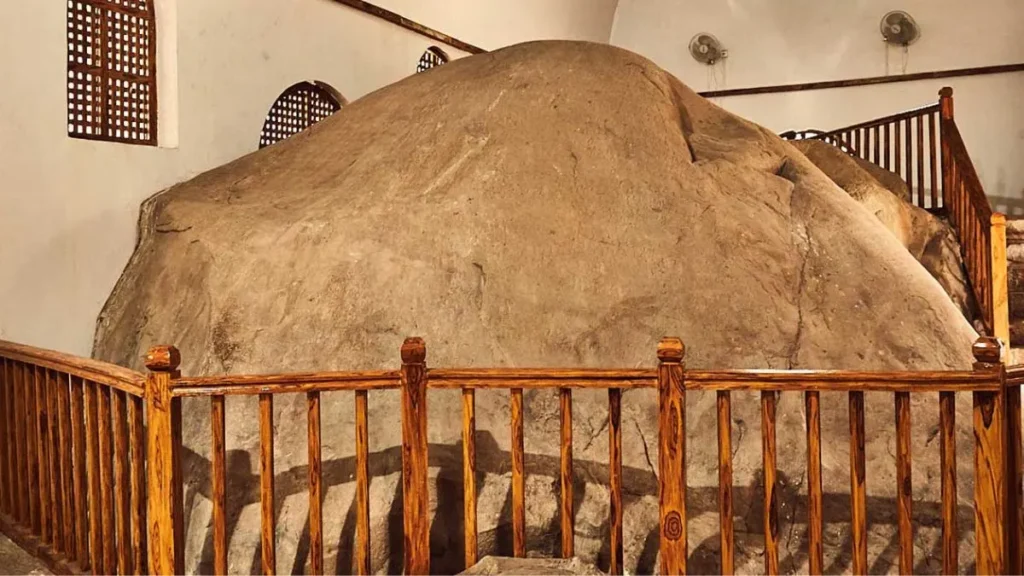
The edicts date back to around 250 BCE, carved during the reign of Emperor Ashoka of the Mauryan Empire, not long after his transformation from a ruthless conqueror into a ruler devoted to Buddhism and dharma following the bloody Kalinga War. Inscribed in Brahmi script using the Prakrit (Pali) language, the fourteen edicts on this boulder are counted among Ashoka’s Fourteen Major Rock Edicts, found at similar sites across the subcontinent.
What makes the Junagadh rock especially remarkable is that it wasn’t just used once. Roughly 400 years later, around 150 CE, the Western Kshatrapa ruler Rudradaman I added his own inscription just above Ashoka’s a Sanskrit prose record describing his repair work on the nearby Sudarshan Lake, and notably one of the earliest known examples of polished Sanskrit prose in Indian epigraphy. Later still, around 455 CE, the Gupta ruler Skandagupta added a third inscription, again referencing repairs to the same lake.
The edicts were rediscovered by James Tod in 1822, and to protect them from the elements, the Nawab Rasool Khan of Junagadh built a protective structure around the boulder in 1900. That structure has been repaired multiple times since in 1939, 1941, and again after a collapse in 2014 and the site is now formally listed by the Archaeological Survey of India as one of the Monuments of National Importance in the Junagadh-Girnar area.
Also Read : Uparkot Fort, Junagadh
What’s Inscribed on the Rock
The fourteen edicts cover a wide range of moral and administrative guidance from Ashoka’s reign, touching on:
- Non-violence, including restrictions on animal sacrifice
- Religious tolerance and respect for all faiths and communities
- Welfare measures, such as medical care for humans and animals
- Good governance principles, including fairness and accessibility for all subjects
- Personal conduct, encouraging honesty, gratitude, and restraint from greed
Layered above and around these are the later Rudradaman and Skandagupta inscriptions, making the boulder a genuinely rare record spanning roughly 700 years of Indian history on a single rock.
Timings and Entry Fee
Timings: Generally open daily from 8:00 AM to 6:00 PM. Some listings mention a midday break from 1:00 PM to 2:00 PM, so it’s worth confirming locally.
Entry fee: Most sources list ₹25 for Indian visitors and ₹250 for foreign visitors. However, a few sources report free entry. Carry some cash and confirm the fee at the ticket counter.
Tickets: You can also book tickets in advance through the ASI’s online ticketing portal.
Time needed: Plan for 15–30 minutes. That’s enough time to read the display boards and view the inscriptions. It makes an easy stop rather than a half-day destination.
Best Time to Visit
October to February offers the most comfortable weather for combining this stop with a wider Girnar or Junagadh sightseeing day. Since the site itself takes very little time, it works well as an early-morning add-on before tackling the Girnar Hills trek, when temperatures are still cool.
How to Reach the Ashoka Rock Edicts
By Road: The edicts sit directly on the route to Mount Girnar, making them an easy stop for anyone heading to the Girnar ropeway or trek starting point.
By Train: Junagadh Junction Railway Station connects to major cities across Gujarat, and a short taxi or auto ride takes you to the edicts.
By Air: The closest airports are Keshod (about 40 km), Porbandar (about 104 km), and Rajkot (about 105 km).
Also Read : Adi Kadi Vav, Junagadh
Who Should Visit
- History enthusiasts – a direct, tangible link to the Mauryan Empire and two later dynasties on the same stone
- Girnar trekkers – since the site sits right on the way to Girnar, it’s an easy five-minute detour before or after the climb
- Epigraphy and script lovers – a rare chance to see Brahmi, Sanskrit, and later scripts layered on one boulder
- Anyone doing a full Junagadh heritage circuit – pairs naturally with Uparkot Fort and other Junagadh historical sites
Where to Eat Near the Ashoka Rock Edicts
Since the site is right along the Girnar route, most visitors eat either in Junagadh town before heading out, or at the small food stalls near the Bhavnath Taleti area at the base of Girnar. Kathiyawadi staples like gathiya-jalebi and locho are easy to find nearby. If you’re planning a broader Gujarat food trail, check out our guides to famous foods in Ahmedabad and best street food in Ahmedabad.
Other Places to Visit Nearby
- Mount Girnar – Gujarat’s highest peak and a major Jain and Hindu pilgrimage site, directly beyond the edicts
- Uparkot Fort – Junagadh’s ancient hilltop fort, with Buddhist caves and stepwells
- Bhavnath Mahadev Temple – a significant Shiva temple at the base of Girnar, especially lively during the Bhavnath Fair
- Damodar Kund – a sacred water tank near the Girnar route
Also Read : Tulsi Shyam Temple, Amreli
Frequently Asked Questions (FAQs)
Most current listings put entry at ₹25 for Indian visitors and ₹250 for foreign visitors, though a few sources mention free entry. It’s best to confirm the current rate at the site before your visit.
Ashoka wrote his original inscriptions in the Brahmi script using the Prakrit (Pali) language. Later, Rudradaman I and Skandagupta added inscriptions in Sanskrit, making the rock a layered record of India’s linguistic history.
Around 15 to 30 minutes is enough to view the inscriptions and read the accompanying display boards, making it a quick add-on rather than a standalone destination.
Yes, the site sits directly on the route to the Girnar ropeway and trek starting point, making it easy to combine both in a single trip.
The Western Kshatrapa ruler Rudradaman I added an inscription around 150 CE, and the Gupta ruler Skandagupta added another around 455 CE both referencing repairs to the nearby Sudarshan Lake.
Advance booking isn’t usually necessary. You can buy tickets on-site, or book them online through the ASI if you prefer to plan ahead.
Final Thoughts
Few places let you stand before 2,200 years of continuous Indian history carved into a single rock. The Ashoka Rock Edicts take only about half an hour to visit, yet they’re one of the most historically significant stops on any Junagadh or Girnar itinerary. Planning a trip to Junagadh? Reach the road less traveled with us. Drop your questions in the comments, and we’ll help you plan the rest of your visit.
