In the early 1980s, geologists came to the fields around Raiyoli looking for limestone. A cement plant needed reserves, and the area was known to be mineral-rich.
They found dinosaur eggs instead. Thousands of them.
What they’d stumbled onto was one of the largest dinosaur hatchery sites on earth and for years before that, villagers had been carrying the smooth stone spheres home, not knowing what they were, and worshipping them.
Today the Balasinor Dinosaur Museum stands on that site: India’s first dinosaur museum and fossil park, in Mahisagar district, about 90 to 100 km from Ahmedabad. It’s also, by several accounts, the only open fossil site in India where visitors can touch real fossils in the ground.
This guide covers timings, ticket prices (which vary wildly across sources), the backpack rule that catches people out, what Rajasaurus actually was, and how to plan a day trip.
Quick Facts at a Glance
| Detail | Information |
| Full name | Dinosaur Fossil Park and Museum |
| Location | Raiyoli village, near Balasinor, Mahisagar district, Gujarat |
| Status | India’s first dinosaur museum and fossil park |
| Inaugurated | June 2019 (see the dating note below) |
| Museum size | Around 25,000 sq ft, roughly 10 galleries |
| Fossil park area | Around 72 hectares |
| Star species | Rajasaurus narmadensis |
| Species identified | At least 13 |
| Eggs / fossils found | Around 10,000 |
| Timings | Roughly 10:00 AM – 5:00/6:00 PM, closed Mondays |
| Tickets | Around ₹70 adult / ₹30 child; foreign visitors ₹300–400 verify |
| Bag rule | No backpacks Free lockers provided |
| Time needed | Half a day |
| Distance from Ahmedabad | Approx. 90–100 km |
| Best time to visit | October to March |
Rajasaurus: The King Lizard of the Narmada
The site’s most significant find deserves its own section.
Rajasaurus narmadensis was a carnivorous abelisaurid that lived in the Late Cretaceous the final stretch of the age of dinosaurs, before the extinction event roughly 66 million years ago.
Why the name? Raja means king. The animal resembled a T. rex in general build, but carried a horn or crest on its head a crown, effectively. Further fossils found along the Narmada river gave it the narmadensis suffix.
Why it matters: This is a dinosaur species described from Indian fossils, named in Sanskrit, found in a Gujarati village. For Indian schoolchildren who grow up on American and Argentinian dinosaurs, that’s not a small thing.
The museum has built a dedicated 3D film about Rajasaurus, and it’s the centrepiece of the experience.
The Discovery Story
This is the part worth telling your children on the drive over.
The early 1980s Geologists from a survey team are working the Balasinor area, prospecting limestone reserves for a cement plant Routine work in a mineral-rich district.
What they find instead are dinosaur bones and eggs eventually revealing egg hatcheries and fossils of at least 13 species, across a site now covering roughly 72 hectares, with around 10,000 fossils and eggs recorded.
And here’s the detail that sticks: local villagers had already been finding the fossilised eggs. Not knowing their scientific significance, they’d taken them home and revered them as sacred objects.
The custodian: Balasinor was a princely state of the Babi dynasty, and Princess Aaliya Sultana Babi widely known as the “Dinosaur Princess” has been the site’s most visible champion for years, credited with working to protect it and sometimes personally guiding visitors.
Tickets and Timings: Read This Carefully
Published figures here are more inconsistent than almost any attraction we’ve covered Here’s what different sources report.
Timings
| Source says | Timings | Closed |
| Listing A | 10:00 AM – 5:00 PM | Monday |
| Listing B | 10:00 AM – 6:00 PM | Monday |
| Listing C (older) | 8:00 AM – 6:00 PM | — |
Monday closure is consistent across the recent sources. Gujarat Tourism confirms it.
Ticket Prices
| Source says | Adult | Child | Foreign |
| Listing A | ₹70 | ₹30 | ₹300 |
| Listing B | ₹70 | ₹30 | ₹400 |
| Listing C | ₹70 (park) | ₹50 (park) | — |
| Listing D (older) | ₹20 | ₹10 | — |
| Visitor report (2020) | ₹50 | — | — |
The consensus is roughly ₹70 for adults and ₹30 for children, with foreign visitors charged ₹300–400.
One outlier worth flagging: a single listing quotes ₹500 per person for the museum, separate from park entry. No other source supports that figure. Treat it with suspicion, but budget flexibly.
Reported Add-Ons
- 5D theatre: around ₹50
- VR films: around ₹50
- Professional camera permit: around ₹700
What to do: carry more cash than you expect to need, and confirm current rates at the counter Fees appear to have risen substantially since the older listings.
The Backpack Rule Nobody Mentions
A visitor report flags something no official listing does, and it will affect your day:
Backpacks and bags larger than a purse are not allowed inside. Free lockers are provided, so it isn’t a disaster but if you arrive with a family day-pack expecting to carry it round, you’ll be repacking at the entrance.
Plan for it: carry a small bag with essentials, and leave the rest in the locker or the car.
Photography is generally allowed, though a professional camera permit is reportedly charged separately.
What’s Inside the Museum
The museum covers roughly 25,000 sq ft across about 10 galleries, and it’s considerably more modern than most Indian museums.
1. The Atrium and Habitat Replica
Why it matters: The atrium recreates the habitat of these creatures the point being that stepping into it puts you 65 million years back. It’s the first impression, and it’s the right one.
Best for: Everyone
2. Life-Size Models and Sculptures
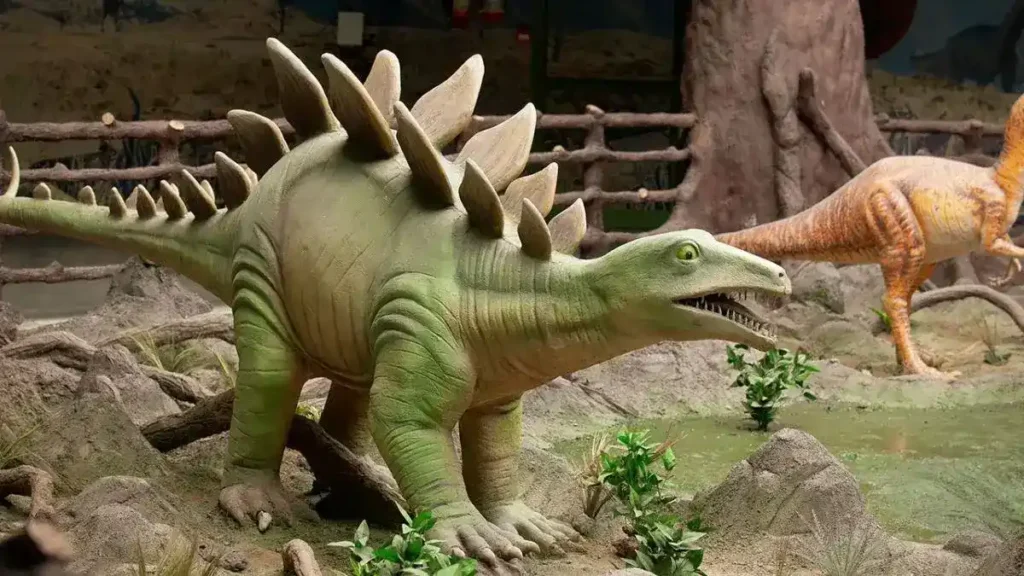
Why it matters: Reports describe 40 to 50 sculptures and figurines, plus life-size dinosaur replicas, illustrating size, shape, habits and habitat.
Best for: Children
3. The Rajasaurus 3D Film
Why it matters: A dedicated 3D film on Rajasaurus narmadensis, the species described from this region.
Best for: Everyone
4. The Technology Galleries
Why it matters: 360-degree 3D projection, virtual reality, interactive kiosks and a 5D theatre. There’s also a “Time Machine” installation and a vivid Mesozoic display.
Best for: Teenagers, tech-minded visitors
Note: 5D and VR are reportedly charged separately.
5. The Fossil Exhibits
Why it matters: Galleries covering dinosaurs of India and Gujarat specifically, with fossil exhibitions. This is the substance behind the spectacle.
Best for: Students, serious visitors
6. The Kids’ Zone and Souvenir Shop
Why it matters: A dedicated interactive Dino fun area for children, plus a souvenir shop.
Best for: Families
The Fossil Park: Touch a Real Fossil
This is the part that makes Balasinor genuinely unusual.
The site has two components: the museum and the open fossil park. And according to multiple accounts, this is the only open fossil site in India where visitors can touch and feel real fossils in situ. Other fossil parks in the country are closed to the general public.
Take a guide The egg fossils are scattered across a 72-hectare site and are genuinely difficult to spot without someone who knows where they are. Visitors consistently say the same thing: without a guide, you’ll walk past them.
Arrange a guided tour through the site, or enquire about tours associated with Princess Aaliya Babi, who has run them for visitors over the years.
The sunset from the hilly section of the fossil park is a reported highlight worth timing your visit to catch.
How to Reach Balasinor Dinosaur Museum
The museum is at Raiyoli village, a short distance outside Balasinor town.
By Road (Recommended)
- From Ahmedabad: approx. 90–100 km, roughly 1.5–2 hours
- From Vadodara: approx. 100–110 km
- From Gandhinagar: approx. 110–120 km
- From Balasinor town: reported at anywhere from 11 to 16 km, around 30 minutes
A hired cab or your own vehicle is strongly recommended State transport buses run to Balasinor from Ahmedabad and Gandhinagar, but the last stretch to Raiyoli is easier with your own transport.
By Bus
GSRTC buses connect Balasinor with Ahmedabad, Gandhinagar and Nadiad. Arrange local transport onward from Balasinor.
By Train
There’s no convenient railhead at Raiyoli. Ahmedabad and Vadodara are the practical arrival points, with road transport onward.
By Air
Sardar Vallabhbhai Patel International Airport, Ahmedabad is the nearest, roughly 100–110 km away.
Best Time to Visit
October to March is the recommended window.
- October–March (Winter) – Best overall. The fossil park involves walking on open ground with limited shade, and winter makes that comfortable.
- July–September (Monsoon) – Green and atmospheric, but the open park is less pleasant in rain.
- April–June (Summer) – Hot. The museum is indoors and fine, but the fossil park walk becomes punishing. Go early.
Best time of day: Arrive at opening, around 10 AM. Do the museum first while it’s cool, then the fossil park, and stay for sunset from the hilly section if your schedule allows.
Allow half a day minimum Visitors who budget two hours consistently report wishing they’d stayed longer.
Where to Eat and Stay
At the site: a small cafeteria with limited options, plus a few street food stalls outside the museum. Adequate, not a destination.
What to carry: Water and snacks, particularly if you’re visiting with children. Standard Gujarati travel food theplas, khakhra, dry farsan works well.
Balasinor town – Simple local eateries and Gujarati thali options.
Where to stay: Raiyoli itself has no real lodging Your options are:
- Balasinor town – including the Garden Palace, the Babi family’s heritage property
- Ahmedabad (90–100 km) the widest choice, and the most common base for a day trip
- Vadodara (100–110 km) the alternative
Most visitors do this as a day trip from Ahmedabad, which works comfortably.
Planning the Ahmedabad end? Our famous foods in Ahmedabad guide covers what to eat before you set off, and the best street food in Ahmedabad list is the right way to end the day.
Places to Visit Near Balasinor
| Place | Why Visit | Best For | Distance |
| Galteshwar Temple | Old Shiva temple on the Mahi river, a common pairing on day tours | Pilgrims, heritage lovers | Nearby |
| Wanakbori Dam | Large dam on the Mahi, a popular local outing | Families | Mahisagar district |
| Balasinor town | The former princely capital, with the Babi family’s Garden Palace | Heritage travellers | ~11–16 km |
| Ahmedabad | UNESCO World Heritage City – old city, riverfront, museums | Everyone | ~90–100 km |
| Vadodara | Lakshmi Vilas Palace, Fateh Singh Museum, Kirti Mandir | Heritage lovers | ~100–110 km |
| Champaner-Pavagadh | UNESCO World Heritage Site | Everyone | ~80–100 km |
Making a Weekend of It
Balasinor sits almost exactly between Ahmedabad and Vadodara, which makes it easy to build into a longer trip.
From the Ahmedabad side, pair it with the Vikram Sarabhai Space Exhibition free, ISRO-run, and the other great science day out for children in this part of Gujarat. Dinosaurs one day, rockets the next.
From the Vadodara side, our Maharaja Fateh Singh Museum guide and Kirti Mandir Vadodara guide cover the Gaekwad trail, about two hours away.
Suggested Day Trip from Ahmedabad
7:30 AM – Leave Ahmedabad after breakfast. 9:30 AM – Reach Raiyoli. 10:00 AM – Museum opens. Galleries, 3D film, atrium. 12:30 PM – Lunch at the cafeteria or in Balasinor. 2:00 PM – Fossil park with a guide – the eggs, the open site. 4:30 PM – Galteshwar Temple, if you have time. 5:30 PM – Sunset from the fossil park’s hilly section. 8:00 PM – Back in Ahmedabad.
Frequently Asked Questions (FAQs)
The museum generally opens around 10:00 AM and closes between 5:00 and 6:00 PM. It remains closed on Mondays. Check the latest timings before visiting.
Entry is generally around ₹70 for adults and ₹30 for children. Foreign visitors may pay more, while VR and 5D experiences usually have separate charges.
Yes, visitors can reportedly see and touch fossils at the Raiyoli fossil site. A local guide can help you identify fossils and dinosaur eggs scattered around the site.
Rajasaurus narmadensis was a carnivorous dinosaur from the Late Cretaceous period. Fossils found in Gujarat helped scientists identify this distinctive abelisaurid dinosaur.
Yes. The museum features life-size dinosaur models, interactive exhibits, films, VR experiences, a 5D theatre and a kids’ zone, making it an interesting family attraction.
Balasinor is approximately 90–100 km from Ahmedabad and usually takes around 1.5–2 hours by road, making it suitable for a day trip.
Final Thoughts
The Balasinor Dinosaur Museum exists because someone went looking for cement and found a hatchery. Around 10,000 eggs and fossils, thirteen species, and a crowned carnivore named after the Narmada all in a Gujarati village where locals had been quietly worshipping the eggs for years. Travel Roach brings you closer to this fascinating prehistoric site with practical tips for planning your visit.
Go on a weekday that isn’t Monday, take a guide into the fossil park, leave the backpack in the car, and give the museum and fossil site a full half-day.
Been recently? Share the current ticket prices and timings in the comments published figures for this one are all over the place, and reader updates genuinely help Travel Roach keep its travel guides useful and up to date.
