Every city has a beach story. Surat has two. The first is the straightforward one: Dumas Beach is the closest and most popular beach to Surat 21 kilometres southwest of the city centre, on the Arabian Sea coast, with black sand, good street food, and one of the finest sunset views in South Gujarat. Thousands of Surati families visit every week. The evening bhajiya and pav bhaji at the beach stalls are legendary in their own right.
The second story is the one that has made Dumas famous far beyond South Gujarat: the beach is widely reported as one of the most haunted places in India. The land was historically a Hindu cremation ground. Visitors have reported strange whispers and unexplained sounds after dark. Dogs are said to behave strangely near certain parts of the beach. The Economic Times has listed it among Gujarat’s most haunted locations. It appears in lists of the top haunted beaches in the world.
TravelRoach will tell you both stories. And then we will tell you the third one the one that locals mostly tell which is that the haunted reputation is folklore, the beach is perfectly safe during the day, the bhajiya is excellent, and the sunset is worth every kilometre of the drive from Surat. This guide covers the full picture: the black sand, the street food, the safety notes, the haunted legends presented as what they are (legends), and everything you need to plan a complete Dumas Beach visit.
Dumas Beach – Quick Information
| Detail | Information |
| Location | 21 km southwest of Surat city, on the Arabian Sea coast, South Gujarat |
| Beach Type | Urban beach – accessible, popular, with food stalls and activity |
| Sand Type | Black/dark sand – due to high iron content in the coastal soil |
| Most Famous For | Black sand, spectacular sunsets, street food, and haunted folklore |
| Adjacent Temple | Dariya Ganesh Temple – an ancient Ganesha shrine next to the beach |
| Entry Fee | Free – no entry fee |
| Timings | Open throughout the day (recommended: sunrise to sunset) |
| Night Visits | Possible but not recommended – beach is poorly lit after dark; safety and folklore concerns both apply |
| Swimming | NOT RECOMMENDED – strong undercurrents make the sea dangerous at Dumas |
| Best Time of Day | Evening (5:00 PM – 7:00 PM) for sunset; morning for walks |
| Best Season | October to March |
| Street Food | Bhajiya, pav bhaji, dabeli, sweet corn, coconut water, Chinese snacks |
| Haunted Status | Listed in multiple ‘Most Haunted Places in India’ compilations; historically a cremation ground |
| Distance from Surat City | ~21 km (~35–40 minutes by road) |
| Distance from Surat Airport | ~15 km (~25 minutes) |
| Distance from Surat Station | ~20 km (~35 minutes) |
| Route | Via NH-48 toward Hazira / Dumas |
| Comparison | More developed and busier than Suvali Beach (~35 km further south) |
About Dumas Beach – The Straightforward Story
The Black Sand
The most immediately distinctive feature of Dumas Beach is its sand: dark, almost black, certainly unlike the pale cream or golden sand of most Indian beaches. The darkness is attributed to the high iron content in the coastal soil and sand the same geological characteristic that gives Tithal Beach in Valsad its famous deep black colour, though Dumas is generally described as darker grey rather than pure black.
This dark sand is the source of much of the beach’s atmospheric character and, indirectly, of some of its haunted reputation the visual quality of black sand at dusk, when the light is low and the sea is loud, creates conditions that are naturally more dramatic and unnerving than white sand in the same light. The iron-rich sand also retains heat differently from quartz sand, becoming noticeably warm in the afternoon sun.
The Arabian Sea View and Sunsets
Dumas Beach faces west directly into the Arabian Sea. This orientation makes it one of Surat’s finest sunset locations. The sun descends into the open ocean, visible as a complete disc above the water with nothing between it and the horizon. In the winter months particularly, the combination of the dark sand, the Arabian Sea catching the orange and red of the sunset, and the relatively open beach creates an evening view that draws visitors from across Surat specifically for the sunset.
The evening atmosphere at Dumas between approximately 5:00 and 7:00 PM the food stalls active, families spread across the beach, the light shifting through the sunset colours, the sea breeze consistent is the version of Dumas that most of its regular visitors know and love. This is not a ghost story. It is just a good beach at the right time of day.
Also Read : Suvali Beach, Surat
The Dariya Ganesh Temple
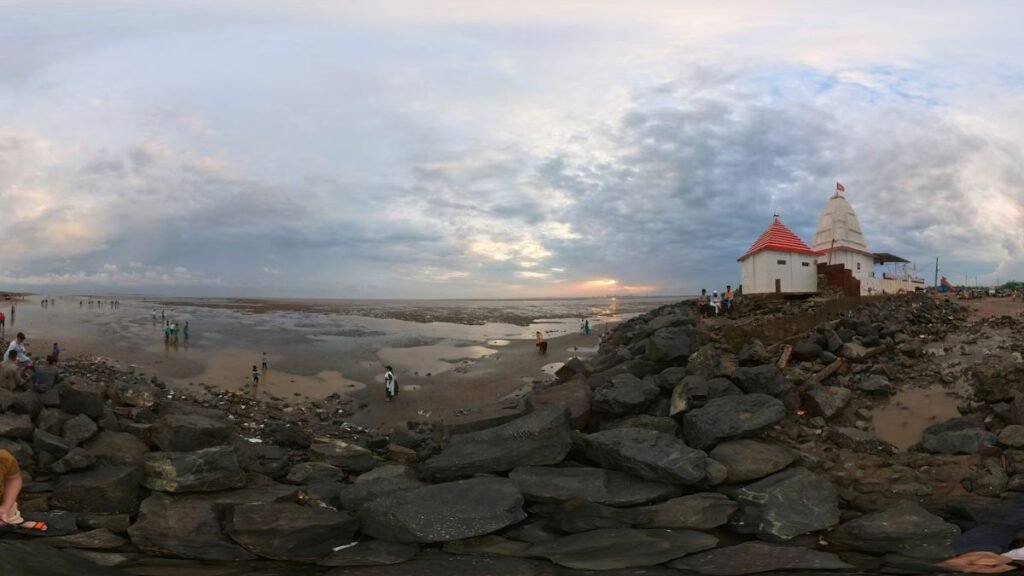
Adjacent to the main Dumas Beach area stands the Dariya Ganesh Temple an ancient temple dedicated to Lord Ganesha with a specifically maritime character. Dariya means ocean or sea in Gujarati, making this the Lord of the Sea Ganesha a deity worshipped specifically in relation to the ocean and those who depend on it. The temple is visited by fishing communities, by pilgrims, and by beach visitors who stop for darshan before or after their time on the sand. Its antiquity and its sea-facing position give it a significance beyond the beach’s recreational identity.
The Haunted Reputation – What the Stories Say and What to Make of Them
The Historical Background – A Cremation Ground
The foundation of Dumas Beach’s haunted reputation is historical rather than invented: the land on which the beach sits was, according to local and historical records, a Hindu cremation ground (smashan) for an extended period. In the Hindu tradition, cremation grounds are among the most sacred and most spiritually charged of all spaces the sites where the final transition of the soul occurs, where the body is returned to the five elements, and where the presence of Shiva (who is said to dwell in cremation grounds) is especially palpable.
The cultural status of a former cremation ground in the Hindu tradition is complex. It is simultaneously a sacred and a liminal space a place where the boundary between the living and the dead is understood to be thinner than elsewhere. The belief that the souls of those cremated here linger in the vicinity is not a horror-movie invention but a genuine expression of how South Asian cultures think about the relationship between place, memory, and the dead.
The Reported Phenomena
Multiple accounts from visitors and locals have contributed to Dumas Beach’s haunted reputation over the years. These accounts typically include:
- Strange whispers and unexplained sounds after dark – visitors have reported hearing voices or whispers with no identifiable source, particularly in the late evening and after midnight
- Apparitions and unexplained lights – orbs, shadows, and occasional human-shaped apparitions reported by night visitors; orbs appear frequently in flash photography taken at the beach
- Unusual dog behaviour – stray dogs near the beach have been observed barking aggressively at apparently empty space, or refusing to enter certain sections of the beach; dogs are widely believed in Indian tradition to be sensitive to spiritual presences
- Mysterious disappearances – local legends include accounts of people who walked into the sea or onto the beach at night and were not seen again; the practical explanation for some of these is the beach’s genuinely dangerous undercurrents
The Honest Assessment
TravelRoach presents this for what it is: folklore. Most Surat locals who know Dumas Beach well and there are thousands of them, since it is the city’s most popular beach consider the haunted reputation a combination of historical association, cultural tradition, and the kind of storytelling that attaches to any dramatically located, dark-sanded, formerly sacred site. They visit Dumas regularly, in the evening, with their families, and eat bhajiya by the water.
That said, the beach’s practical safety concerns are real and not folklore. The strong undercurrents at Dumas are genuinely dangerous. Swimming is not recommended. The beach after dark is poorly lit and, like any isolated public space at night, presents practical safety risks that have nothing to do with paranormal activity. The sensible visitor visits during the day or in the early evening and is home before full dark.
The haunted reputation is part of Dumas Beach’s identity and is worth knowing about. It adds atmosphere and context to the place. But the beach deserves to be known primarily for its sunset, its bhajiya, and the particular quality of an evening on the Arabian Sea coast of South Gujarat — not only for a reputation that makes it sound more alarming than it needs to be.
Street Food at Dumas Beach – The Real Reason to Go
The Bhajiya – Non-Negotiable

The first and most important food item at Dumas Beach is bhajiya the hot, freshly fried Gujarati fritter made with onion, methi, batata, or mirchi, depending on the vendor. The combination of fresh bhajiya from a beach stall, the sea breeze, and the sound of the waves is one of the defining sensory experiences of an evening at Dumas. There is no wrong bhajiya at Dumas the vendors generally know their audience but finding the stall with the freshest oil and the crispest batter is the unofficial competitive sport of the regular visitor.
Also Read: Surat on a Plate: Must-Visit Food Joints You Can’t Miss
The Full Food Menu
Beyond bhajiya, the Dumas Beach food stalls offer a varied and genuinely satisfying range:
- Pav Bhaji – the Mumbai-origin spiced vegetable mash with buttered bread rolls; several stalls do a good Surti version with extra butter and masala
- Dabeli – Surat’s beloved street snack; spiced potato in a bread roll with sweet tamarind chutney, mint chutney, sev, and peanuts
- Sweet Corn – charcoal-roasted with lime and masala; the beach corn smell is as characteristic as the sea smell at Dumas
- Coconut Water – fresh coconuts available throughout the beach
- Chinese Snacks – Indianised Chinese (fried noodles, manchurian, etc.) available from several stalls
- Various chaat items – bhel puri, sev puri, and other savoury chaats from mobile vendors
The food stalls at Dumas are generally more numerous and more varied than at the quieter Suvali Beach further south. This is one of the practical advantages of Dumas’s greater commercial development the food infrastructure is reliable and the stalls operate consistently through the evening hours.
Things to Do at Dumas Beach
Sunset Walking and Photography
The primary and most universally enjoyed activity at Dumas is the evening walk along the dark sand shoreline as the sun sets over the Arabian Sea. The beach is wide enough for comfortable walking. The combination of the dark sand, the orange and red sky, and the sound of the waves makes for straightforward visual beauty that doesn’t require any particular effort or planning to experience. Simply arrive by 5:00 PM, walk toward the sunset, and let the evening do the rest.
Street Food Circuit
A dedicated food circuit of the Dumas Beach stalls is itself an activity. The serious Surat foodie approach is to identify the best bhajiya stall (usually the one with the longest queue), have bhajiya first, then work through pav bhaji, dabeli, and sweet corn in order of hunger. Evening food at the beach, eaten standing by the stall with the sea wind in your face, is one of Surat’s most accessible and genuinely enjoyable street food experiences.
Dariya Ganesh Temple Visit
The adjacent Dariya Ganesh Temple deserves a short, respectful visit remove footwear at the entrance and spend 10 to 15 minutes in the maritime Ganesha’s presence. The combination of the sea-facing temple and the beach gives a particular quality to the location that beach visits alone cannot provide.
Morning Walks, Yoga, and Fitness
Dumas Beach’s morning character is completely different from its evening atmosphere. In the early hours from approximately 6 to 9 AM the beach is used by Surat’s fitness community: joggers, yoga practitioners, walking groups, and those who simply come for the sea air before the day begins. The beach in the morning is cooler, less crowded than the evening, and has a calm, purposeful energy entirely distinct from the sunset crowd.
Adventure Sports — Seasonal
Seasonal operators run water sports and adventure activities from Dumas Beach during the calm season. Confirm current availability on arrival the activity and operator situation changes seasonally. Horse rides along the beach are also available from local operators.
Best Time to Visit Dumas Beach
October to March – Best Season
The winter months are the most comfortable for Dumas Beach visits. The weather in South Gujarat from October to February is pleasant 20 to 28 degrees Celsius and the sea breeze keeps the beach cooler than the city. The sunsets in this period are particularly vivid in the clear winter atmosphere. October and November visits benefit from the post-monsoon landscape freshness; December and January are the clearest and most comfortable for extended beach time.
Evening – 5:00 PM to 7:00 PM Year-Round
Regardless of season, the evening window between 5:00 and 7:00 PM is the prime Dumas Beach experience. The food stalls are at their most active. The light is at its most beautiful. The sea is at its most photogenic. And the crowd families, groups, couples gives the beach its characteristic evening energy. Arrive by 5:00 PM on weekdays or by 4:30 PM on weekends to find a good position.
Morning – 6:00 to 9:00 AM
The morning is the local’s Dumas the version that the fitness community and regular walkers know. The beach at dawn, before the food stalls are fully operational, is quieter, cooler, and more contemplative than any other time of day. Morning visits are not typically associated with the haunted reputation or the food stalls but are genuinely pleasant for their own reasons.
Monsoon -Not Recommended for Swimming
The monsoon sea at Dumas is dangerous. The beach remains accessible during the monsoon but swimming and wading are strongly inadvisable. The dark sky and rough sea do give the beach a particularly atmospheric, dramatic quality in monsoon conditions but this is best appreciated from a safe distance from the water.
How to Reach Dumas Beach from Surat
| From | Distance | Mode | Approx. Time |
| Surat city centre | ~21 km | Car / Taxi / Auto (via NH-48/Dumas Road) | 35–45 minutes |
| Surat Railway Station | ~20 km | Taxi / Auto | 35–45 minutes |
| Surat Airport | ~15 km | Taxi | 25–30 minutes |
| Suvali Beach | ~35 km further south | Car / Taxi | 40–50 minutes |
| Navsari | ~40–45 km | Car | 55–65 minutes |
| Valsad | ~85 km | Car | 1.5 hours |
| Vadodara | ~155 km | Car / Train + local | 2.5–3 hours |
| Ahmedabad | ~265 km | Car / Bus | 4.5 hours |
By Road from Surat
From Surat city centre, Dumas Beach is approximately 21 km via NH-48 heading south-west toward the Arabian Sea coast. Follow the road toward Dumas village. Google Maps navigation to ‘Dumas Beach, Surat’ is reliable. Parking is available near the beach. The road is well-maintained and well-travelled most Surat auto drivers and taxis know it. Ola and Uber are widely available in Surat for the direct journey.
Via Suvali – Combining Both Beaches
Dumas Beach and Suvali Beach (approximately 35 km further south) can be combined in a single coastal day from Surat. The recommended approach: visit the quieter Suvali Beach in the afternoon for a peaceful couple of hours, then drive north to Dumas for the evening sunset and street food. This gives you the full range of Surat’s coastal character quiet and natural at Suvali, lively and food-forward at Dumas.
Also Read: Vansda National Park, Navsari
Nearby Attractions to Combine with Dumas Beach
- Suvali Beach ~35 km south | The quieter, cleaner alternative to Dumas fewer food stalls, fewer crowds, but a more natural and unspoilt beach experience. Best for those who find Dumas too commercial. Read our full TravelRoach guide.
- Surat City ~21 km | India’s diamond capital and one of Gujarat’s greatest food cities. The locho, ghari, Surti undhiyu, and dabeli of Surat deserve a dedicated city food crawl before or after the beach. Read our Food Joints in Surat guide on TravelRoach.
- Hazira Industrial Complex ~10 km | One of India’s largest energy and petrochemical corridors ONGC, Shell LNG, ArcelorMittal Nippon Steel. Not a tourist destination but context for the industrial landscape of the Surat coast.
- Tithal Beach, Valsad ~85 km south | Gujarat’s most distinctively black sand beach darker than Dumas, with a Sai Baba Temple and BAPS Swaminarayan Temple right on the shoreline. Read our full TravelRoach guide.
- Vansda National Park ~100–110 km | Gujarat’s most densely forested national park, in Navsari district. A full nature day trip in addition to the coastal experience. Read our full TravelRoach guide.
Practical Tips for Dumas Beach
- Don’t swim – the undercurrents at Dumas Beach are strong and genuinely dangerous. Multiple incidents have been attributed to these currents over the years. Wading in ankle-deep water is possible in calm conditions; do not go deeper.
- Arrive by 5:00 PM for the sunset on weekdays – or by 4:30 PM on weekends when the beach fills quickly. The best sunset viewing positions fill fast.
- The bhajiya queue is worth joining – the best bhajiya stall will have a line. Join it. The quality difference is real.
- Carry cash – most beach stalls operate cash-only. Carry sufficient notes for bhajiya, pav bhaji, coconut water, and any activities.
- Avoid the beach after full dark – whether or not you believe the haunted reputation, the beach is poorly lit after sunset and is safer and more enjoyable during daylight and early evening hours.
- Don’t bring valuables to the beach – like any busy public beach, Dumas has the usual pickpocketing risks in crowded evening conditions. Leave non-essential items in the car.
- Morning visits are underrated – if you want Dumas without the crowd, the 6:30 to 8:30 AM morning window is the local’s beach.
- Combine with Suvali for a full coastal day – Suvali’s quiet and Dumas’s lively energy together give you the complete South Gujarat beach experience.
Frequently Asked Questions (FAQs)
Dumas Beach is one of India’s most famous ‘haunted’ beaches and appears on multiple lists of haunted places in the country. The historical basis for the reputation is real: the land was historically a Hindu cremation ground, and the cultural association between former cremation sites and lingering spirits is genuine in South Asian tradition. Various visitors have reported strange sounds, unexplained lights, and unusual dog behaviour at the beach after dark. However, most Surat locals the people who know the beach best consider the haunted reputation to be folklore rather than fact and visit regularly without incident. The sensible approach is to visit during daylight or early evening hours and not to swim regardless of time of day, as the undercurrents are the beach’s genuine danger.
The sand at Dumas Beach is black or dark grey due to the high iron content in the coastal soil and sand of this stretch of the South Gujarat coast. The iron-rich sediment carried to the coast from the Western Ghats mountain range through river systems and deposited along the shoreline gives the sand its distinctive dark colour. This is the same geological process that creates the famous black sand beaches at Tithal (Valsad) and other dark sand beaches along the South Gujarat and Maharashtra coasts. The dark sand absorbs and retains heat more efficiently than pale sand.
No – swimming at Dumas Beach is not recommended. The beach is well known for its strong undercurrents, which are genuinely dangerous even for confident swimmers. Multiple incidents have been attributed to these currents at Dumas over the years. Wading in ankle-to-knee depth in calm conditions is generally considered safe, but entering the water more deeply is inadvisable. There are no permanent lifeguards stationed at Dumas. Keep children away from the water and always assess sea conditions before wading.
The best overall season is October to March when the weather in South Gujarat is pleasant (20 to 28 degrees Celsius). The best time of day is the evening from 5:00 PM to 7:00 PM when the food stalls are active, the sunset is at its finest, and the beach energy is at its most characteristic. On weekdays, arrive by 5:00 PM for good positioning. On weekends, arrive by 4:30 PM to find a comfortable spot before the peak crowd. Morning visits from 6:30 to 8:30 AM offer a completely different, quieter experience favoured by local fitness enthusiasts.
Dumas Beach is 21 km southwest of Surat city centre approximately 35 to 45 minutes by road. From anywhere in Surat, take the road via NH-48 toward the coast in the direction of Dumas village. Ola and Uber cabs are widely available in Surat and can take you directly to the beach. From Surat Airport (15 km), the drive takes approximately 25 to 30 minutes. From Surat Railway Station (20 km), approximately 35 to 45 minutes. Parking is available near the beach for private vehicles.
Dumas Beach has the best street food infrastructure of any beach near Surat. The must-try items are bhajiya (hot Gujarati fritters — the definitive beach snack), pav bhaji (spiced vegetable mash with buttered bread rolls), dabeli (Surat’s signature spiced potato snack in a bread roll with chutneys and sev), sweet corn (charcoal-roasted with lime and masala), and coconut water. Indianised Chinese snacks and various chaats are also available. Most stalls operate in the evening from approximately 4:00 PM onward and are at their busiest and freshest between 5:00 and 8:00 PM. All food is vegetarian in accordance with Gujarat’s food culture.
Yes -Dumas Beach is primarily a family destination, used by Surat families as an accessible evening outing. The broad beach, the food stalls, the sunset view, and the general atmosphere are all family-friendly in the daytime and early evening. The practical cautions for families are: do not allow children to enter the sea (strong undercurrents), keep an eye on belongings in the crowded evening conditions, and plan to leave before full dark. Children who enjoy beach walks, food stalls, and the visual experience of a sunset over the sea will find Dumas genuinely enjoyable. The haunted reputation is purely a night-time and after-dark concern and does not affect daytime family visits.
Final Thoughts
Dumas Beach is Surat’s most famous beach and one of South Gujarat’s most talked-about destinations. It is famous for two things: black sand sunsets and ghost stories. Both deserve credit for what they are.
The sunset is real, accessible, and consistently excellent. The bhajiya is real, hot, and worth the drive. The Dariya Ganesh Temple is real and worth a visit. The black sand is real and distinctive. These are the primary reasons the beach has drawn Surat families and tourists for decades.
The haunted reputation is a genuine piece of cultural folklore rooted in real history the former cremation ground, the cultural traditions around such sites, and the particular atmospheric quality of dark sand and sea at night. It is worth knowing about and respecting in the sense that good folklore always deserves respect. But it is not the dominant reality of a daytime or early evening visit.
Go for the bhajiya. Stay for the sunset. Be home before dark. That is the complete and correct Dumas Beach instruction.
Have you visited Dumas Beach? Share your experience the best bhajiya stall, the sunset that stopped you, your thoughts on the haunted stories in the comments. TravelRoach would love to hear from every South Gujarat coastal explorer.
