Most people who visit Gujarat think of lions at Gir, or flamingos at Thol, or the salt desert of Kutch. Very few think of a dense, lush rainforest tall teak and bamboo trees towering 30 metres high, a forest floor carpeted in rare orchids, a river flowing silently through the canopy, and one of the world’s most endangered owls quietly watching from a branch above you.
But that place exists. It is Vansda National Park in the Navsari district of South Gujarat and it may be the most underrated wildlife destination in the entire state.
Tucked in the northernmost reaches of the Western Ghats, spanning just 24 square kilometres of forest that has not seen a single tree cut since 1952, Vansda is small in size but extraordinary in character. This TravelRoach guide gives you everything the park’s history, all wildlife to watch for, entry fees, safari rules, the remarkable narrow gauge train journey through the forest, nearby attractions, and honest tips for planning a memorable visit.
Vansda National Park – Quick Information
| Detail | Information |
| Location | Kilad Village, Vansda Taluka, Navsari District, Gujarat |
| Districts Covered | Navsari and Dang (the park straddles both) |
| Part of | Northernmost Western Ghats (Sahyadri mountain range) |
| Area | ~23.99 sq km (24 sq km) |
| Established | 1979 (some records cite 1985) formerly Maharaja of Vansda’s private forest |
| Managed By | Gujarat Forest Department |
| Entry Point | Kilad Village (only active entrance 10 km from Vansda town, 3 km from Waghai) |
| Park Timings | 7:00 AM – 5:00 PM (daily) |
| Open Season | Mid-October to mid-June (approx. October 16 to June 14) |
| Closed Season | Mid-June to mid-October (Monsoon terrain inaccessible) |
| Permit Duration | 3 hours per entry permit |
| Vehicle Allowed | Enclosed four-wheelers only (cars, SUVs, jeeps) two-wheelers NOT allowed |
| Vehicle Fee | ₹400 per car/SUV/jeep |
| Guide Fee | ₹100 per hour (compulsory guides help avoid getting lost) |
| Camera Fee | ₹200 for DSLR |
| Prior Booking | Not required for normal visits entry at gate |
| Forest Office Contact | 02630 230057 (Vansda Range Forest Office) |
| Nearest Railway Station | Waghai (~3–4 km from park gate) |
| Nearest Airport | Surat Airport (~105–130 km) |
| Best Time to Visit | November to February for wildlife; May–June for fireflies |
About Vansda National Park – Gujarat’s Best Kept Secret
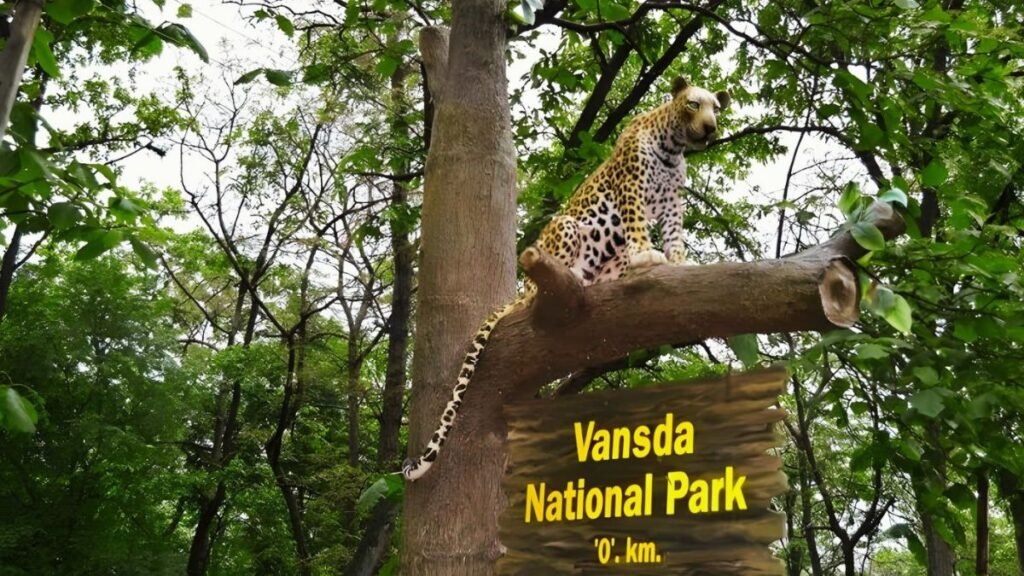
A Forest Frozen in Time
Vansda National Park sits at the very edge where South Gujarat’s plains surrender to the lush, hilly terrain of the Western Ghats. The park occupies 24 square kilometres of the Vansda-Waghai region, straddling the Navsari and Dang districts. The Vansda-Waghai state highway passes right through the park, and so does Gujarat’s only remaining narrow gauge railway line meaning you can arrive by train and pass through the forest before you even begin your safari.
What makes Vansda truly extraordinary is what has and has not happened here over the past 70-plus years. Not a single tree has been legally felled in this forest since 1952. The Maharaja of Vansda State, who owned these forests, personally prohibited all tree cutting. When the state was absorbed into independent India and the forest was eventually declared a national park in 1979, that tradition of absolute protection was maintained. The result is a forest of extraordinary density trees exceeding 30 metres in height, a canopy so thick it creates permanent twilight on the forest floor, and an undergrowth thriving with life that has had seven decades to grow completely undisturbed.
The park is also one of the least visited national parks in India. There are no tourist lodges inside. No commercial operators crowding the entry gate. The single entry point at Kilad village processes a fraction of the visitors that more famous parks handle. This near-complete absence of crowds is, arguably, Vansda’s greatest attraction.
The Name and the Royal Connection
The name Vansda comes from the Vansda State a small princely state that was part of British India. The Maharajas of Vansda owned and protected these forests for generations. When the Maharaja abolished tree felling in 1952 nearly three decades before the forest received official national park status it was an act of conservation that was ahead of its time. Today’s tall, ancient forest is directly the result of that single royal decision.
Flora – What the Forest is Made Of
Vansda’s vegetation is classified as a tropical moist deciduous forest, rich with Western Ghats biodiversity. Despite its small area, the park contains over 450 species of plants a density that rivals much larger protected forests in India.
Key Trees
- Teak (Sagwan) The dominant tree, standing tall with broad leaves that create the characteristic light-play on the forest floor
- Bamboo Dense bamboo groves crisscross the park, creating impenetrable corridors for wildlife
- Mango, Amla (Indian Gooseberry), Behda, Shimlo Fruit trees that attract birds and animals
- Sisam, Kusum, Khair, Kalam, Sadad Hardwood species forming the forest core
- Humb, Modad, Timru, Mahudo, Dudhkod Species unique to Western Ghats forests
The Numbers
- 110+ tree species
- 63 types of climbing plants and lianas
- 199 herb species
- 25 grass species
- Rare orchids found in the undergrowth
- Native grassland patches in the eastern sections of the park
The Firefly Season – May to June
One of Vansda’s most magical and least-known phenomena happens just before the monsoon closes the park. In May and June, the trees of Vansda light up with thousands of fireflies on dark, moonless nights. The entire forest glows with their synchronized light a phenomenon described by those who have witnessed it as completely surreal and unlike anything else in Gujarat. If your visit coincides with this window, plan an evening in the forest. You will never forget it.
Also Read: Saputara Travel Guide
Wildlife — What to Look For
Mammals
| Animal | Sighting Chance | Notes |
| Leopard | Low–Medium | Elusive but resident. Best chance: early morning drives in winter. Vansda’s most celebrated mammal. |
| Rusty-Spotted Cat | Very Rare | One of the world’s smallest wild cats. Spotted in Feb 2023 after a 23-year gap extremely rare sighting. |
| Indian Grey Mongoose | High | Commonly seen along forest trails. Quick, curious, and active during daylight hours. |
| Jungle Cat | Medium | Seen in the grassland patches and forest edges, especially during early morning hours. |
| Hyena | Low–Medium | Nocturnal occasional sightings at dawn and dusk near forest edges. |
| Wild Boar | High | Frequently spotted rooting through the forest floor. Travels in family groups. |
| Sambar Deer | Medium | India’s largest deer. Usually seen near water sources and bamboo groves. |
| Four-Horned Antelope (Chousingha) | Medium | World’s only four-horned antelope. Shy and fast look for it in open areas and grassland patches. |
| Indian Bison (Gaur) | Medium | Large and impressive. Found near forest water points, especially in morning and late afternoon. |
| Indian Giant Squirrel | Medium | Large, vividly coloured squirrel seen leaping between tall teak trees. Easier to spot by sound. |
| Porcupine | Low | Mostly nocturnal. Occasionally seen near the forest entrance at dusk. |
| Common Langur and Rhesus Macaque | High | Both monkey species are common throughout the park and easy to spot from vehicles. |
| Civet | Low | Nocturnal, rarely seen. Look carefully near dense bamboo thickets at dawn. |
Birds — Vansda’s Greatest Treasure (150–200+ Species)
For birdwatchers, Vansda National Park is one of Gujarat’s finest and most underappreciated destinations. The combination of Western Ghats forest species, deciduous woodland birds, and resident owls creates a birdlist that is far more diverse than most visitors expect from a Gujarat forest.
| Bird | Type | Notes |
| Forest Owlet | Critically Endangered | Fewer than 1,000 individuals left in the world. Vansda is one of its known resident habitats. Early morning in winter is the best window. |
| Brown Fish Owl | Resident | Large and striking. Commonly seen near the Ambika River and water sources. |
| Mottled Wood Owl | Resident | Another impressive owl species resident in the park. Best spotted at dawn. |
| Malabar Trogon | Western Ghats species | Brilliantly coloured bird with crimson and green plumage. A prized sighting for birdwatchers. |
| Indian Pitta | Migratory | Known as the ‘nine-colour bird’. Arrives in winter. Seen in low undergrowth. |
| Crested Serpent Eagle | Resident | Large, distinctive raptor. Often heard calling loudly before being spotted circling above. |
| Great Hornbill / Grey Hornbill | Resident | Magnificent birds with large yellow bills. Usually seen in pairs in tall trees. |
| Paradise Flycatcher | Migratory | Long-tailed, elegant flycatcher. Males have a white or chestnut tail ribbon. Beautiful in flight. |
| Leaf Bird (Chloropsis) | Resident | Brilliant green bird, often difficult to spot against foliage. More audible than visible. |
| Sunbird species | Resident | Multiple species iridescent colours flash in the forest canopy, especially near flowering trees. |
| Woodpecker species | Resident | Several species including Flame-backed and Heart-spotted Woodpeckers. |
| Indian Peafowl | Resident | Common across the park. Males display in open areas near the forest edges. |
Reptiles and Other Species
- Indian Rock Python – Large constrictor occasionally spotted crossing forest paths
- Indian Cobra and Krait – Both venomous species present; stay inside your vehicle
- Russell’s Viper – Ground-dwelling venomous species; another reason not to walk in the forest without a guide
- Various monitor lizard species and chameleons
- 121 spider species recorded – including the dramatic Giant Wood Spider, with webs spanning several metres between trees
- River fish and freshwater species in the Ambika River
How a Safari at Vansda National Park Works
Entry Point
There is only one active entry point for visitors: Kilad Village, located 10 km from Vansda town and approximately 3 km from Waghai. The Navtad Village entrance, which was previously a second option, is now permanently closed to visitors. From Vansda town, take the road towards Waghai and you will see the park entrance gate on your right after approximately 15 minutes. Collect your permit at the gate.
The Safari Route
The tourist route inside the park extends approximately 4 km from the entry gate, of which around 1 km passes through the Kilad village settlement and the remaining 3 km is dense forest. At the end of the 3-km forest stretch, there is a designated stopping area where your guide will ask you to pause and observe before turning back. Total inside-the-park time per permit is 3 hours. The full tourist route including time at the stopping point is approximately 12 km return.
Vehicle and Guide Rules
- Only enclosed four-wheelers (cars, SUVs, jeeps) are permitted. Two-wheelers are strictly not allowed inside the park.
- A guide is compulsory this is both a rule and a practical necessity, as the forest interior can disorient visitors. Guide fee: ₹100/hour.
- You cannot exit your vehicle inside the forest section of the park.
- Food and plastic are not permitted inside.
- Stopping mid-route is officially not allowed, though your guide may pause for wildlife sightings at designated areas.
- No prior booking is needed for a normal self-drive visit. Show up at the gate, pay the fees, collect your permit, and go.
Vansda National Park – Entry Fees
| Category | Fee |
| Car / SUV / Jeep (per vehicle) | ₹400 |
| Mini Bus / Heavy Vehicle | ₹2,000 |
| Guide (per hour — compulsory) | ₹100 (first hour) + ₹50 per additional hour |
| DSLR Camera Permit | ₹200 |
| Videography | ₹5,000 – ₹10,000 |
| Professional Feature Film | ₹25,000 – ₹50,000 |
| Indian Visitors (individual) | ₹20 per person (older rate verify at gate) |
| Foreign Nationals | Equivalent of USD 5 per person |
| Permit Duration | 3 hours per permit |
Note: Fee structures at smaller national parks can change without notice. Always confirm current rates at the Kilad Village gate or by calling the Vansda Range Forest Office at 02630 230057 before your visit.
Also Read: Gir National Park Safari Guide
The Narrow Gauge Train – Gujarat’s Most Scenic Rail Journey
One of the most unique and underrated ways to experience Vansda National Park is on Gujarat’s only remaining narrow gauge railway line the historic Bilimora to Waghai railway. This slow, charming train runs from Billimora (a major junction on the Western Railway line in Navsari district) to Waghai in Dang, passing directly through the national park and its adjoining forested areas. It is one of the few train journeys in India where you genuinely pass through the heart of a protected forest.
Key Details of the Bilimora–Waghai Narrow Gauge Train
- Route: Bilimora (Navsari) to Waghai (Dang) passing through Vansda National Park and dense forests
- Daily departures from Waghai: 6:00 AM and 2:30 PM
- Total journey time: Approximately 3 hours one way
- Forest section: Only the first hour of the journey passes through forested areas consider going only until Unai station if you specifically want the forest experience
- Vistadome Coach: An AC vistadome coach has been added to the train, offering panoramic glass views for better wildlife spotting
- Ordinary ticket to Unai: ₹30 | Vistadome ticket to Unai: ₹470
- Birdwatching from the train is excellent the slow speed and gentle noise level make animal spotting surprisingly productive
This train journey is a genuine hidden gem of Gujarat travel completely off the mainstream tourist radar. If you are visiting Vansda, combining a morning train ride on the narrow gauge with an afternoon self-drive safari in the park makes for a near-perfect wildlife day.
Best Time to Visit Vansda National Park
November to February – Best for Wildlife
Winter is peak season for wildlife sightings at Vansda. The air is cool, visibility through the bare and semi-bare deciduous forest is better than during the green season, and animals are active during the morning hours. Birdwatching is at its most productive migratory species including the Indian Pitta and Paradise Flycatcher are present, and resident owl species are easiest to spot in the long winter nights. This is also the most comfortable time for a morning safari.
March to May – Forest Owlet and Dry Season
As the trees lose their leaves before the monsoon, visibility inside the forest actually improves significantly. This is arguably the best time to spot the critically endangered Forest Owlet, which is active in the early morning hours. Leopard sightings tend to increase during the dry season as animals converge near water sources. The heat builds through April and May, so plan early morning visits and carry plenty of water.
May to Mid-June – Firefly Season (Special Experience)
The last few weeks before the monsoon closes the park are when Vansda’s extraordinary firefly display takes place. Trees and undergrowth glow with thousands of synchronized fireflies on moonless nights. This is a magical, once-in-a-lifetime kind of experience that very few visitors know about. The park closes in mid-June, so plan your firefly visit between mid-May and early June.
Mid-June to Mid-October – Closed Season
The park closes during the monsoon. Heavy rainfall makes the terrain inaccessible and potentially dangerous. The Kilad Village road and forest paths become impassable after monsoon rains. Do not attempt to visit during this period.
Also Read: Top 10 Places to Visit in Gujarat
How to Reach Vansda National Park
| From | Distance | Mode | Approx. Time |
| Surat | ~106–130 km | Car / Taxi (via NH48 towards Waghai) | 2 – 2.5 hours |
| Bilimora | ~40 km | Car / Narrow Gauge Train | 1 hour by road; 3 hrs by train |
| Vadodara (Baroda) | ~235 km | Car / Train to Bilimora + Transfer | 4 – 4.5 hours |
| Ahmedabad | ~400 km | Car / Train to Surat/Bilimora + Transfer | 6 – 7 hours |
| Waghai | ~3–4 km | Car / Auto | 10 minutes |
| Ahwa (Dang HQ) | ~28 km | Car | 40 minutes |
| Saputara Hill Station | ~60 km | Car | 1.5 hours |
| Surat Airport | ~105–130 km | Flight + Taxi | 2 – 2.5 hours |
By Road (Recommended)
A private vehicle is by far the best way to reach and explore Vansda National Park. From Surat, take NH48 towards Vadodara, then divert towards Navsari and follow the road to Waghai. The roads are generally good until Bilimora; from Bilimora onwards, they become narrower and more winding as you enter the Western Ghats foothills. Allow extra time for the final 40 km to the park. Google Maps navigation to ‘Kilad Village, Vansda National Park’ is reasonably reliable.
By Train
The nearest major railway station on the main Western Railway line is Bilimora Junction (~40 km from the park), on the Mumbai–Ahmedabad rail corridor. From Bilimora, hire a local taxi or auto for the 40 km drive to the park, or take the narrow gauge train from Bilimora towards Waghai for the scenic forest journey (3 hours, but you can exit at Unai after 1 hour of forest travel). Waghai station is only 3–4 km from the park gate.
By Air
Surat Airport (STV) is the nearest commercial airport, approximately 105 to 130 km from the park. Several daily flights connect Surat to Mumbai, Delhi, Bangalore, and Ahmedabad. From the airport, hire a taxi or cab directly to Vansda National Park. The drive takes approximately 2 to 2.5 hours.
Public Transport Warning
While state buses run from Surat and Bilimora towards Waghai and Ahwa, reaching the Kilad Village entrance directly by public transport is difficult. It is strongly recommended to have your own vehicle or arrange a private taxi before arriving in the region. Once inside the park, private four-wheelers are the only transport option there is no shared safari service.
Where to Stay Near Vansda National Park
Kilad Nature Education Campsite
The best overnight option for serious nature lovers is the Kilad Nature Education Campsite, located in Kilad Village the same village as the park’s entry gate. This campsite offers a genuine wilderness stay with forest access, campfire evenings, guided forest walks, and educational sessions about the park’s ecology. It is run with an ecotourism focus and is ideal for families, student groups, and wildlife enthusiasts who want more than a single-day drive. Contact the Forest Department or ecotourism operators for current availability and booking.
Waghai and Ahwa
The towns of Waghai (~4 km from the park) and Ahwa (~28 km, the headquarters of Dang district) have basic guesthouses and Forest Department rest houses. These are comfortable for a night’s stay and serve as good bases for combining Vansda with other Dang district attractions like Gira Waterfalls and Saputara.
Saputara Hill Station (~60 km)
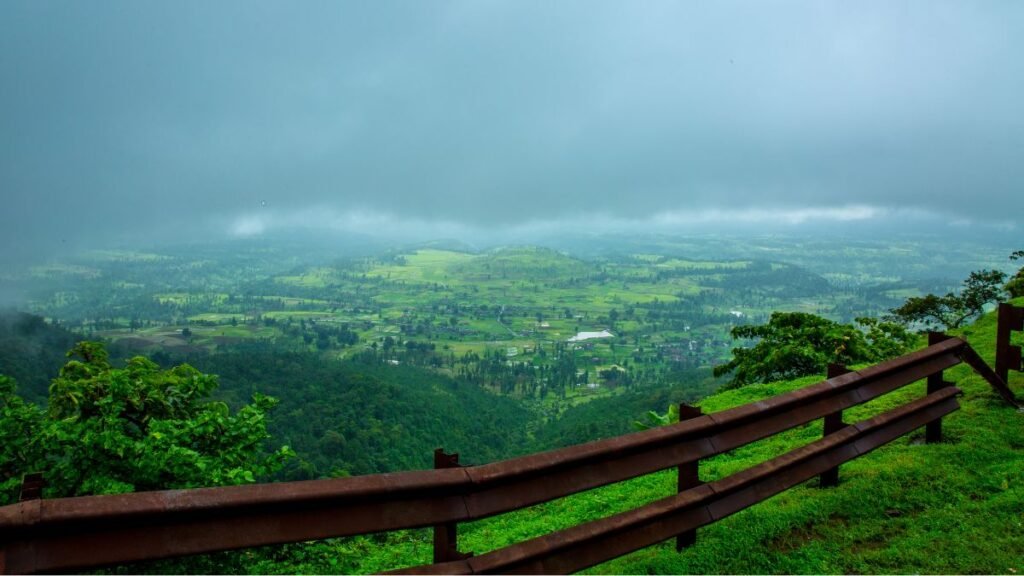
Gujarat’s only hill station, Saputara, has the widest range of accommodation near the Vansda region from budget guesthouses and GTDC cottages to mid-range hotels with hill views. Staying in Saputara and doing Vansda as a day trip is a very practical and comfortable option, especially for families.
Surat (~106–130 km)
For the widest range of hotel options across all budgets, Surat city is your best base. From Surat, Vansda National Park is doable as a day trip with an early start (6–7 AM departure). Surat has excellent food, comfortable hotels, and easy connectivity that makes it a practical anchor for this trip.
Things to Do at and Around Vansda National Park
1. Self-Drive Safari
The primary experience at Vansda is a self-drive safari in your own enclosed four-wheeler along the 4 km forest route, guided by the compulsory forest guide. The permit is valid for 3 hours. Drive slowly, keep noise minimal, and scan the canopy and undergrowth carefully. The forest is dense and dark animals can appear and disappear within seconds. Early morning (7–9 AM) is the most productive window for wildlife sightings.
2. Birdwatching
Vansda is a top-tier birdwatching destination in South Gujarat. Arrive at the gate by 7 AM and move slowly along the forest route, listening for calls before looking. The Forest Owlet, if spotted, is a life-list bird for serious birders. Carry binoculars (at least 8×42), a field guide to Indian birds, and a notebook for recording sightings. Early morning in November to February is the absolute peak window.
3. Narrow Gauge Train Journey
Board the Bilimora–Waghai narrow gauge train for a completely unique perspective on the forest. The Vistadome coach offers panoramic views as the tiny train winds through the Western Ghats foothills and crosses into the forest zone near Vansda. This is one of Gujarat’s most scenic and least-known train journeys. Combine with a park safari on the same day.
4. Visit Gira Waterfalls (Girmal Falls)
Located near Waghai in Dang district, the Gira Waterfalls (also called Girmal Falls) is one of Gujarat’s most impressive waterfalls particularly spectacular immediately after the monsoon (October to December) when the water is at its most powerful. At roughly 30 metres in height, Gira Falls is among the widest waterfalls in South Gujarat and a natural complement to a Vansda visit.
5. Explore the Tribal Villages and Culture
The areas surrounding Vansda National Park are home to Adivasi (tribal) communities including the Kunbi, Dangi, Kokni, Bhil, Warli, and Gamit peoples each with distinct traditions, crafts, and cultural practices deeply rooted in the forest. With prior permission and ideally a local guide, a visit to a nearby tribal village offers profound insight into the relationship between these communities and the forest they have coexisted with for centuries.
6. Waghai Botanical Garden
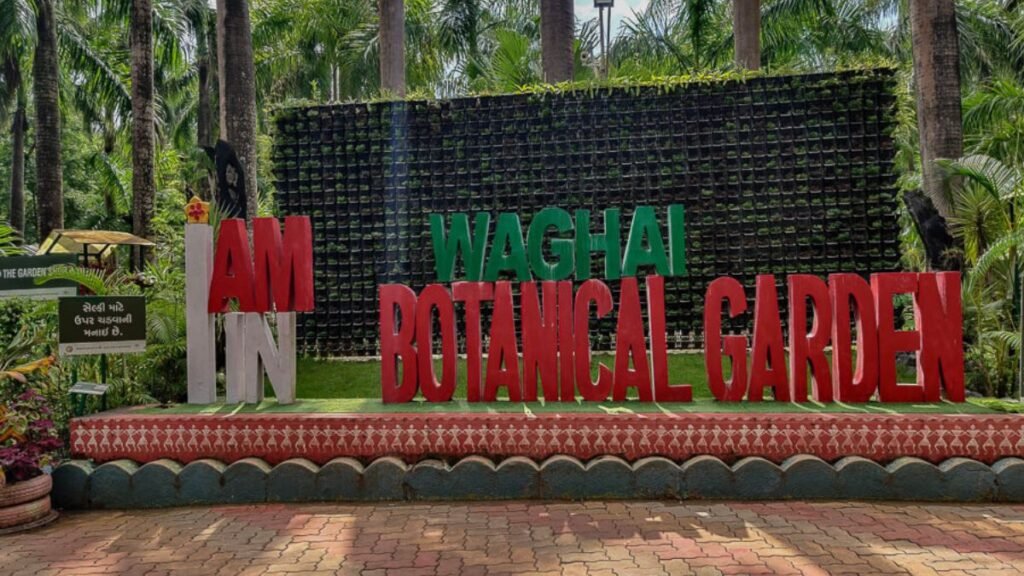
Located near Waghai town, just a few kilometres from the park, the Waghai Botanical Garden is managed by the Gujarat government and houses a well-maintained collection of tropical and sub-tropical plants, including several medicinal herb species. A pleasant and educational add-on to your Vansda visit.
Nearby Attractions to Combine with Vansda
- Saputara Hill Station ~60 km | Gujarat’s only hill station, with lakes, viewpoints, cable car, and the famous Saputara Museum. Plan a 2-day trip combining Vansda and Saputara.
- Gira Waterfalls (Girmal Falls) ~30–40 km near Waghai | One of Gujarat’s largest and most powerful waterfalls. Best visited October to December post-monsoon.
- Ahwa and Dang District ~28 km | The tribal heartland of Gujarat. Dang Durbar (tribal festival in Holi week) is one of the most vibrant cultural events in South Gujarat.
- Wilson Hills, Dharampur ~70 km | A lesser-known hill retreat in Valsad district. Scenic viewpoints, waterfalls, and forest walks. Good for combining with Vansda on a 2-day South Gujarat trip.
- Bilimora ~40 km | Gateway town on the Western Railway line. Starting point of the historic narrow gauge train to Waghai. Good for overnight stays and dining.
- Purna Wildlife Sanctuary ~60–80 km | A larger forest reserve in South Gujarat home to leopards, sloth bears, and tribal communities. Combine with Vansda for a full South Gujarat wildlife circuit.
Travel Tips for Vansda National Park
- Carry everything you need -there are no shops, dhabas, or facilities inside the park. Bring water, snacks, and a basic first-aid kit.
- Start early – reach the gate by 7 AM, the moment it opens. Wildlife activity peaks in the first 2 hours after sunrise.
- Move slowly and quietly – this is not a place to rush. Switch off music, speak in whispers, and let the forest come alive around you.
- Private vehicle is essential – do not attempt to visit by public bus or two-wheeler. Enclosed four-wheelers only are allowed inside.
- Hire the guide – this is compulsory and genuinely helpful. A knowledgeable local guide can identify bird calls, spot animals you would miss, and navigate safely.
- Bring binoculars – a good pair of binoculars (8×42 or 10×42) will transform your birdwatching experience significantly.
- Carry a field guide ‘Birds of India’ by Grimmett & Inskipp is the standard reference. Download eBird and Merlin apps for digital assistance.
- DSLR and telephoto lens recommended wildlife in a dense forest moves quickly. A 300–500mm telephoto gives you the reach needed for meaningful photographs.
- Do not step out of your vehicle in the forest section the park has leopards, pythons, and venomous snakes. The ‘no exit from vehicle’ rule is for your own safety.
- Check park status before visiting call the Forest Office (02630 230057) to confirm the park is open before making the drive, especially in October and June when the season changes.
Frequently Asked Questions (FAQs)
Vansda National Park is famous for being Gujarat’s greenest and most densely forested national park, situated in the northernmost part of the Western Ghats in Navsari district. It is home to leopards, the critically endangered Forest Owlet (one of the rarest birds in the world with fewer than 1,000 individuals remaining), the rusty-spotted cat (one of the world’s smallest wild cats), over 150 bird species, and a forest that has had not a single tree cut since 1952. The park is also known for its firefly season in May–June and Gujarat’s only narrow gauge train that passes through the forest.
The vehicle entry fee is ₹400 for a car, SUV, or jeep. A guide is compulsory and costs ₹100 per hour. A DSLR camera permit is ₹200. Individual visitor fees are ₹20 for Indians and the equivalent of USD 5 for foreign nationals. No prior booking is required for a standard visit collect your permit at the Kilad Village entrance gate. Always confirm current fees by calling the Vansda Range Forest Office at 02630 230057 before visiting.
Vansda National Park is open from approximately mid-October (October 16) to mid-June (June 14) each year. Exact dates may vary depending on monsoon conditions. The park is closed during the monsoon season (mid-June to mid-October) as heavy rainfall makes the terrain inaccessible and potentially dangerous. Daily timings are 7:00 AM to 5:00 PM. Each permit is valid for 3 hours.
Vansda is home to leopards, jungle cats, rusty-spotted cats, hyenas, wild boars, sambar deer, four-horned antelopes (chousingha), Indian bison (gaur), Indian giant squirrels, porcupines, civets, and both common langur and rhesus macaque monkeys. The park has over 150 bird species including the critically endangered Forest Owlet, Brown Fish Owl, Malabar Trogon, Indian Pitta, Paradise Flycatcher, Great Hornbill, and Crested Serpent Eagle. Reptiles include pythons, cobras, kraits, and Russell’s vipers.
From Surat, the drive to Vansda National Park is approximately 106 to 130 km and takes about 2 to 2.5 hours. Take NH48 from Surat towards Vadodara, divert towards Navsari and Waghai, then follow the Vansda-Waghai road. The park entrance at Kilad Village is on the right side of this road, about 15 minutes from Vansda town. A private vehicle is strongly recommended public transport does not go directly to the park gate. Alternatively, take a train to Bilimora Junction (on the Mumbai–Ahmedabad line) and hire a taxi for the final 40 km.
The Bilimora to Waghai narrow gauge railway is Gujarat’s only remaining narrow gauge train line, and it passes directly through Vansda National Park and the surrounding forest areas. The full journey from Bilimora to Waghai takes approximately 3 hours. Only the first hour of the journey passes through dense forest you can exit at Unai station if you want just the forest section. A Vistadome coach offers panoramic views. Ordinary ticket to Unai is ₹30; the Vistadome coach ticket is ₹470. Trains depart Waghai at 6:00 AM and 2:30 PM daily.
Yes, Vansda National Park can be a wonderful experience for families with children who are interested in nature, wildlife, and the outdoors. The self-drive format where you stay in your own vehicle throughout makes it manageable even with young children. The forest is genuinely exciting for curious young minds tall trees, birds, squirrels, peacocks, and the chance of a leopard sighting create a memorable experience. Children should be briefed to stay quiet inside the vehicle and must not exit in the forest section. The Kilad Nature Education Campsite also offers educational overnight programmes designed for school groups.
Final Thoughts
Vansda National Park will not offer you the comfortable infrastructure of Gir, the crowd-friendly safari buses of Ranthambore, or the famous tigers of Kanha. What it offers is something rarer and more valuable a forest that has been left almost completely alone for more than 70 years, and the silence, density, and life that results from that extraordinary act of restraint.
When you drive into Vansda at 7 AM on a November morning, the canopy closes over your vehicle and the daylight dims, and somewhere above you a Forest Owlet calls in the half-dark you understand why conservation matters. And you understand why some of Gujarat’s most important stories are not told loudly enough.
